Health Search
Diabetes
Informational summaries from aggregated signals.
Signals analyzed
20,000
Last generated
Feb 14, 2026
Author: HealthUnspoken Editorial Team
Human-reviewed summaries of health experiences
Quick note
Use this page to understand patterns, not to self-diagnose. If symptoms persist, check with a clinician.
How people describe diabetes
Most-cited patterns from aggregated discussions
Top symptoms (share of mentions)
Commonly linked contributing factors
Grouped by clinical pattern
Primary causes
3 factors
- Insulin deficiency (Type 1 diabetes)
- Insulin resistance (Type 2 diabetes)
- Chronic metabolic dysfunction with elevated glucose
Secondary causes
5 factors
- Genetic susceptibility and family history
- Excess body fat and obesity
- Physical inactivity
Medication-related
2 factors
- Insulin therapy can cause hypoglycemia if dosing, meals, and activity are mismatched
- Medication requirements often change over time with weight, diet, and disease progression
What worked (and is it clinically backed?)
Reported actions + clinician backing + whether it’s short-term relief or long-term improvement.
Chips show clinician backing and whether an action is short-term relief or long-term improvement.
30 sec visual summary
Foods to avoid with diabetes
30 sec visual summary
Foods that increase diabetes risk
Reduce
Foods people often find gentle
Increase
Foods people commonly limit
| Trigger | Do instead | Why it helps |
|---|---|---|
| Large carb-heavy meals | Use balanced plates with fiber + protein + controlled carbs | Reduces sharp glucose spikes after meals |
| Long periods of sitting | Add short movement breaks and regular walking | Improves insulin sensitivity during the day |
| Irregular glucose checks | Track glucose at consistent times | Makes trends visible and supports safer adjustments |
| Frequent sugary drinks/snacks | Prefer water and whole-food snacks | Lowers glycemic load and excess calorie intake |
| Medication changes without review | Adjust medication only with clinician guidance | Reduces hypo/hyperglycemia risk |
Trigger
Do instead
Trigger
Do instead
Trigger
Do instead
Trigger
Do instead
Trigger
Do instead
| Myth | Reality | Explanation |
|---|---|---|
Only people who eat sugar get diabetes | Insulin dysfunction, genetics, weight, and activity patterns all influence risk | Diet quality matters, but diabetes is multifactorial and not caused by a single food. |
If I feel fine, my blood sugar is fine | Early diabetes can have mild or no obvious symptoms | Regular screening and glucose checks are needed even when symptoms are subtle. |
Medication means I can ignore lifestyle | Medication and lifestyle work best together | Diet, activity, sleep, and stress still influence day-to-day glucose control. |
Only people who eat sugar get diabetes
Insulin dysfunction, genetics, weight, and activity patterns all influence risk
Diet quality matters, but diabetes is multifactorial and not caused by a single food.
If I feel fine, my blood sugar is fine
Early diabetes can have mild or no obvious symptoms
Regular screening and glucose checks are needed even when symptoms are subtle.
Medication means I can ignore lifestyle
Medication and lifestyle work best together
Diet, activity, sleep, and stress still influence day-to-day glucose control.
Low-carb plans can improve glucose but may be hard to sustain
Long-term adherence and nutrient adequacy need planning.
Fasting can help some people but worsen fatigue or glucose variability in others
Use extra caution with insulin or glucose-lowering medicines.
Herbal remedies show inconsistent benefit
Do not replace prescribed medication without medical supervision.
Symptoms of low blood sugar need urgent response
Sweating, shakiness, confusion, or faintness require prompt correction and review.
Persistent high glucose or signs of complications need clinician care
Seek medical review for vision changes, foot numbness, slow-healing wounds, or kidney concerns.
Reading notes
How to read the symptom charts
People describe diabetes through recurring daily signs like thirst, urination changes, fatigue, and blurred vision. These patterns are useful for awareness, not diagnosis.
Root-cause notes
Clinicians center diabetes around insulin dysfunction: low insulin production in Type 1 and insulin resistance in Type 2, with weight, activity, and genetics shaping risk.
What worked: context
Community-reported approaches often overlap with clinician recommendations: carbohydrate quality, weight management, physical activity, and medication adherence.
Foods: context
Food guidance emphasizes reducing fast glucose spikes and improving fiber, protein quality, and meal balance over strict one-size-fits-all rules.
Daily habits: context
Daily consistency matters more than perfect days. Small repeatable habits often produce better glucose stability over time.
Myths vs reality: context
Many myths oversimplify diabetes. The reality is that type, severity, and response to treatment vary by person.
Trade-offs: context
Some strategies help one person and destabilize another. Monitoring, review, and medication safety remain essential.
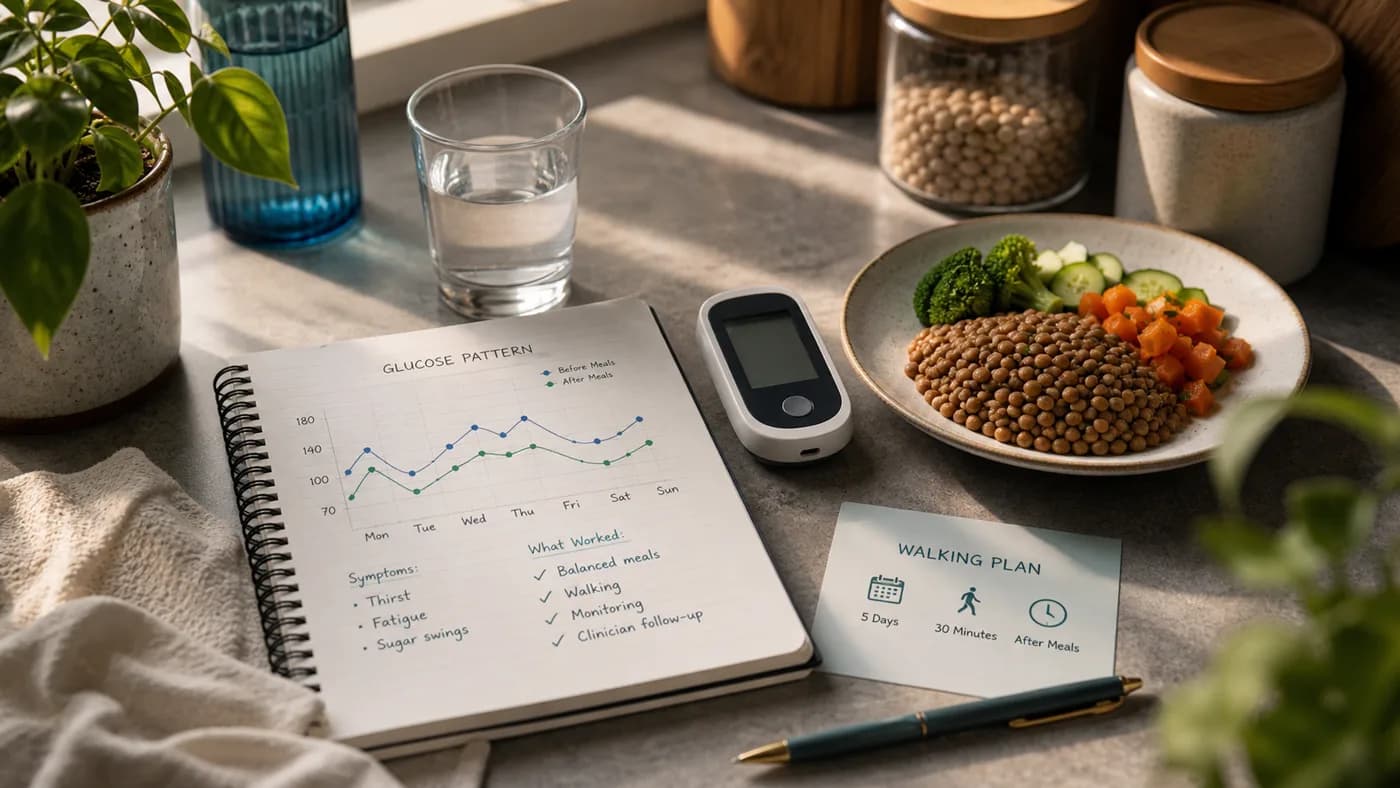
How to stabilize daily blood sugar patterns
Simple daily steps that support safer and steadier glucose control.
- Plan balanced meals: Build meals around vegetables, protein, and controlled carbohydrate portions.
- Move after meals: Take a short walk after meals when possible.
- Monitor glucose consistently: Track readings at regular times and log patterns.
- Review medication safety: Coordinate dosing changes with your clinician, especially when diet or activity shifts.
FAQs
What is the main difference between Type 1 and Type 2 diabetes?
Type 1 mainly involves little or no insulin production, while Type 2 mainly involves insulin resistance and relative insulin deficiency.
Can lifestyle changes help diabetes?
Yes. Many people improve glucose control with structured eating, activity, weight management, and regular monitoring, often alongside medication.
When should I seek medical care quickly?
Get prompt care for severe low blood sugar symptoms, persistent very high readings, dehydration, confusion, or signs of complications.
Knowledge check
What best describes Type 2 diabetes?
- No insulin is produced at all in every case
- Body cells resist insulin and glucose remains elevated
- It is caused only by eating sweets
Type 2 diabetes is primarily insulin resistance with varying degrees of insulin deficiency.
Which daily habit most supports stable glucose trends?
- Skipping all carbohydrates permanently
- Balanced meals plus regular movement and monitoring
- Changing medicines without clinician review
Consistent nutrition, physical activity, and monitoring usually improve stability and safety.
Data methodology & context
This page summarizes recurring patterns from public discussions and clinician summaries. We highlight what people commonly report and where medical guidance tends to agree or caution. It is meant to help you ask better questions, not replace professional care.
We separate anecdotes (what people say helped or hurt) from clinician-backed guidance when possible. If the two disagree, we call it out clearly.
Signals analyzed: 20,000. Last updated: 2026-02-14T11:47:12Z. Evidence level: moderate.
This content summarizes patterns from public user experiences and clinical discussions for educational purposes only. It is not medical advice.