
Passing a Kidney Stone at 28: My Six-Month Battle
- Authors

- Name
- Author: HealthUnspoken Editorial Team
- Published on
- Last updated:
- Country
- Country
- 🌍Country: USA
At 28, I thought kidney stones were something older people dealt with. Then one small 6 mm stone turned my life upside down for half a year. It sent me to the ER, made me question every strange urinary symptom, and taught me that pain does not need to be large to take over your life.
The Night It All Began
It was July when the pain first struck.
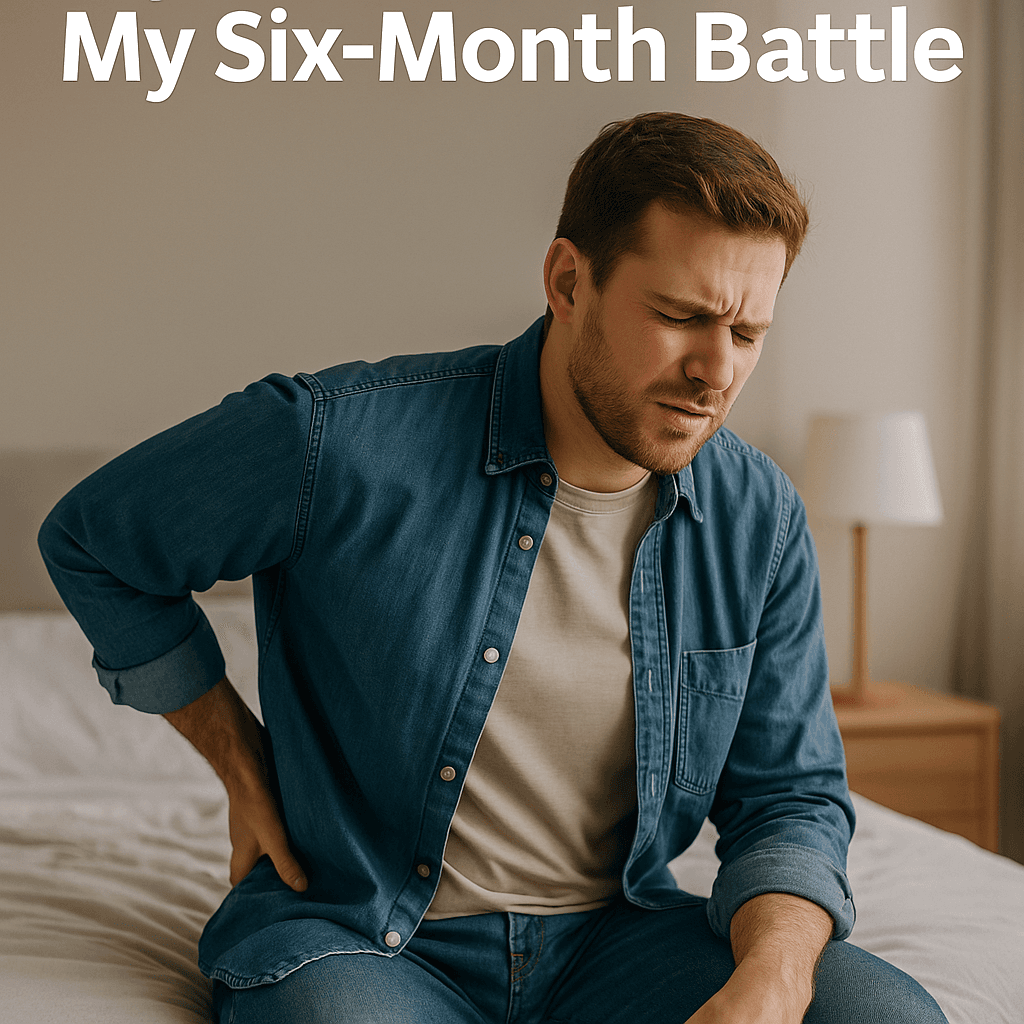
I had just climbed into bed when a stabbing ache started on my right side and lower back. At first, I tried to explain it away. Maybe indigestion. Maybe a pulled muscle. Maybe something I ate.
I shifted positions. I sat on the toilet. I bent over the sink because nausea kept rising, but nothing came up. Nothing helped.
Within minutes, the pain stopped feeling like a question. It became an emergency.
My stomach twisted. Sweat poured down my face. I could barely breathe without feeling like knives were pushing through my side. The worst part was that I lived alone with my puppy, and even in that level of pain, I was trying to think through logistics.
Food in the crate. Water in the bowl. Door locked. Keys. Phone. Hospital.
That is what medical panic can look like when nobody else is home. You are terrified, but you are also making a checklist because the world does not stop for your crisis.
I drove myself to the nearest ER in the middle of the night, hunched over the steering wheel, one hand gripping my side and the other gripping the wheel. Every red light felt personal.
The First ER Visit
The ER was small and quiet. I must have looked half-crazed walking in.
The receptionist handed me forms while I was doubled over. I scribbled something that barely looked like my name. Soon I was in a bed with an IV, shaking while the staff tried to get the pain under control.
The first round of pain medication did not touch it.
That scared me. Until then, I had thought severe pain meant you got medicine and the pain lowered. Instead, I learned that kidney stone pain can have its own brutal momentum.
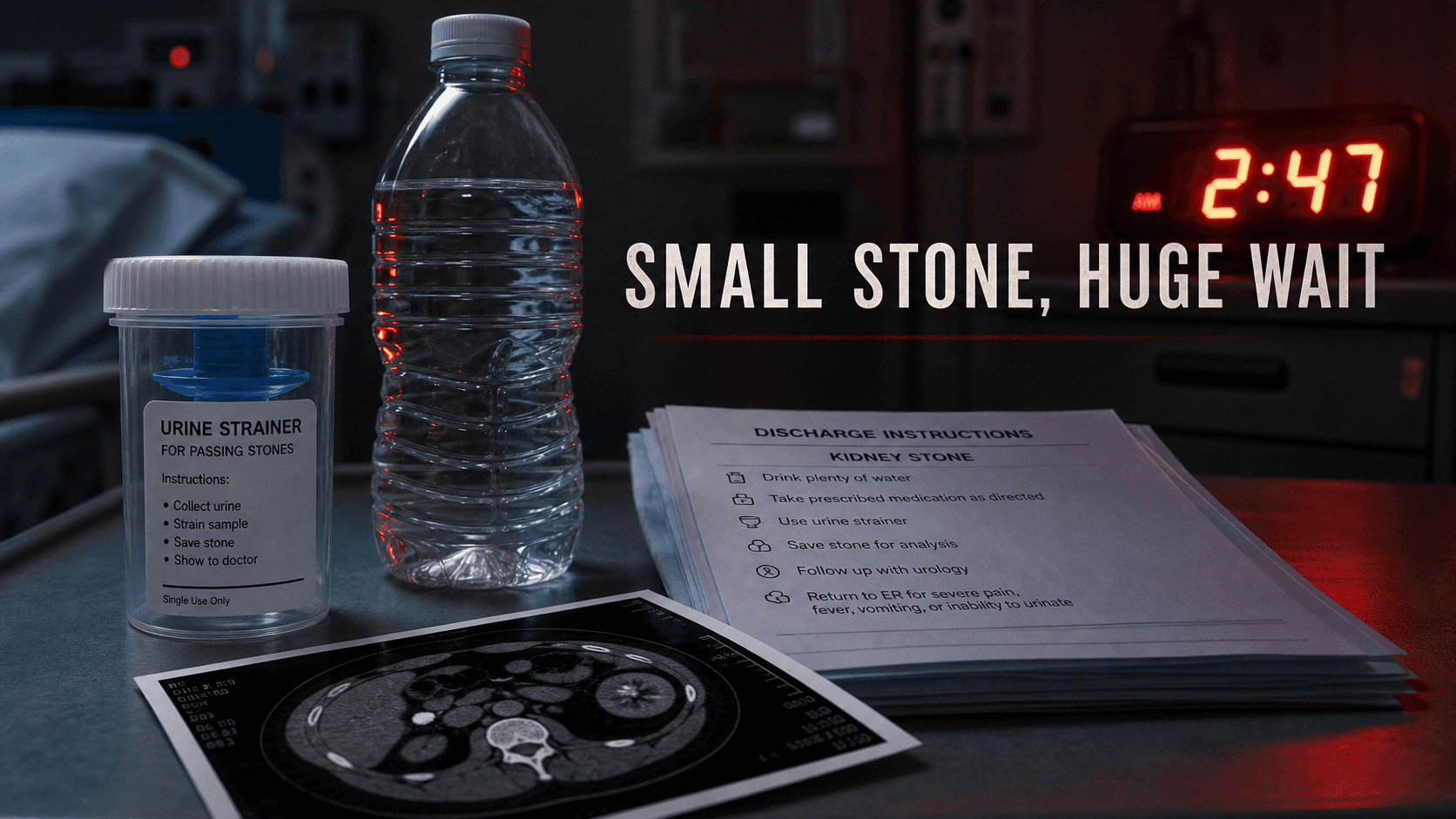
They sent me for a CT scan. Every bump in the hallway made me want to scream.
The doctor came back with the result: a 6 mm kidney stone.
Six millimeters sounds tiny until it is inside a narrow ureter. The doctor explained that this was around the size where passing it naturally was possible for some people, but procedures also start entering the conversation depending on location, blockage, symptoms, and how the body is handling it.
When morphine finally worked, I understood relief in a way I never had before. The shaking stopped. My body unclenched. For the first time in hours, I could breathe.
After bloodwork, urinalysis, and discharge instructions, I went home at dawn with prescriptions, advice to hydrate, and the uneasy assignment of trying to pass the stone.
The Strange Waiting Game
The next few weeks felt unreal.
Kidney stones are not always constant pain. Sometimes the pain comes in waves. Sometimes it fades enough to trick you into thinking the crisis is over. Sometimes you feel almost normal, which makes you wonder whether you passed the stone without noticing.
I drank water like it was my job. I carried pain medication. I kept a heating pad nearby. I watched for symptoms but also tried not to become obsessed with every sensation.
At the same time, I was preparing for a cross-country move.
That combination was strange: boxes, leases, goodbyes, and somewhere inside my body, a stone that may or may not have still been moving.
Denial became convenient. If I could pack, work, and keep moving, maybe the stone was gone.
But the body does not accept denial as proof.
When Blood in Urine Was Brushed Off
Six months later, I noticed blood in my urine and a faint tingling on the right side again.
A clinic treated it like a urinary tract infection and gave me antibiotics. I wanted to believe that explanation because a UTI sounded simpler than the alternative. I wanted the story to be new, short, and solvable.
Two days later, the old pain came back.
This time I was home for the holidays, and my mom rushed me to the same hospital where I had been born. The experience replayed itself: IV, scan, medication, fear, waiting for answers.
The doctor said the same stone had been moving through my ureter for months and was now almost blocking the way out.
That sentence landed hard.
It meant the first ER visit had not been a closed chapter. It meant my body had been carrying the problem while I was moving states, packing boxes, and pretending things were fine. It also made me angry at how easily blood in urine had been treated as something routine.
Sometimes it is a UTI. Sometimes it is not. The symptom deserves attention either way.
What Other Kidney Stone Stories Kept Repeating
While preparing this update, I reviewed broader kidney stone conversations from doctor-channel and health-influencer comment sources. I am not publishing raw comments or personal details, but the patterns were unmistakable.
People repeatedly described kidney stone pain as wave-like, nauseating, and hard to localize. Some said they crawled across the floor. Some compared it to childbirth, surgery, or the worst pain they had ever felt. Others described being young and not believed, or being afraid to ask for pain relief because they did not want to be judged.
Another pattern was confusion. Was it back pain? Food poisoning? A UTI? Appendicitis? Something dangerous? Many people did not know until imaging or urine testing gave them an answer.
The prevention comments were messier. People talked about lemon water, apple cider vinegar, low oxalate diets, keto changes, supplements, salt, calcium, and hydration. Some believed a specific home remedy changed everything for them.
That is exactly where caution matters. A personal routine may feel convincing, but kidney stones can have different causes. Calcium oxalate stones, uric acid stones, struvite stones, and cystine stones do not all have the same prevention plan. What helped one person may be irrelevant or risky for another, especially for people with kidney disease, medication restrictions, recurrent UTIs, gout, digestive disease, pregnancy, or dehydration risk.
The useful lesson is not "copy a stranger's remedy."
The useful lesson is: save the stone if you can, follow up, learn the stone type, and build a prevention plan around evidence and your own health history.
The Last Attempt
After the second ER visit, I went into survival mode again.
I drank water constantly. I kept a bottle near me. I watched symptoms. I also tried an herbal supplement marketed as "stone breaker" because I was desperate and tired of waiting.
Looking back, I would frame that differently now.
Desperation makes unverified solutions attractive. I understand why people search for them. When you are in pain, "maybe this helps" can feel better than doing nothing. But supplements can interact with medications, affect kidneys or liver, vary in quality, and create false confidence.
If I were doing it again, I would ask a clinician or pharmacist before taking anything new. I would also ask clearer follow-up questions: Where is the stone now? Is it blocking urine? How big is it? How long is too long to wait? When should I call urology? What symptoms mean ER, not clinic?
Then one quiet morning after waking up, it finally happened.
I passed the stone.
After half a year of pain, scans, uncertainty, and fear, it was suddenly over. I sat on the edge of my bed stunned, relieved, and almost laughing at how something so small could create so much chaos.
What I Wish I Had Known Sooner
I wish I had understood that a kidney stone journey has two parts.
The first part is getting through the acute pain safely.
The second part starts after the relief.
NIDDK explains that treatment depends on stone size, location, stone type, symptoms, and whether the stone is blocking the urinary tract or causing infection. Small stones may pass, but larger stones, blocked stones, severe pain, vomiting with dehydration, or infection concerns may need urgent care or urology procedures.
Mayo Clinic also notes that stones can cause pain that comes in waves, pain moving toward the groin, blood in urine, vomiting, fever, chills, and trouble passing urine.
Those facts would have helped me take the in-between period more seriously. Feeling better for a few days did not necessarily mean the stone was gone.
It also would have helped me understand why catching the stone matters. If a stone can be analyzed, the result may guide prevention. Without that information, prevention becomes guesswork.
Prevention Is Not One-Size-Fits-All
After a kidney stone, it is tempting to search for a single rule: drink this, avoid that, never eat this food again.
The truth is more individual.
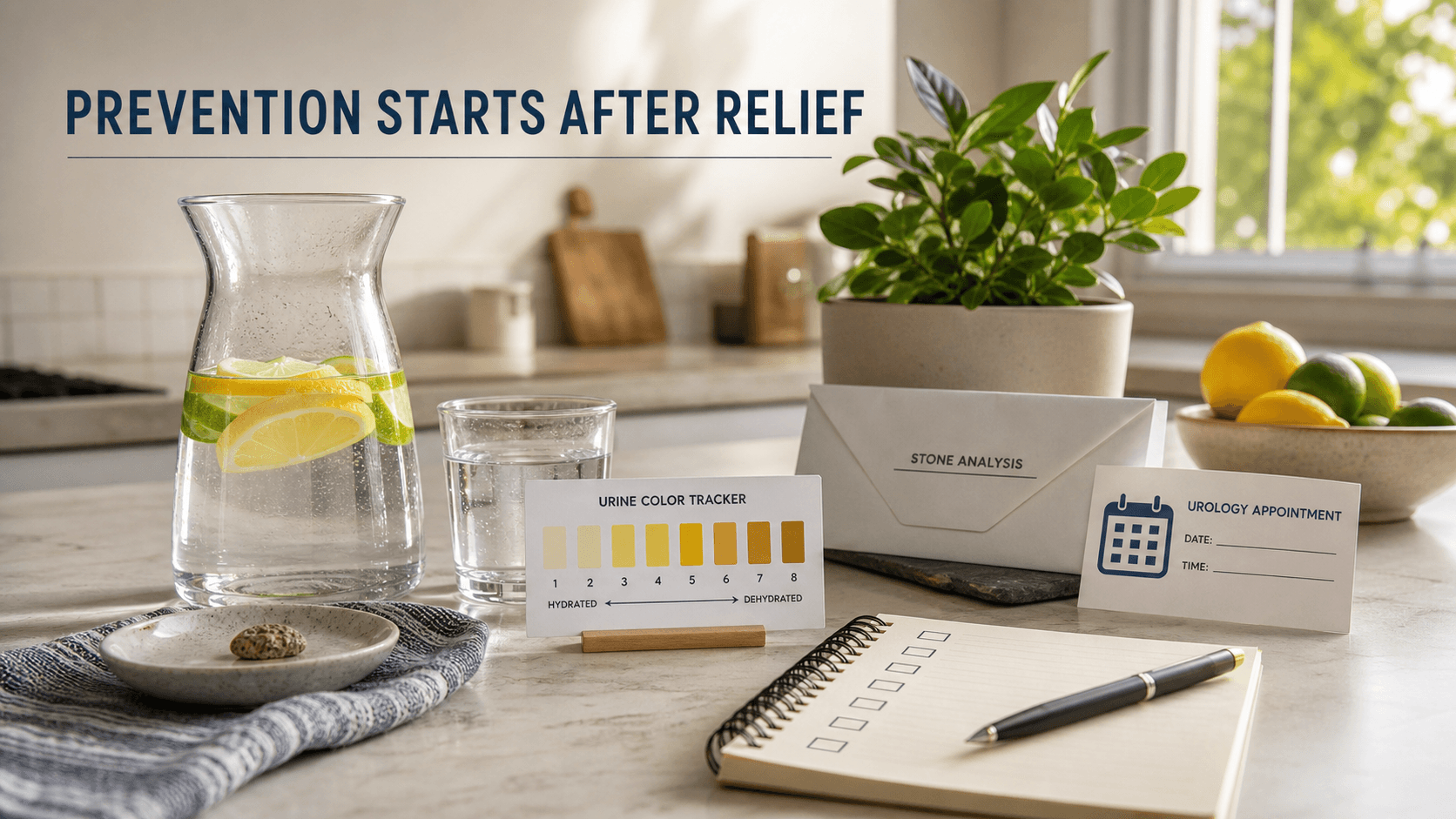
Hydration matters for many people because concentrated urine makes it easier for minerals to form crystals. But even hydration targets should be personalized if someone has kidney failure, heart failure, urinary frequency, incontinence, or other medical limits.
Diet changes also depend on the stone type. Some people need to reduce sodium. Some need to think about animal protein. Some need guidance around oxalate-rich foods. Some need medication such as potassium citrate, thiazide-type diuretics, allopurinol, or antibiotics for specific stone types, but only under medical supervision.
The National Kidney Foundation emphasizes a personalized prevention plan, often built around stone analysis and sometimes 24-hour urine testing. That matters more than copying broad internet lists.
For me, the practical lesson was simple:
- do not assume youth protects you
- do not ignore blood in urine
- do not let temporary improvement replace follow-up
- ask whether you should strain urine and save the stone
- ask what stone size and location mean for your plan
- be cautious with supplements and extreme diet changes
- follow up after the pain ends
When to Seek Medical Care
Please seek medical care promptly if you have possible kidney stone symptoms, especially:
- severe side, back, lower abdominal, or groin pain
- pain that comes in waves and does not settle
- blood in urine
- burning, urgency, cloudy urine, or foul-smelling urine
- nausea or vomiting with pain
- inability to urinate or only passing a small amount
- known kidney disease, one kidney, pregnancy, immune suppression, or recurrent stones
Seek urgent or emergency care if pain is so severe that you cannot sit still or get comfortable, or if symptoms include fever, chills, repeated vomiting, dehydration, fainting, confusion, worsening weakness, or trouble passing urine. A blocked infected urinary system can become dangerous.
Also seek follow-up if a stone is diagnosed but symptoms keep recurring, if you are waiting a long time without confirmation that it passed, or if you need a prevention plan after passing one.
What the Stone Changed
The stone taught me that pain can humble you fast.
It also taught me that relief can be disorienting. One morning you are living under a cloud of medical uncertainty; the next morning the object causing it is gone. The body moves on before the mind catches up.
I still hope I never face another stone again. But if I do, I will be less casual about follow-up. I will ask better questions. I will not treat blood in urine as something to explain away. I will not assume feeling better means the problem has resolved.
And I will remember that health stories do not always end when the pain stops.
Sometimes that is when the smarter part of care begins.
Related Reading
- Surviving Too Much: My Life with Crohn's, Kidney Stones, and 37 Surgeries
- Struggling With Overactive Bladder: The Quiet Battle I Never Expected
References
- NIDDK: Symptoms & Causes of Kidney Stones
- NIDDK: Treatment for Kidney Stones
- Mayo Clinic: Kidney Stones Symptoms and Causes
- National Kidney Foundation: Kidney Stones
Disclaimer: This article is for educational purposes only and is not medical advice. Individual symptoms, risks, and treatment decisions vary. Always consult a qualified healthcare professional for diagnosis and personalized care. If you have severe, worsening, or emergency symptoms, seek urgent medical attention immediately.
Related Reading
Continue reading after Passing a Kidney Stone at 28: My Six-Month Battle
Surviving Cancer Didn’t End My Fear — It Changed It
A personal journey through cancer survivorship, scan anxiety, body vigilance, and learning how fear can linger long after treatment ends.
Four Collapsed Lungs, Years of Misdiagnosis — My Life With Ehlers-Danlos Syndrome
A personal journey through repeated lung collapses, surgery, medical dismissal, rib instability, infections, and finally receiving an Ehlers-Danlos Syndrome diagnosis.
When Retirement Finally Gave Me the Time to Heal
A personal story about back and hip pain, overwork, physiotherapy, walking, gardening, and how recovery became possible only after life finally slowed down.
Share on WhatsApp
2–3 line summary is copied. Tap to open WhatsApp and share.
 Tip: You can edit the text after it opens in WhatsApp.
Editorial Note
This article is prepared by the HealthUnspoken Editorial Team. Our articles may combine first-person submissions, public health education references, and commonly discussed experiences, then are edited for clarity and context.
The goal is reader awareness and education. This content is not a diagnosis or a treatment plan.
⚕️ Medical Disclaimer
The information provided in this article is for **educational and informational purposes only**. It should not be considered medical advice, diagnosis, or treatment. Always seek the advice of your physician or other qualified healthcare provider regarding any medical condition or treatment decisions.
🧾 Sources
HealthUnspoken articles may include first-person stories, editorial summaries of broadly discussed experiences, and public health education references. They are reviewed by the editorial team for clarity and educational context.
Reader Experiences Shared
Curated anonymized snippets from public health discussions, edited for readability.
I kept thinking passing kidney stone would settle on its own, but what helped most was tracking patterns and asking clearer questions in appointments.
The hardest part for me was uncertainty around passing kidney stone. Once I stopped changing everything at once, I could finally see what was helping.
I used to delay care because I was embarrassed about passing kidney stone. Earlier conversations would have saved me a lot of stress.
A second opinion around passing kidney stone changed my decisions completely. The issue was still real, but the plan felt calmer and more practical.
For me, progress with passing kidney stone came from boring consistency, not one dramatic fix. That mindset reduced panic a lot.
I learned to separate fear from facts with passing kidney stone. Writing down symptoms before visits made discussions more useful.