
13 Years with Overactive Bladder — and What Bladder Training Changed for Me
- Authors

- Name
- Author: HealthUnspoken Editorial Team
- Published on
- Last updated:
- Country
- Country
- 🌍Country: Unknown
For 13 years, my life quietly revolved around the nearest bathroom. Wherever I went — office, restaurant, bus stop, movie hall, someone else’s house — part of my mind was always measuring the distance to a restroom. Overactive bladder did not look dramatic from the outside, but it changed how safe I felt inside my own day.
Life in 60-Minute Intervals
At my worst, I was going to the bathroom around 15 times a day. Some days it felt even more frequent because the urge came back before I had mentally recovered from the last trip.
Night was not restful either. I would wake two or three times, half-asleep and irritated, walking to the toilet because my body refused to settle. The next morning carried the cost: fogginess, a short temper, and the dull embarrassment of knowing that a basic body function had become the center of my schedule.
The hardest part was the invisible planning. I avoided long drives. I hesitated before watching a movie. I chose restaurant seats based on bathroom access. In meetings, I listened with one ear while another part of my brain calculated whether I could wait another 20 minutes.
That kind of vigilance slowly becomes an identity. You are not just living with urgency. You are living with the fear of urgency.
Expectation vs Reality
Before I understood what was happening, I had a simple expectation: if a doctor found the right medicine, the problem would stop.
Reality was more complicated.
I tried multiple treatments over the years, including mirabegron, solifenacin, and electrical stimulation therapy. Some helped for a while. Some reduced the intensity but not the fear. Some seemed to work only as long as I kept everything else perfectly controlled.
When symptoms returned, it felt like failure. In hindsight, that was not fair. Overactive bladder can involve bladder signaling, pelvic floor tension, fluid timing, sleep, stress, habits, and learned responses. For some people, medication is important. For others, training and physical therapy matter just as much. Many need a combination.
The missing piece for me was not another dramatic intervention. It was structure.
Getting a Name for the Pattern
It took years to get a clear diagnosis: overactive bladder (OAB). The label helped because it gave my experience a frame. Still, a diagnosis by itself did not give me control.
Then a urologist suggested bladder training.
At first, I almost dismissed it. I had already tried treatments that sounded more medical and more serious. How could a diary, timed waiting, and pelvic floor work change something that had dominated my life for more than a decade?
But the way he explained it stayed with me: my bladder had learned impatience, and my brain had learned fear. We were not trying to ignore real signals. We were trying to separate real fullness from conditioned alarm.
That distinction changed how I approached the whole problem.
What the Bladder Diary Revealed
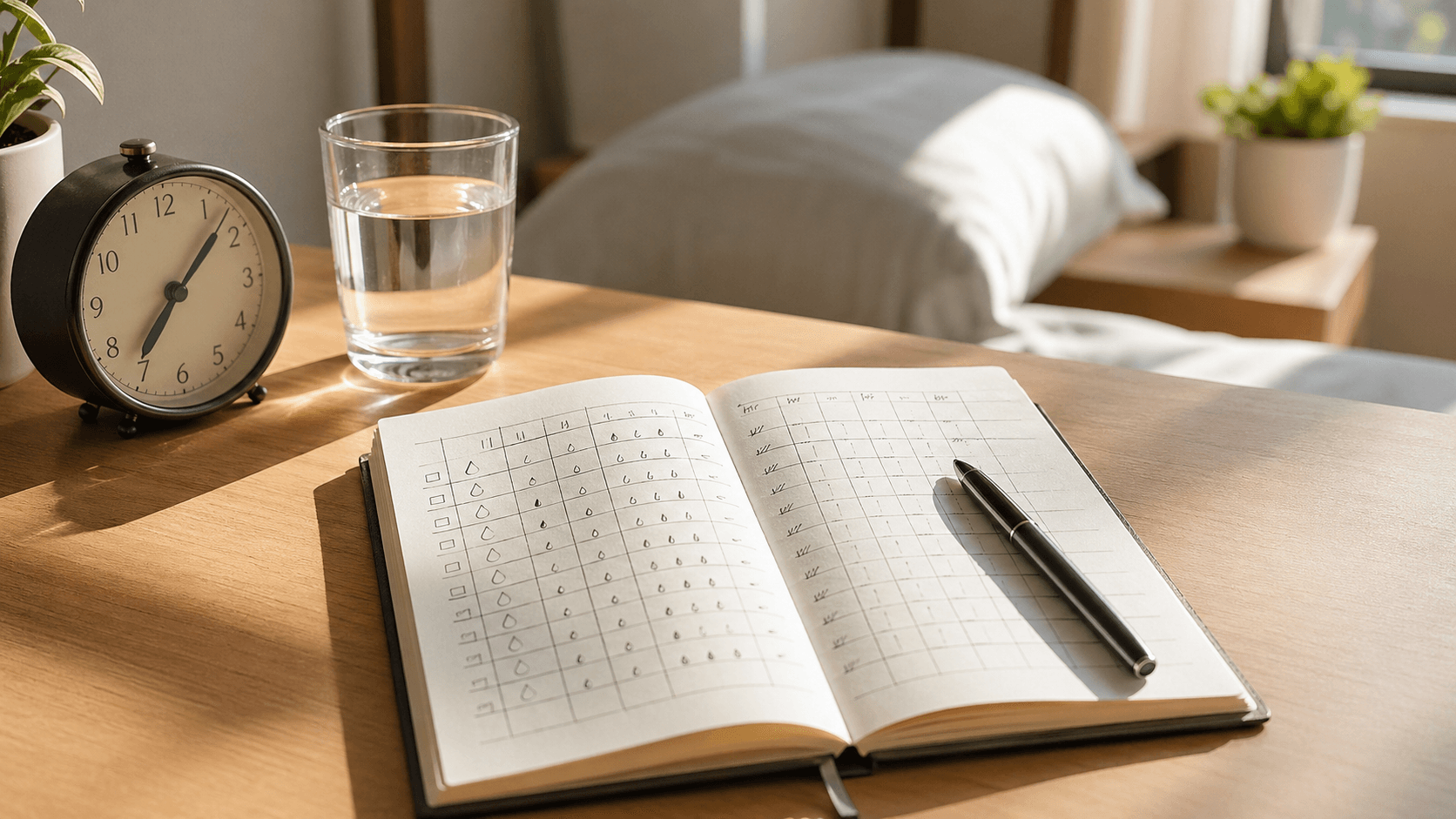
The bladder diary felt awkward at first. I wrote down the time, the urge, the amount of urine, fluid intake, and what was happening around the episode. It felt too simple to matter.
Then the patterns appeared.
Some urges came after standing up from a chair. Some came as soon as I reached home. Some appeared before meetings, before travel, or when I knew a bathroom might not be available. The urgency was real in the body, but the trigger was not always bladder fullness.
That was difficult to accept because it did not mean the symptoms were imaginary. It meant my nervous system and habits had become part of the loop.
The diary also changed my conversations with the urologist and pelvic floor physiotherapist. Instead of saying, "I go all the time," I could describe timing, volumes, triggers, and night waking. That made the care plan more practical.
Learning Pelvic Floor Relaxation
My physiotherapist helped me understand something I had never noticed: when the urge came, I often tensed my whole lower body. I braced. I tightened. I panicked.
That tension made the urge louder.
We worked on pelvic floor awareness, not just strengthening. For some people, pelvic floor exercises are about contraction. For me, learning how to release tension mattered just as much. Biofeedback helped because I could see the difference between holding and relaxing on a screen.
This was one of the most useful lessons of the whole process: urgency asked me to react quickly, but improvement required me to slow down.
Experience Blocks
"The urge was strongest when I was afraid of not finding a bathroom"
Bathroom access became a mental safety signal. If I knew a restroom was nearby, I felt calmer. If I did not, the urge became sharper. That fear loop was not solved by willpower. It improved only when I started practicing delay in safe, planned situations.
"Night waking made everything harder"
Broken sleep made daytime urgency feel less manageable. After poor nights, I had less patience and more body vigilance. This overlap reminded me of broader sleep and daytime shutdown patterns, where the body feels harder to trust after repeated disruption.
"Caffeine and evening fluids were not the whole story, but they mattered"
Reducing caffeine and moving most fluids earlier in the day helped my nights. It did not cure the condition by itself, and I had to avoid becoming extreme about restriction. The useful change was predictability, not dehydration.
"Tracking made progress visible"
Without the diary, I would have missed small wins. A 20-minute delay became 30. Night waking reduced. The number of daily trips slowly dropped. Seeing that on paper made progress feel real before it felt easy.
What Felt Common Across Other Experiences
When I later read and heard other bladder-related stories, a few themes felt familiar:
- people often measured life by bathroom access before they ever used the word "anxiety"
- night urination affected mood, focus, and confidence the next day
- pelvic floor tension and stress could make urgency feel stronger
- caffeine, alcohol, late fluids, constipation, and poor sleep sometimes worsened symptoms
- many people tried several approaches before finding a stable routine
The important point is that these patterns are not a diagnosis checklist. They are conversation starters. If you bring them to a clinician, they can help separate OAB from urinary infection, diabetes, prostate issues, medication effects, pelvic floor dysfunction, pregnancy-related changes, or other causes of urinary symptoms.
What Slowly Helped Me
The most useful changes were not dramatic. They were repeatable.
- I used the bladder diary honestly, even when the numbers embarrassed me.
- I practiced delaying non-urgent trips in small, planned steps.
- I learned to relax my pelvic floor instead of bracing against every urge.
- I reduced caffeine and moved heavier fluid intake earlier in the day.
- I stopped treating every urge as an emergency.
- I reviewed progress with professionals instead of experimenting wildly on my own.
Over time, my bathroom trips dropped from around 15 a day to roughly 5-7. Night waking reduced until I could often sleep through. The biggest change was not only the number. It was the quiet return of choice.
I could sit through a movie. I could take a longer route home. I could enter a meeting without immediately scanning for exits.
What Backfired
Two things made the problem worse for me.
The first was panic-monitoring every sensation. If I spent the whole day checking whether I needed to go, I created more alarm. That kind of body vigilance overlaps with other mind-body symptom loops, where fear and physical sensation keep feeding each other.
The second was over-restricting fluids. Drinking less sometimes reduced trips temporarily, but it also made me feel worse and created another kind of anxiety. A clinician-guided plan was safer than trying to control everything through restriction.
When to Seek Medical Care
Please do not assume every urinary urgency pattern is simple OAB. Seek medical evaluation if you have:
- burning or pain while urinating
- blood in urine
- fever, chills, back pain, or pelvic pain
- sudden new urgency or leakage
- excessive thirst, unexplained weight loss, or very frequent urination
- difficulty starting urination or feeling unable to empty
- pregnancy, recent childbirth, or new neurological symptoms
- symptoms that disrupt sleep, work, travel, or emotional wellbeing
Seek urgent care if urinary symptoms come with severe pain, inability to pass urine, confusion, high fever, or other emergency symptoms.
Bladder training can be helpful for some people, but it should not be used to delay care when red flags are present.
Living Freely Again
I do not describe myself as cured. I describe myself as retrained.
My bladder still has moods. Travel can still make me cautious. Stress can still make symptoms louder. But I no longer feel ruled by the first signal my body sends.
The real gift of bladder training was not pretending the urge was fake. It was learning that not every urge needed immediate obedience.
If you are living around bathroom access, bring the pattern to a urologist, primary care doctor, or pelvic floor physiotherapist. A clear diary, honest symptom history, and realistic care plan can turn a vague embarrassing problem into something you can actually work with.
Sometimes healing is not a sudden breakthrough. Sometimes it is the slow return of trust: one logged day, one delayed trip, one uninterrupted night at a time.

References
- MedlinePlus: Overactive Bladder
- MedlinePlus: Frequent or Urgent Urination
- PubMed: Pelvic floor muscle training for overactive bladder symptoms
Disclaimer: This article is for educational purposes only and is not medical advice. Overactive bladder symptoms can have several causes, and treatment needs vary. Please consult a qualified clinician for diagnosis, red-flag symptoms, and treatment decisions.
Related Reading
Continue reading after 13 Years with Overactive Bladder — and What Bladder Training Changed for Me

Surviving Cancer Didn’t End My Fear — It Changed It
A personal journey through cancer survivorship, scan anxiety, body vigilance, and learning how fear can linger long after treatment ends.
Passing a Kidney Stone at 28: My Six-Month Battle
A 28-year-old’s painful journey through ER visits, sleepless nights, blood in urine, and finally passing a stubborn 6mm kidney stone after six months.

Four Collapsed Lungs, Years of Misdiagnosis — My Life With Ehlers-Danlos Syndrome
A personal journey through repeated lung collapses, surgery, medical dismissal, rib instability, infections, and finally receiving an Ehlers-Danlos Syndrome diagnosis.
Share on WhatsApp
2–3 line summary is copied. Tap to open WhatsApp and share.
 Tip: You can edit the text after it opens in WhatsApp.
Editorial Note
This article is prepared by the HealthUnspoken Editorial Team. Our articles may combine first-person submissions, public health education references, and commonly discussed experiences, then are edited for clarity and context.
The goal is reader awareness and education. This content is not a diagnosis or a treatment plan.
⚕️ Medical Disclaimer
The information provided in this article is for **educational and informational purposes only**. It should not be considered medical advice, diagnosis, or treatment. Always seek the advice of your physician or other qualified healthcare provider regarding any medical condition or treatment decisions.
🧾 Sources
HealthUnspoken articles may include first-person stories, editorial summaries of broadly discussed experiences, and public health education references. They are reviewed by the editorial team for clarity and educational context.
Reader Experiences Shared
Curated anonymized snippets from public health discussions, edited for readability.
I kept thinking overactive bladder would settle on its own, but what helped most was tracking patterns and asking clearer questions in appointments.
The hardest part for me was uncertainty around overactive bladder. Once I stopped changing everything at once, I could finally see what was helping.
I used to delay care because I was embarrassed about overactive bladder. Earlier conversations would have saved me a lot of stress.
A second opinion around overactive bladder changed my decisions completely. The issue was still real, but the plan felt calmer and more practical.
For me, progress with overactive bladder came from boring consistency, not one dramatic fix. That mindset reduced panic a lot.
I learned to separate fear from facts with overactive bladder. Writing down symptoms before visits made discussions more useful.