
Coffee vs. Caffeine: Do the Benefits Depend on the Source?
- Authors

- Name
- Author: HealthUnspoken Editorial Team
- Published on
- Last updated:
- Country
- Country
- 🌍Country: USA
Some people can drink black coffee on an empty stomach and feel sharp, calm, and ready for the day. Others take a few sips and get heartburn, jitters, a racing pulse, or a night of broken sleep. That difference is the whole point: caffeine may be the same molecule, but the package it comes in can change how your body experiences it.
Coffee Is Not Just Caffeine
Coffee gets treated like a caffeine delivery system, but that is only part of the story.
A cup of coffee contains caffeine, yes. It also contains hundreds of plant compounds, including polyphenols and other substances that may help explain why moderate coffee intake is often studied separately from caffeine itself.
That is why the question "Is caffeine healthy?" is too simple.
The better question is:
What source of caffeine are we talking about, how much are you taking, and what does it do to your body afterward?
For some people, coffee feels perfect. It improves alertness, pairs with a morning routine, and does not disturb digestion or sleep.
For others, coffee is the wrong vehicle. The same person who tolerates tea may get reflux from coffee. Someone who handles one small morning cup may feel anxious after a large cold brew. Someone who feels fine in the afternoon may discover that caffeine silently ruins deep sleep that night.
The source matters because the experience is not only chemical. It is also digestive, behavioral, and personal.
Expectation vs Reality
The expectation is simple:
- caffeine wakes you up
- coffee has health benefits
- tea is gentler
- pills are predictable
- energy drinks are stronger
Reality is messier.
Caffeine can improve alertness, but it cannot repay sleep debt. Coffee may fit well in a healthy diet, but it can aggravate heartburn or anxiety in sensitive people. Tea may feel smoother, but it still counts toward your daily caffeine total. Chocolate contains less caffeine, but it can still add up when combined with coffee or tea. Pills can be convenient, but they remove the natural pause that comes with sipping a drink.
The problem is rarely one isolated cup.
The problem is the stack: coffee in the morning, tea at lunch, chocolate in the afternoon, an energy drink before a late drive, and maybe a pain reliever or supplement that also contains caffeine.
That is how "I only had coffee" quietly becomes a high-caffeine day.
Comparing the Sources
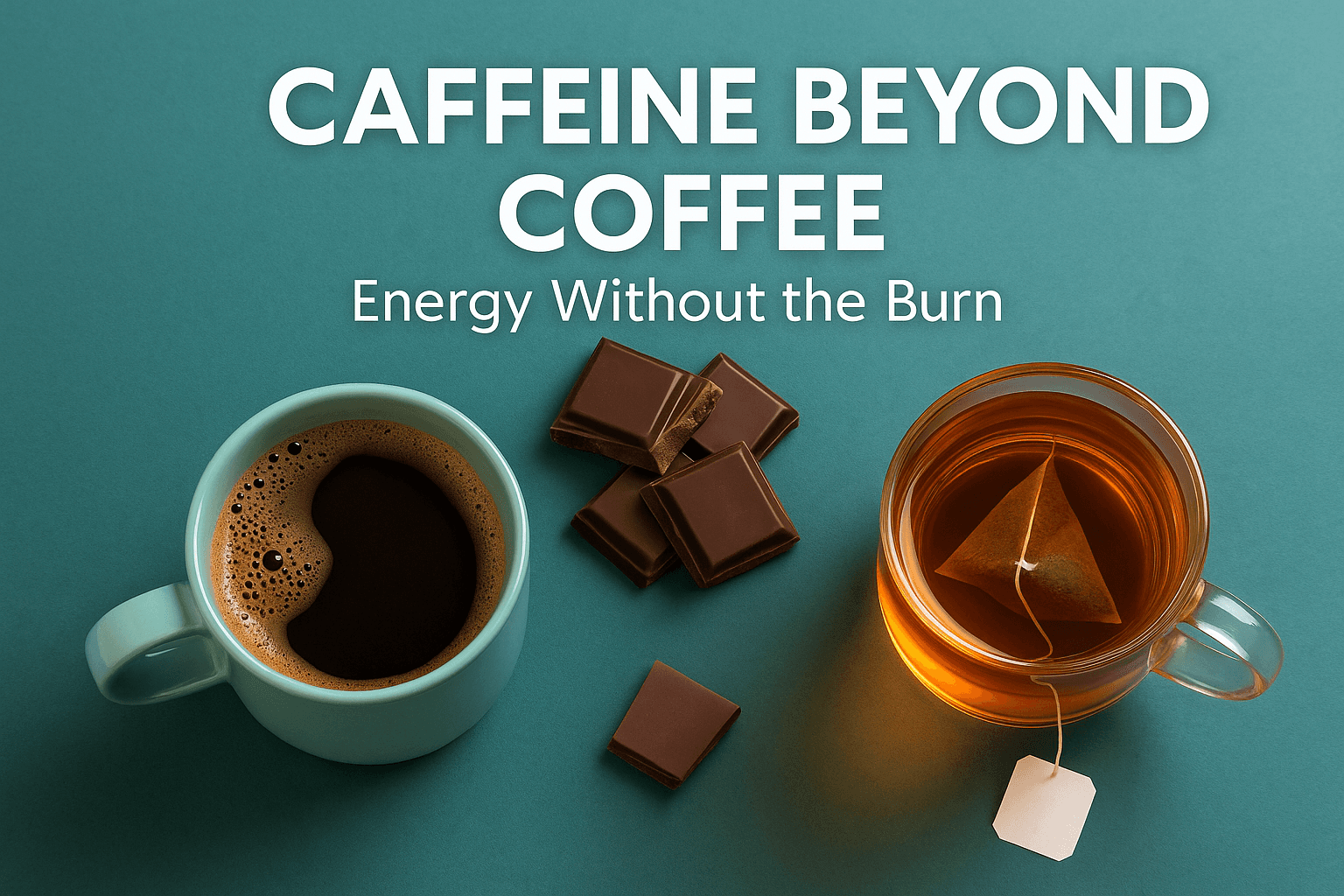
Coffee, tea, chocolate, caffeine pills, soda, and energy drinks all belong in the same caffeine conversation, but they do not belong in the same category.
Coffee is usually the strongest everyday source for many adults. It can be part of a balanced routine, but serving size matters. A small home-brewed cup and a large coffee-shop drink are not the same dose.
Tea usually provides less caffeine per cup than coffee, though this varies by type, strength, and steeping time. Many people experience tea as gentler, especially when coffee feels too sharp or acidic.
Dark chocolate is a mild source. It rarely replaces a cup of coffee for alertness, but it can contribute to the total, especially for people who are sensitive or already consuming caffeine elsewhere.
Caffeine pills are predictable but easy to misuse. A measured dose can be useful for some adults, but pills make it easier to take caffeine quickly, combine it with other stimulants, or ignore the body's warning signs.
Energy drinks and shots are the trickiest. Caffeine content can vary widely, and the drink may also contain sugar, other stimulants, or large serving sizes. They are especially concerning for children, teens, and anyone mixing them with alcohol or other drugs.
What Felt Common in Real Caffeine Stories
Across caffeine conversations, a few patterns repeat.
Some people use coffee to blunt hunger during fasting or dieting. Some rely on it to push through poor sleep. Some tolerate tea but not coffee. Some feel clear and focused with caffeine, while others feel shaky, irritable, or wired without being productive.
There is also a common trap: caffeine can hide the signal that something else needs attention.
If you are constantly tired, caffeine may help you function for a few hours, but it may also delay asking better questions:
- Am I sleeping enough?
- Is my sleep actually restorative?
- Am I eating enough earlier in the day?
- Am I using caffeine because I am overworked?
- Is anxiety making caffeine feel harsher?
- Is reflux worse when I drink coffee on an empty stomach?
This overlaps with broader daytime sleepiness and brain fog stories. Caffeine may help symptoms for a while, but it can also become a patch over a pattern that deserves attention.
The Stomach Question
People often ask whether caffeine from tea, chocolate, or pills gives the same benefits as coffee.
For the stomach, the answer is not always.
Coffee can bother some people for reasons that go beyond caffeine alone. Acidity, gastric stimulation, timing, portion size, and drinking it on an empty stomach can all matter. Someone with GERD, gastritis, Crohn's disease, irritable digestion, or a sensitive stomach may find coffee harder to tolerate than tea.
That does not mean coffee is "bad." It means your personal response counts.
If coffee causes burning, nausea, urgency, stomach pain, or reflux, it is reasonable to test a different source:
- smaller coffee serving
- coffee after food instead of on an empty stomach
- lower-acid coffee
- half-caf or decaf
- black or green tea
- herbal tea when you want the ritual without caffeine
For people whose reflux is tied to anxiety and sleep disruption, caffeine timing can matter too. That pattern connects with the GERD and anxiety loop, where food, fear, sleep, and symptoms can feed each other.
The Sleep Tradeoff
Caffeine's biggest hidden cost is often sleep.
You may not feel wired at bedtime and still sleep lighter. You may fall asleep but wake more often. You may sleep enough hours but feel less restored. Then the next morning you need more caffeine to function, which keeps the cycle going.
That loop can look like discipline from the outside:
coffee, work, coffee, push through, sleep badly, repeat.
But the body eventually notices.
Mayo Clinic and the FDA both describe up to 400 mg of caffeine per day as a common upper amount for most healthy adults, but that does not mean 400 mg is right for every person. Some people feel side effects at much lower amounts. Genetics, medication, anxiety, pregnancy, sleep debt, body size, and how often you consume caffeine can all affect tolerance.
The clock matters as much as the total.
A smaller morning dose may be fine. A late-afternoon dose may be the reason you keep waking at 3 a.m.
When Caffeine Starts Working Against You
Caffeine may be too much, or poorly timed, if you notice:
- insomnia or lighter sleep
- anxiety, irritability, or feeling "wired but tired"
- fast heartbeat or palpitations
- shakiness or muscle tremors
- stomach upset, reflux, or nausea
- frequent urination or bladder urgency
- headaches when you skip it
- needing more to get the same effect
Those signs do not mean everyone must quit caffeine. They mean the dose, source, timing, or overall pattern may need adjusting.
If caffeine causes chest pain, fainting, severe palpitations, severe anxiety, confusion, vomiting, or symptoms that feel unsafe, seek medical care promptly.
A More Practical Way to Use Caffeine
Instead of asking whether coffee, tea, or caffeine pills are universally best, I would ask:
What gives me the benefit with the least cost?
For some people, that is one morning coffee with breakfast.
For others, it is tea. For others, it is half-caf. For some, it is cutting caffeine after noon. For some, it means avoiding caffeine pills and energy drinks entirely because they make the dose too easy to overshoot.
Helpful experiments:
- Track total caffeine for three days, including tea, chocolate, soda, energy drinks, supplements, and some medications.
- Move caffeine earlier and watch sleep quality for a week.
- Try coffee after food instead of before food if reflux is an issue.
- Test tea or half-caf if coffee causes jitters.
- Avoid combining caffeine with other stimulants unless a clinician has said it is safe.
- Taper gradually if you want to cut down, because abrupt withdrawal can cause headaches and fatigue.
Special Caution: Pregnancy, Teens, Pills, and Energy Drinks
Some groups need a narrower caffeine conversation.
ACOG describes less than 200 mg per day as moderate caffeine consumption during pregnancy. If you are pregnant, trying to become pregnant, or breastfeeding, it is worth discussing caffeine with your clinician because caffeine also comes from tea, chocolate, soda, and some medications.
Children and teens should be more cautious, especially with energy drinks. The FDA notes that medical experts advise against energy drinks for children and teens because of caffeine and sugar levels.
Pure caffeine powder or highly concentrated liquid caffeine is a separate danger category. The FDA warns that these products can deliver toxic doses very easily and recommends avoiding them.
This is why "caffeine is caffeine" is technically true but practically incomplete.
The dose and delivery method can change the risk.
Closing Reflection
Caffeine can be useful.
It can make mornings easier, sharpen focus, and bring comfort through rituals like coffee or tea. But it can also become a quiet way of borrowing energy from later in the day.
The goal is not to defend coffee or attack it.
The goal is to notice your real pattern.
If coffee makes you feel good, does not disturb sleep, and fits your health situation, it may be a reasonable part of your routine. If coffee burns your stomach, speeds up your heart, worsens anxiety, or steals sleep, you are not failing. You may simply need a different source, a smaller dose, or a different timing window.
Caffeine is a tool.
The best version is the one that helps without making your body pay for it later.
References
- FDA: Spilling the Beans: How Much Caffeine is Too Much?
- FDA: Pure and Highly Concentrated Caffeine Warning
- Mayo Clinic: Caffeine: How Much Is Too Much?
- ACOG: Moderate Caffeine Consumption During Pregnancy
Disclaimer: This article is educational and experience-based, not medical advice. Caffeine tolerance varies by person, health history, pregnancy status, medications, sleep, anxiety, and individual sensitivity. If caffeine causes severe symptoms or you have questions about caffeine with a medical condition or medication, speak with a qualified healthcare professional.
Related Reading
Continue reading after Coffee vs. Caffeine: Do the Benefits Depend on the Source?

Motherhood Across the Whole Journey: What Real Lives Looked Like Behind the Milestones
A curated long-form motherhood journey built from real experiences across planning, childbirth, postpartum shock, and the invisible years after.
Two Hip Replacements, Twenty Years Apart and the Quiet Miracle of Living Without Pain
I lived through two hip replacements separated by twenty years. What changed was not only medicine but how pain, preparation, therapy and resilience reshaped my life.
Why Shaming Smokers Never Worked — and What Actually Might
A compassion-first look at smoking, nicotine addiction, relapse, quitting support, and why practical help works better than judgment.
Share on WhatsApp
2–3 line summary is copied. Tap to open WhatsApp and share.
 Tip: You can edit the text after it opens in WhatsApp.
Editorial Note
This article is prepared by the HealthUnspoken Editorial Team. Our articles may combine first-person submissions, public health education references, and commonly discussed experiences, then are edited for clarity and context.
The goal is reader awareness and education. This content is not a diagnosis or a treatment plan.
⚕️ Medical Disclaimer
The information provided in this article is for **educational and informational purposes only**. It should not be considered medical advice, diagnosis, or treatment. Always seek the advice of your physician or other qualified healthcare provider regarding any medical condition or treatment decisions.
🧾 Sources
HealthUnspoken articles may include first-person stories, editorial summaries of broadly discussed experiences, and public health education references. They are reviewed by the editorial team for clarity and educational context.
Reader Experiences Shared
Curated anonymized snippets from public health discussions, edited for readability.
I kept thinking coffee vs caffeine would settle on its own, but what helped most was tracking patterns and asking clearer questions in appointments.
The hardest part for me was uncertainty around coffee vs caffeine. Once I stopped changing everything at once, I could finally see what was helping.
I used to delay care because I was embarrassed about coffee vs caffeine. Earlier conversations would have saved me a lot of stress.
A second opinion around coffee vs caffeine changed my decisions completely. The issue was still real, but the plan felt calmer and more practical.
For me, progress with coffee vs caffeine came from boring consistency, not one dramatic fix. That mindset reduced panic a lot.
I learned to separate fear from facts with coffee vs caffeine. Writing down symptoms before visits made discussions more useful.