
When Food or Water Goes Down the Wrong Pipe: What Really Happens and How to Stay Safe
- Authors

- Name
- Author: HealthUnspoken Editorial Team
- Published on
- Last updated:
- Country
- Country
- 🌍Country: India
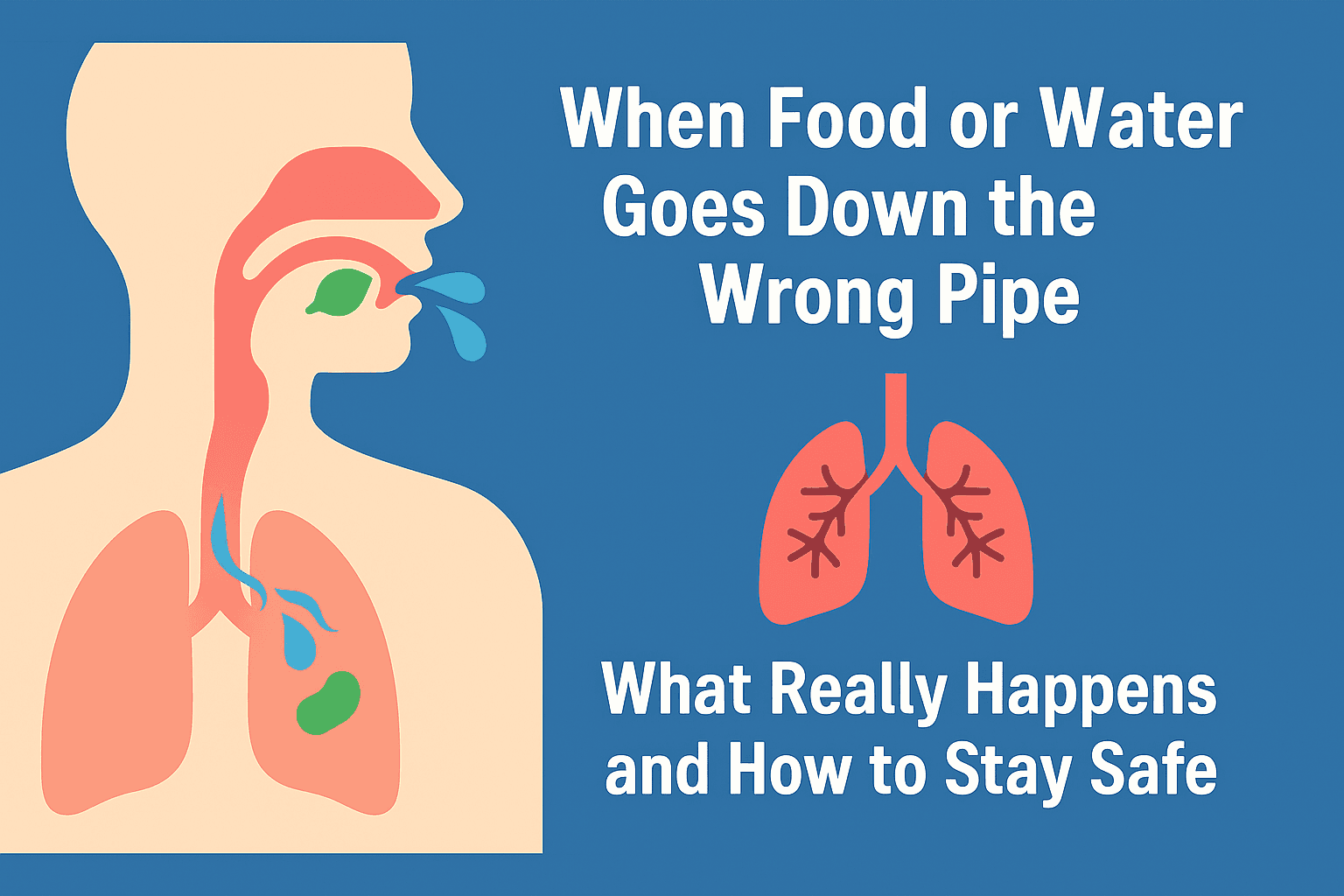
Most people know the feeling. You take a sip of water, it goes "down the wrong pipe," and your body erupts into coughing. It feels dramatic, then settles. In many cases that is the whole story. But when it keeps happening, especially around meals, tired evenings, older age, stroke, or neurological illness, it can mean more than a random awkward sip.
The important distinction is not between calm and panic.
It is between a one-off protective cough and a recurring swallowing pattern that needs attention.
Why the Cough Feels So Immediate
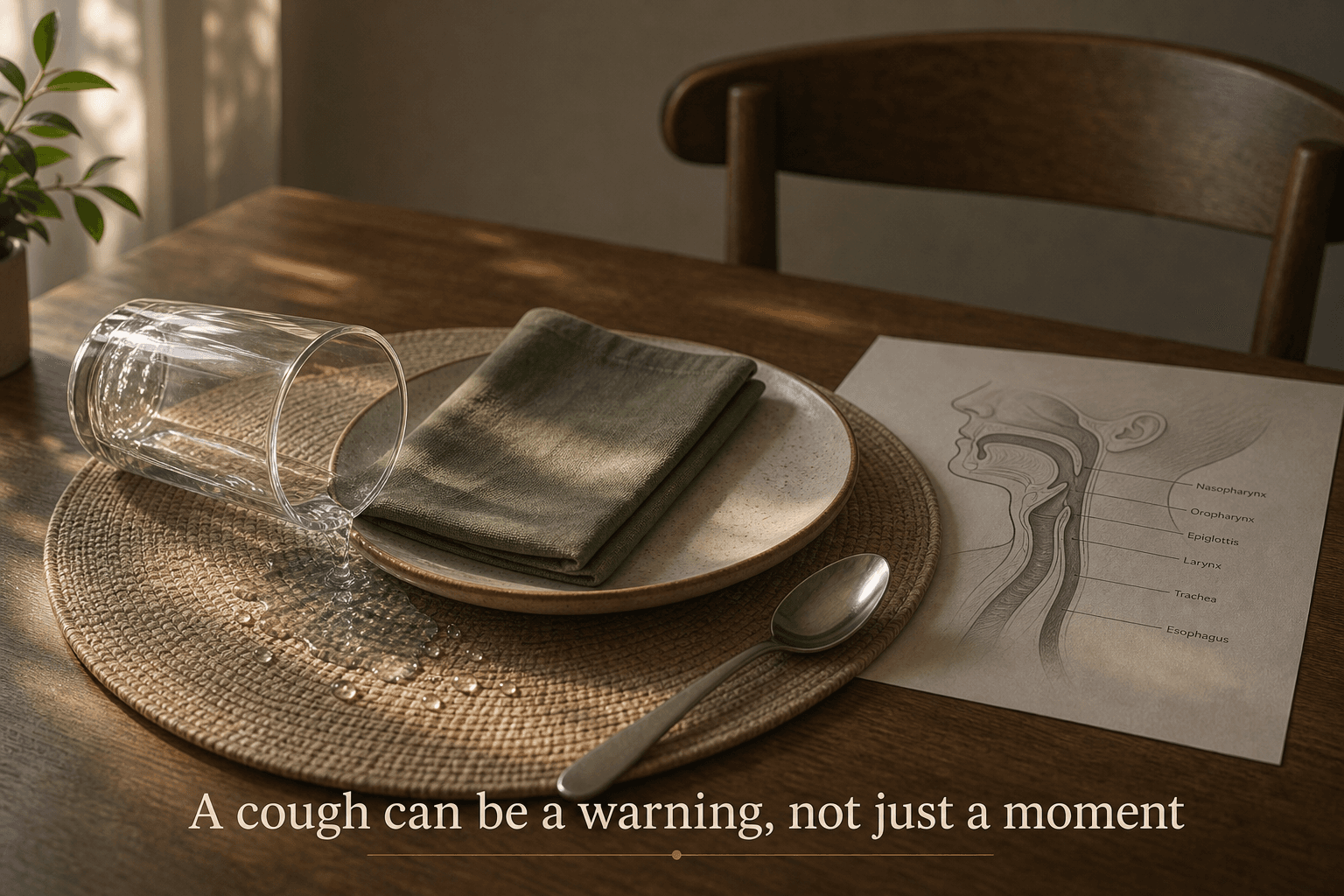
When swallowing works well, food and liquid move into the esophagus while the airway is protected by precise timing between the throat muscles, larynx, and epiglottis. If that timing slips, even for a moment, material can head toward the airway entrance and the body reacts fast.
That explosive cough is not failure.
It is protection.
The body is trying to clear the airway before material travels deeper.
That is why the moment feels so intense:
- sudden throat irritation
- an urgent cough burst
- watering eyes
- a feeling of having lost control for a second
- temporary inability to talk normally
For most healthy adults, an isolated episode clears and ends there.
The concern rises when the same pattern starts repeating.
What People Usually Assume
Common assumptions sound like this:
- "It happens to everyone, so it cannot mean anything."
- "If I can cough, I am always safe."
- "I was just drinking too fast."
- "It only happens when I laugh, so it is not worth mentioning."
Some of those explanations are true sometimes.
But clinicians start paying attention when episodes are not random anymore. Patterns matter more than one dramatic memory.
The real question is:
Is this an isolated moment, or is swallowing becoming less reliable?
What the Comment Patterns Suggested
I reran bounded MySQL samples for this topic using the same approach we used on earlier upgrades: small comments_high_quality pulls from both youtube and youtube_health_influencers, ordered by like_count DESC with per-database limits. I did not use raw comments in the article.
The useful patterns were consistent:
- some people were not describing a random water-cough moment at all, but repeated cough after eating or drinking
- some described esophageal dysphagia, hard-to-swallow pills, or even trouble swallowing saliva
- some connected the problem to reflux, a throat lump sensation, or breathing discomfort after big meals
- some had already seen clinicians but still felt dismissed, undertreated, or told it was "just anxiety"
- some had trouble identifying whether the issue was airway safety, reflux irritation, or food feeling stuck lower down
That mix matters because "wrong pipe" language often gets used for several different problems:
- a one-off cough reflex
- oropharyngeal swallowing difficulty
- esophageal swallowing trouble
- reflux-related irritation
- panic that starts after a frightening meal episode
Those are not identical, which is why repeated symptoms deserve actual evaluation instead of generic reassurance.
Patterns That Tend to Raise Concern
The original version of this article already captured a few common triggers, and they are still the right ones to watch:
- talking or laughing while swallowing
- rushed meals and large bites or gulps
- eating in a reclined position
- distraction from screens or stressful conversation
- fatigue, drowsiness, or late-evening meals
- weak swallow timing in older adults
Those factors matter because swallowing is not purely mechanical. It depends on posture, attention, coordination, mouth moisture, muscle timing, and alertness.
That is why environment changes risk so much.
A noisy, rushed, half-reclined dinner while exhausted is very different from a slower upright meal.
Who Needs More Caution
Anyone can choke or aspirate. Risk increases in certain groups:
- older adults with slower reflexes or frailty
- people after stroke
- people with Parkinson's disease, dementia, or other neurological conditions
- people with known dysphagia
- people recovering from major illness or surgery
- people who are heavily sedated, very sleepy, or cognitively impaired
- people with chronic dry mouth, poor dentition, or weak cough
Caregivers often feel the burden first. One bad episode can make every later meal feel tense. That reaction makes sense, but constant fear is not a swallowing plan.
What helps more is turning vague worry into observable patterns.
The Difference Between Aspiration and Aspiration Pneumonia
This distinction matters because people often hear the word "aspiration" and jump straight to pneumonia.
Aspiration means food, liquid, saliva, or stomach contents enter the airway.
Aspiration pneumonia is a lung infection that can happen after aspiration, especially in people who are older, frail, already ill, or aspirating repeatedly.
Not every wrong-pipe moment causes pneumonia.
But the risk gets more serious when there is:
- repeated coughing or choking with meals
- poor oral hygiene
- weak mobility or prolonged bed rest
- reduced alertness
- poor lung reserve
- fever or chest symptoms after aspiration events
That is why recurrence matters more than a single isolated incident.
Silent Aspiration Is Why Repetition Should Not Be Ignored
One reason swallowing problems get missed is that not all aspiration causes a dramatic cough.
Some people aspirate with very little obvious response. Clinicians sometimes call this silent aspiration. A person may not look panicked at all, yet still be having material reach the airway.
You cannot diagnose silent aspiration at home, but clues that swallowing may be less safe include:
- a wet or gurgly voice after eating or drinking
- frequent throat clearing
- unexplained coughing during meals
- recurrent chest infections
- fever after suspected swallowing events
- avoiding certain textures
- weight loss because eating feels difficult or stressful
That does not mean every throat clear is dangerous.
It means repeated symptoms deserve more than reassurance.
What Actually Helps at the Table
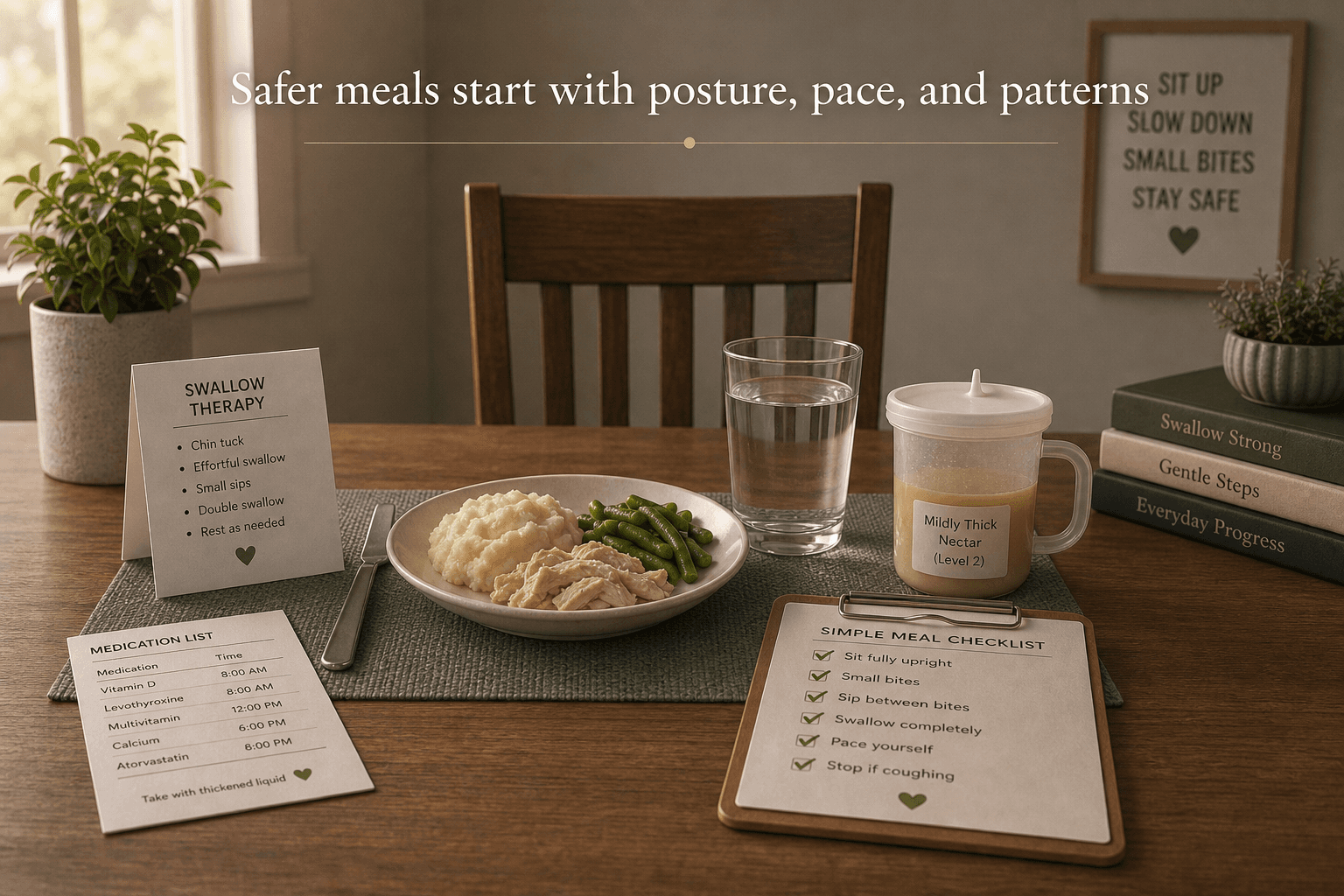
The most useful changes are often simple and repeatable rather than high-tech:
- Sit fully upright for meals and remain upright for a short time after.
- Slow the pace on purpose.
- Take smaller bites and sips.
- Avoid talking during active swallowing if episodes are frequent.
- Pause if coughing starts instead of pushing through.
- Reduce distraction when swallowing is unreliable.
- Keep the mouth comfortable and hydrated when dry mouth is part of the problem.
Some people also do better with texture changes, supervised meals, or specific swallow techniques recommended by a clinician or speech-language pathologist.
That last point matters because internet advice turns sloppy quickly. Thickened liquids, chin-tuck positioning, double-swallow instructions, and texture changes are not one-size-fits-all solutions.
They should match the person's actual swallowing problem.
What Often Makes It Worse
These patterns show up again and again in real life:
- large gulps when very thirsty
- trying to finish the meal quickly
- eating while reclined in bed or on the sofa
- mixing hard conversation or laughter with difficult swallowing
- ignoring repeated episodes because they feel embarrassing
- assuming all coughs are harmless if the person "seems okay" afterward
Embarrassment is an underrated reason people delay care.
Many adults do not mention swallowing trouble until meals start becoming frightening, nutrition drops, or a chest infection forces the issue.
What a Proper Swallowing Evaluation Usually Looks Like
People often imagine that assessment means immediate invasive testing. Sometimes it is more gradual than that.
A swallowing evaluation may begin with:
- a symptom history
- review of which foods or liquids trigger problems
- medication review
- discussion of stroke, neurological disease, reflux, dry mouth, or prior lung infections
- direct observation of swallowing
- referral for more detailed testing if needed
Depending on the situation, clinicians may involve a speech-language pathologist and consider an instrumental swallowing study.
The point is not to label every cough as disease.
The point is to stop guessing when a pattern is already forming.
A Better Caregiver Approach
If you care for an older adult or someone with known swallowing difficulty, the goal is not to make meals feel like a surveillance event.
It is to build a calmer routine:
- seat position checked before the meal starts
- easier pacing
- fewer competing tasks during difficult swallows
- awareness of fatigue timing
- short notes on what textures triggered trouble
- a clear escalation threshold for when to contact the clinician
That structure lowers panic and improves follow-up.
Without it, families often oscillate between denial and overreaction.
When to Seek Medical Evaluation
Please seek medical review if you notice:
- frequent coughing or choking during meals
- a wet or gurgly voice after swallowing
- food sticking or repeated throat-clearing with meals
- unexplained weight loss because eating is difficult
- repeated chest infections, fevers, or aspiration concern
- meal-time fear that reduces food or fluid intake
- known neurological disease with worsening swallow safety
Bring specifics if you can:
- what texture caused trouble
- whether it was food, pills, or liquids
- time of day
- posture
- recovery time
- whether voice or breathing changed afterward
That kind of detail helps more than saying only "sometimes they choke."
When It Is Urgent
Seek urgent care immediately if someone:
- cannot breathe well
- cannot cough effectively
- cannot speak during a choking event
- becomes blue, confused, weak, or unconscious
- has severe breathing distress after aspiration
- develops significant chest symptoms after a serious event
For a true choking emergency, use your local emergency number right away and follow trained first-aid guidance.
This article is not a substitute for emergency training.
FAQs
These are the wrong-pipe questions people search most often. The short answer is usually simple, but the safety details matter.
Does food and water go down the same pipe?
Food and water pass through the same shared throat area for a moment, but they are supposed to move into the esophagus, not the windpipe. The esophagus carries food and liquid to the stomach. The windpipe carries air to the lungs. Swallowing works because the throat muscles, vocal cords, and epiglottis help route each swallow away from the airway.
Do food and water go down the same pipe when swallowing feels normal?
They share the upper throat briefly, but a normal swallow sends both food and water into the food pipe. If water, crumbs, or food slip toward the airway instead, the body usually reacts with a sudden cough to push it back out.
What happens when water goes down the wrong pipe?
Water has entered the airway entrance instead of going cleanly into the esophagus. Most of the time, a strong cough clears it quickly. If coughing does not clear it, breathing feels difficult, the voice sounds wet, or chest symptoms continue afterward, treat it more seriously.
Water went down the wrong pipe. Will I be OK?
If you coughed hard, recovered fully, can breathe normally, and feel fine afterward, it is usually OK to watch. Get medical help if breathing is hard, coughing will not stop, fever develops, your voice stays wet or gurgly, or this keeps happening with meals.
Can water going down the wrong pipe kill you?
A small sip that triggers a good cough usually clears. The danger is different when the airway is blocked, the person cannot breathe or speak, the cough is weak, or material reaches the lungs and causes complications. Active choking or breathing distress is an emergency.
How does water go down the wrong pipe?
It can happen when swallow timing slips. Laughing, talking, rushing, drinking while distracted, lying back, drowsiness, reflux irritation, dry mouth, or swallowing disorders can all make the airway protection less reliable for a moment.
Why does water keep going down the wrong pipe?
Repeated episodes are the bigger signal. They can point to dysphagia, weak cough, reflux-related throat irritation, neurological conditions, medication sedation, poor denture fit, or eating and drinking too fast. If it is happening often, it is worth discussing with a clinician or speech-language pathologist.
What should I do if water goes down the wrong pipe?
Stop drinking, sit upright, and let yourself cough. Do not rush the next sip. Once it settles, take smaller sips and avoid talking while swallowing. If you cannot breathe, cannot speak, turn blue, or have a weak ineffective cough, seek emergency help.
Can food go down the wrong pipe?
Yes. Food can enter the airway instead of the esophagus. Food is usually more concerning than a tiny sip of water because it can block airflow or remain in the airway. If someone cannot speak, breathe, or cough effectively, follow emergency choking guidance immediately.
Food went down the wrong pipe. What should I watch for?
Watch for breathing trouble, weak coughing, noisy breathing, blue lips, chest discomfort, fever, wheezing, or a cough that does not go away. MedlinePlus notes that symptoms in the days after a choking event can suggest irritation, injury, or material entering the lung.
What happens when something goes down the wrong pipe?
Clinically, this is aspiration. Something that should have gone toward the stomach enters the airway instead. The body often coughs it out. In higher-risk people, or when it happens repeatedly, aspiration can contribute to choking, airway irritation, or lung infection.
How can I stop water from going down the wrong pipe so often?
Start with basics: sit upright, slow down, take smaller sips, avoid talking while swallowing, reduce distractions, and avoid drinking when very sleepy. If it still keeps happening, do not keep guessing at home. A proper swallowing evaluation can identify whether texture, posture, reflux, medication, or muscle timing is the real issue.
The Real Takeaway
Going down the wrong pipe once is usually an unpleasant interruption.
Going down the wrong pipe again and again is information.
The safest response is not panic and not dismissal.
It is pattern recognition, calmer meal habits, and proper swallowing assessment when recurrence appears. That protects lung health, nutrition, dignity, and confidence at the table.
If this topic overlaps with other swallowing safety concerns, you may also find this related article useful: The Scariest Thing About Choking Is That No One Hears It.
References
- MedlinePlus: Swallowing Disorders
- Cleveland Clinic: Aspiration
- MedlinePlus: Choking
- MedlinePlus: Choking - adult or child over 1 year
- National Institute on Deafness and Other Communication Disorders: Dysphagia
- NHS: Dysphagia (swallowing problems)
Disclaimer: This article is for educational purposes only and is not medical advice. Repeated coughing, choking, wet voice after meals, weight loss, fever, or suspected aspiration should be assessed by a qualified clinician. For active choking or breathing distress, seek emergency help immediately.
Related Reading
Continue reading after When Food or Water Goes Down the Wrong Pipe: What Really Happens and How to Stay Safe

Motherhood Across the Whole Journey: What Real Lives Looked Like Behind the Milestones
A curated long-form motherhood journey built from real experiences across planning, childbirth, postpartum shock, and the invisible years after.

Two Hip Replacements, Twenty Years Apart and the Quiet Miracle of Living Without Pain
I lived through two hip replacements separated by twenty years. What changed was not only medicine but how pain, preparation, therapy and resilience reshaped my life.

Why Shaming Smokers Never Worked — and What Actually Might
A compassion-first look at smoking, nicotine addiction, relapse, quitting support, and why practical help works better than judgment.
Share on WhatsApp
2–3 line summary is copied. Tap to open WhatsApp and share.
 Tip: You can edit the text after it opens in WhatsApp.
Editorial Note
This article is prepared by the HealthUnspoken Editorial Team. Our articles may combine first-person submissions, public health education references, and commonly discussed experiences, then are edited for clarity and context.
The goal is reader awareness and education. This content is not a diagnosis or a treatment plan.
⚕️ Medical Disclaimer
The information provided in this article is for **educational and informational purposes only**. It should not be considered medical advice, diagnosis, or treatment. Always seek the advice of your physician or other qualified healthcare provider regarding any medical condition or treatment decisions.
🧾 Sources
HealthUnspoken articles may include first-person stories, editorial summaries of broadly discussed experiences, and public health education references. They are reviewed by the editorial team for clarity and educational context.
Reader Experiences Shared
Curated anonymized snippets from public health discussions, edited for readability.
I kept thinking food water goes would settle on its own, but what helped most was tracking patterns and asking clearer questions in appointments.
The hardest part for me was uncertainty around food water goes. Once I stopped changing everything at once, I could finally see what was helping.
I used to delay care because I was embarrassed about food water goes. Earlier conversations would have saved me a lot of stress.
A second opinion around food water goes changed my decisions completely. The issue was still real, but the plan felt calmer and more practical.
For me, progress with food water goes came from boring consistency, not one dramatic fix. That mindset reduced panic a lot.
I learned to separate fear from facts with food water goes. Writing down symptoms before visits made discussions more useful.