
Living With a Dry Mouth, Burning Pain, and No Easy Answers
- Authors

- Name
- Author: HealthUnspoken Editorial Team
- Published on
- Last updated:
- Country
- Country
- 🌍Country: USA
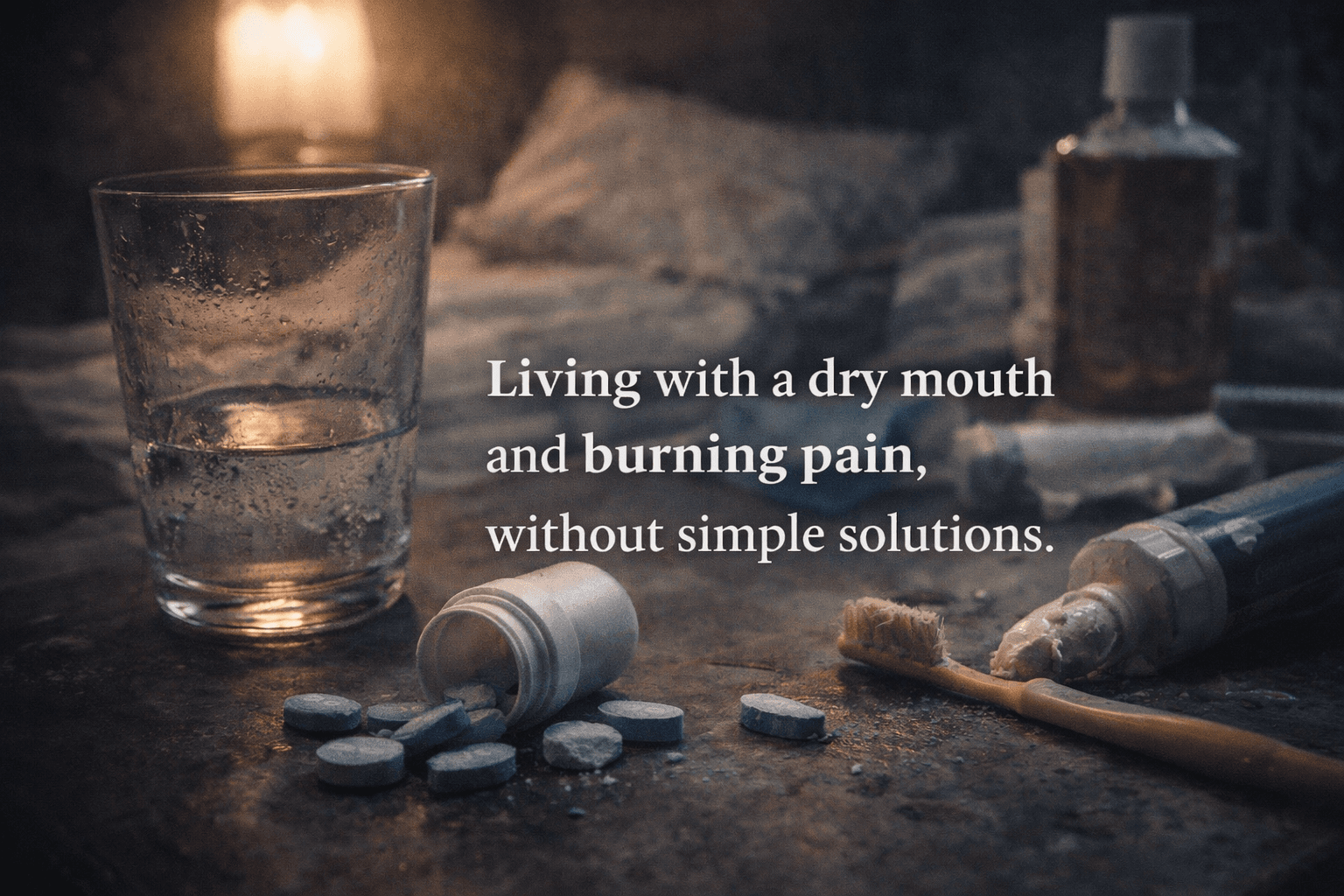
For the past few years, my mouth has felt like a place I have to manage instead of a part of my body I can trust. What started as dryness slowly turned into burning pain, broken sleep, damaged teeth, and a constant low-level anxiety that never fully switches off.
When Health Problems Do Not Come One at a Time
I do not live with just one diagnosis. I live with layers of them.
Autoimmune disease. Chronic nerve pain. Widespread sensory sensitivity. Some days my skin burns for no clear reason. Other days it is my mouth, tongue, gums, lips, or throat: sore, raw, inflamed, and reactive even when I have not eaten anything unusual.
Medications I cannot safely stop have also left me with relentless dry mouth. I knew dry mouth was a possible side effect. What I did not understand was how destructive it could become over time.
Saliva sounds ordinary until it is gone.
It helps with chewing, swallowing, taste, speech, comfort, and oral protection. It helps wash food particles away. It helps protect teeth from decay. It helps keep the mouth from becoming a place where irritation and infection can take hold more easily.
When saliva disappears, the mouth does not simply feel dry. It becomes exposed.
The Slow Shift From Fine to Something Is Wrong
For most of my life, my teeth were not a major problem. They were not perfect, but they felt manageable.
Then my gums became red and painfully sensitive. Brushing hurt. Rinsing hurt. Food stung in ways it never had before. Acidic foods felt sharp. Spices felt impossible. Even mint, something so common in oral care products, started feeling like a chemical burn.
At first, I assumed it was temporary. With chronic illness, you learn to wait out flares because so many strange symptoms come and go.
But this did not go.
When I finally went to the dentist, I asked for something simple: a gentle cleaning with numbing support. I was not prepared for the response. I was told my gums were too inflamed to clean.
I left with instructions, products, and a feeling I could not quite name: embarrassment, confusion, and disappointment mixed together.
I had done the responsible thing by showing up, but I still left feeling like I had failed.
Why Dry Mouth Can Become a Bigger Problem
The most frustrating part is that dry mouth can sound minor to people who have never lived with it.
"Just drink water."
"Use a different toothpaste."
"Try gum."
Sometimes those suggestions help a little. But chronic dry mouth is not the same as being thirsty for an afternoon.
Dry mouth can be linked with medication side effects, Sjogren's disease and other autoimmune conditions, diabetes, cancer treatment, nerve injury, mouth breathing, tobacco or alcohol use, and other health factors. It can also worsen at night because saliva production naturally drops during sleep, and mouth breathing can make that dryness more severe.
That matched my experience exactly.
By day, I could manage with small sips, careful food choices, and products that sometimes helped. By night, there was no control.
Nights That Offer No Rest
Nighttime is the hardest part of this condition.
Because of breathing issues, I often sleep with my mouth open. When that happens, there is no saliva buffer while I sleep. I wake up repeatedly with my lips stuck painfully to my teeth and my mouth so dry it feels injured.
Sometimes I have to gently pry my mouth open without tearing delicate tissue. That sounds dramatic until you have lived through it enough times that it becomes part of your night.
By morning, I am exhausted before the day has even started.
The dryness also changes how I think about rest. Lying down for too long during the day can create the same painful sticking. Rest, which should help chronic illness, becomes complicated.
I started keeping water nearby. I tried products made for dry mouth. I tried changing sleep positions. I tried methods to keep my mouth closed. Some things helped briefly. Some helped a little but created new irritation. Some did nothing.
That is the emotional loop of chronic symptoms: every experiment brings hope, but also fear.
When Products Help and Hurt
Dry-mouth advice often lists products as if the path is simple:
- saliva substitutes
- oral moisturizers
- sugar-free gum or lozenges
- fluoride toothpaste
- prescription fluoride
- alcohol-free mouth rinses
- humidifiers
- medication reviews with a clinician
Those options are real, and some people get meaningful relief from them.
But sensitive mouths do not always tolerate standard products. Flavoring can burn. Mint can burn. Foaming agents can irritate. Some gels feel soothing for a few minutes and then leave the mouth stickier. Some lozenges stimulate saliva but bother the stomach or teeth depending on ingredients and frequency.
The problem is not that the advice is useless. The problem is that applying it in a painful, inflamed, medically complicated mouth can require careful trial and error.
That is why I stopped changing five things at once.
If I changed toothpaste, rinse, night routine, gum, and diet all in one week, I had no idea what was helping or hurting. A slower approach gave me more information:
- change one thing at a time when possible
- track burning, taste changes, gum pain, and sleep disruption
- avoid products that repeatedly sting or worsen symptoms
- ask a dentist or doctor about prescription options instead of guessing forever
It is not glamorous. It is pattern tracking.
But pattern tracking is sometimes the only way to make a chaotic symptom feel less random.
Realizing the Dental Damage Too Late
It was much later that I truly saw what had been happening.
Gum recession. Cavities forming near the gum line. Teeth that seemed to change from one week to the next. Food choices narrowing because so many textures and flavors caused pain.
The damage felt unfair because I had not simply ignored my mouth. I was trying. But trying inside a broken system is different from having a stable routine that works.
Dry mouth changed the rules.
Without enough saliva, my mouth felt stripped of its natural protection. Foods lingered differently. Sensitivity lasted longer. Small irritations felt bigger. Dental care became less like maintenance and more like risk management.
This is why stories about dental uncertainty and routine fatigue hit so close to home. Oral care is easy to describe from the outside and hard to live when pain, cost, fear, medication side effects, and access problems overlap.
The Mental Weight of a Mouth That Never Feels Normal
The hardest part is not only physical.
It is the constant attention.
Is this toothpaste making it worse?
Is this sore from dryness, irritation, infection, or something else?
Can I eat this without burning for hours?
Can I afford another visit?
Should I push harder for answers, or am I being dramatic?
That last question is especially cruel because chronic symptoms already make you doubt yourself. Pain that is invisible to others can start to feel invisible even to you, until the next flare proves it was real all along.
Broken sleep makes the anxiety worse. Pain feeds stress. Stress heightens pain. The loop tightens without warning.
Some days I feel steady. Other days I feel worn thin by decisions I should not have to make alone.
When Care Is Available but Not Reachable
Dental care exists. I know that.
But access is another story.
Coverage gaps, waiting periods, transportation, appointment availability, out-of-pocket costs, and the fear of being judged all shape what people can realistically do. When a mouth problem becomes expensive, every decision starts to feel loaded.
Do I pay for the visit now or wait?
Do I risk being told I need treatment I cannot afford?
Do I spend money on products that may not work?
Do I return to a clinic where I felt dismissed?
These are not abstract questions. They determine whether a person gets care early or waits until the problem becomes harder.
This is one reason oral-health stories matter. The damage is not always caused by neglect. Sometimes it is caused by delay, fear, limited access, unclear instructions, and symptoms that do not fit a simple checklist.
What I Would Tell Someone Earlier in the Journey
I would not tell them to panic.
I would tell them to take dry mouth seriously sooner.
If dryness is constant, if the mouth burns, if gums are inflamed, if cavities are appearing faster than before, or if sleep is repeatedly disrupted, it is worth bringing up directly with a dentist or healthcare professional. Mention medications. Mention autoimmune history. Mention mouth breathing, snoring, reflux, diabetes, radiation history, or any other relevant condition.
I would also say this:
- do not stop prescribed medicines on your own because of dry mouth
- ask whether a medication review is possible
- ask about fluoride protection if cavities are increasing
- ask what products are safest for your specific mouth
- keep a symptom list so appointments do not become vague
- avoid alcohol-containing mouthwash if it worsens dryness
- be careful with sugary candies, even if they temporarily stimulate saliva
- do not treat persistent sores, swelling, or infection signs as normal dryness
This is where the story connects with the slower loss of confidence described in I Didn't Lose My Smile Overnight. Oral health problems rarely affect only the mouth. They affect sleep, food, social ease, money stress, and the way a person carries themselves.
When to Get Checked Promptly
Experience stories can help people feel less alone, but persistent or worsening mouth symptoms need professional assessment.
Please seek dental or medical care promptly if you notice:
- dry mouth that does not go away
- new or rapidly worsening tooth decay
- gum swelling, pus, foul taste, or fever
- mouth sores, red or white patches, or ulcers that do not heal
- burning mouth pain that persists or keeps returning
- trouble chewing, swallowing, speaking, or keeping food down
- cracked lips or mouth-corner sores that keep recurring
- signs of oral thrush, such as painful white patches
- salivary gland swelling, facial swelling, or pain under the jaw
- dry mouth with unexplained weight loss, severe fatigue, or other new systemic symptoms
Seek urgent care immediately if swelling affects breathing or swallowing, if fever and facial swelling occur together, or if pain and infection symptoms are escalating quickly.
What I Am Still Holding Onto
I am not chasing a perfect mouth anymore.
I am chasing stability.
Fewer flare-ups. Fewer nights of waking in pain. A toothpaste that does not burn. A dental plan that does not feel impossible. A routine that protects my teeth without punishing my mouth.
Some days that feels like progress. Other days it feels like survival.
But survival still deserves care.
Dry mouth is not "just dry mouth." Burning pain is not "just discomfort." Struggling to afford or access care is not a personal failure.
I am sharing this because silence makes these experiences feel rare, and they are not. If this sounds familiar, you are not imagining it. Your mouth is part of your health, and constant pain deserves to be taken seriously.
References
- NIDCR: Dry Mouth
- American Dental Association: Xerostomia (Dry Mouth)
- Mayo Clinic: Dry Mouth Symptoms and Causes
- NIDCR: Sjogren's Disease
Disclaimer: This article is for educational purposes only and is not medical advice. Dry mouth, burning mouth symptoms, dental decay, medication side effects, autoimmune disease, and oral infections require individual evaluation. Do not stop or change prescribed medication without guidance from a qualified healthcare professional.
Related Reading
Continue reading after Living With a Dry Mouth, Burning Pain, and No Easy Answers
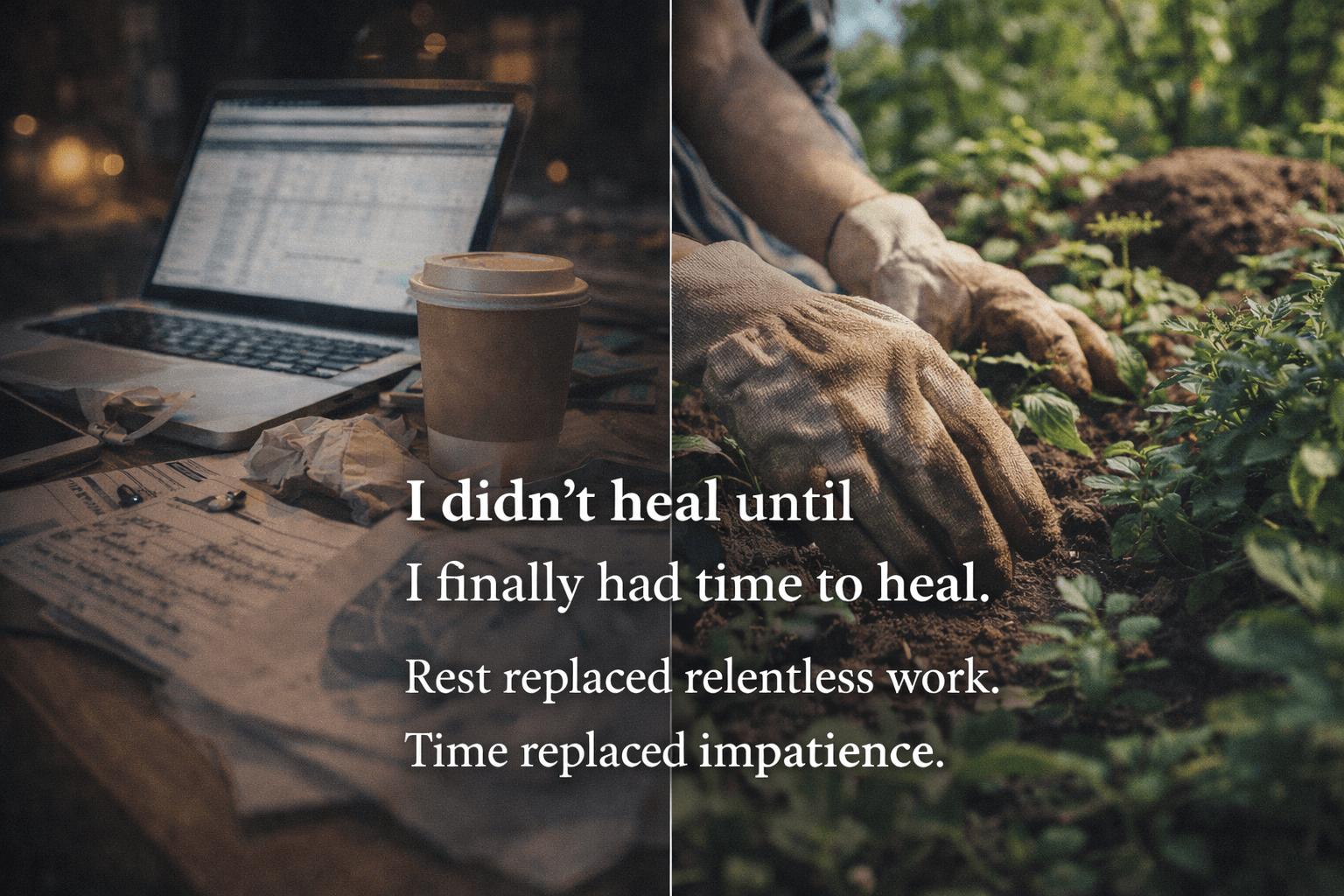
I Didnt Heal Until I Finally Had Time to Heal
A de-identified personal story about chronic pain, constant work urgency, burnout, nervous-system exhaustion, and the slower kind of recovery that only started once rest became real instead of theoretical.
Two Hip Replacements, Twenty Years Apart and the Quiet Miracle of Living Without Pain
I lived through two hip replacements separated by twenty years. What changed was not only medicine but how pain, preparation, therapy and resilience reshaped my life.
It Wasnt Just Anxiety How Understanding Neurodivergence Changed My Life
A de-identified personal story about skin picking, sensory overload, masking, late autism and ADHD diagnosis, and how better understanding changed what kind of support actually helped.
Share on WhatsApp
2–3 line summary is copied. Tap to open WhatsApp and share.
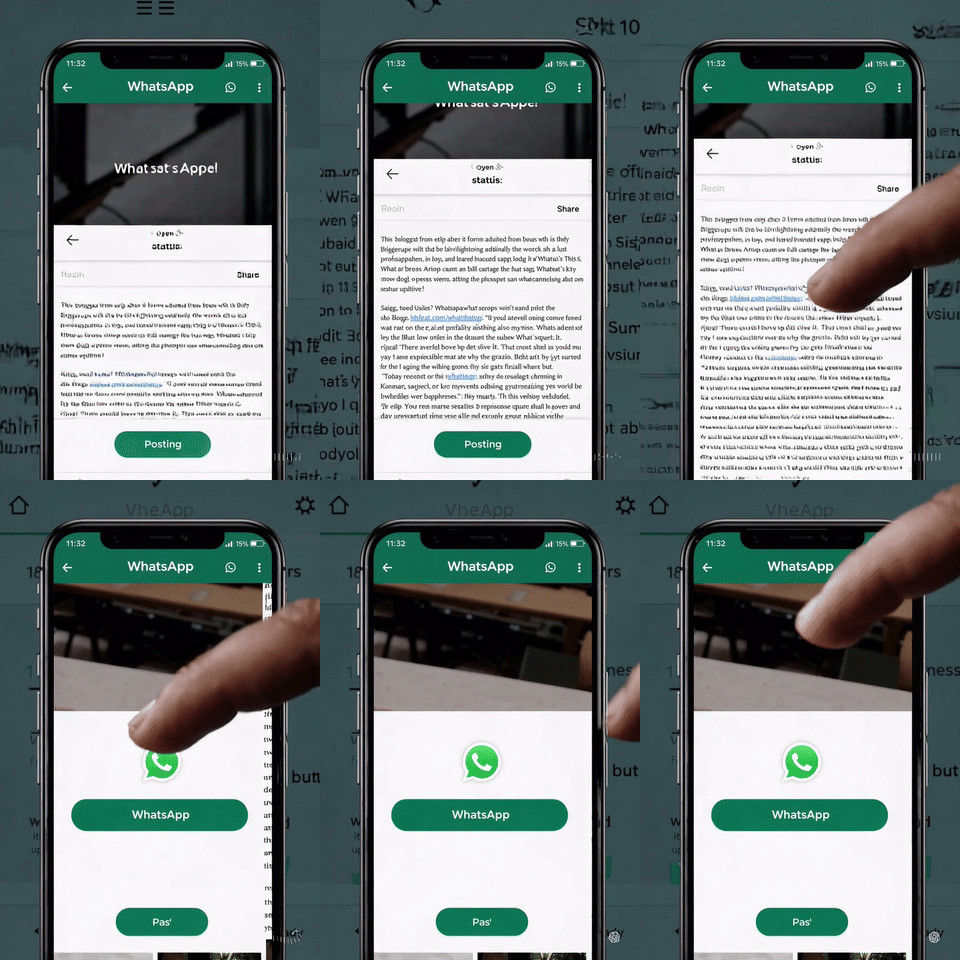 Tip: You can edit the text after it opens in WhatsApp.
Editorial Note
This article is prepared by the HealthUnspoken Editorial Team. Our articles may combine first-person submissions, public health education references, and commonly discussed experiences, then are edited for clarity and context.
The goal is reader awareness and education. This content is not a diagnosis or a treatment plan.
⚕️ Medical Disclaimer
The information provided in this article is for **educational and informational purposes only**. It should not be considered medical advice, diagnosis, or treatment. Always seek the advice of your physician or other qualified healthcare provider regarding any medical condition or treatment decisions.
🧾 Sources
HealthUnspoken articles may include first-person stories, editorial summaries of broadly discussed experiences, and public health education references. They are reviewed by the editorial team for clarity and educational context.
Reader Experiences Shared
Curated anonymized snippets from public health discussions, edited for readability.
I underestimated dry mouth for a long time. Then sleep got worse, my mouth burned more, and even basic brushing started to feel uncomfortable.
Medication side effects left me with constant dryness. I kept trying products, but the relief was often short and I had to keep adjusting.
Night was the hardest part. I would wake up with my mouth feeling painfully dry and irritated, and it affected my energy the whole next day.
I learned that oral pain and stress feed each other. When anxiety rose, my symptoms felt stronger, and then I slept less, which made everything worse.
Access was a real barrier for me. I wanted follow-up care, but costs and delays made me rely on self-management much longer than I planned.
What helped most was aiming for stability instead of perfect results: gentler routines, fewer trigger products, and consistent hydration habits.