
Will God Help You to Be Healthy? My Experience With Worry, Sleep, and Faith

- Authors

- Name
- Author: HealthUnspoken Editorial Team
- Published on
- Last updated:
- Country
- Country
- 🌍Country: Sweden
For years, my mind felt as if it had learned only one skill: worry. I could be working, eating, driving, sitting with family, or lying in bed, and a new concern would arrive before the last one had finished.
It was not always a dramatic fear. Often it was ordinary life pressure stretched until it felt unmanageable.
Bills. Work. My daughter's school. Food. Health. The future. Whether I was doing enough. Whether I was failing quietly and would only discover it too late.
The topics changed, but the habit remained the same: my mind kept searching for danger.
This article is not a claim that faith cures anxiety or insomnia. It is one person's experience of how faith practices, singing, writing, service, and a steadier routine helped reduce the noise in my mind. For some people, spiritual practices are part of coping. For others, they are not. Either way, ongoing anxiety, depression, panic, or severe sleep loss deserves real support.
The Kind of Worry That Follows You Into Bed
The worst time was night.
During the day, worry could hide behind activity. I had work to do, messages to answer, errands to finish, and responsibilities that kept my body moving. But when the house became quiet, my mind did not become quiet with it.
I tried common advice:
- keep the phone away
- dim the lights
- breathe slowly
- tell myself to relax
- lie still and wait for sleep
Sometimes those things helped a little. Often they did not. The moment I had no distraction, my thoughts grew sharper.
The cruel part of sleepless worry is that you start worrying about sleep itself. One thought becomes many:
- "If I do not sleep now, tomorrow will be ruined."
- "Why can everyone else rest so easily?"
- "What if this becomes my normal?"
- "What if something is wrong with me?"
That loop can make the bed feel less like a place of rest and more like a place where the mind reports every unfinished problem.
What I Heard in Other People's Stories
Before rewriting this article, I reviewed anonymized patterns from health-related comment data around anxiety, worry, sleep, prayer, and coping. I did not use or publish raw comments. I looked for repeated themes.
Several patterns stood out.
People often described anxiety as something outsiders misunderstood. From the outside, it could look like overthinking, laziness, avoidance, or weakness. From the inside, it felt like constant scanning: for judgment, danger, illness, failure, or loss of control.
Sleep came up again and again, but not only as a health tip. People treated sleep as proof of whether their life was stable. When sleep improved, they felt more capable. When sleep broke, every other symptom felt louder.
Spiritual coping also appeared in mixed ways. Some people said prayer helped them feel less alone. Some linked faith with action: prayer, then therapy; prayer, then better habits; prayer, then showing up for the next difficult step. Others shared strong claims that spiritual practice alone fixed their struggle. Those claims need caution. A practice that helps one person can still be unsafe if it convinces another person to delay care.
The most useful pattern was not "faith versus care." It was this:
People need something that interrupts the spiral without shaming them for having one.
For me, devotional songs became one of those interruptions.
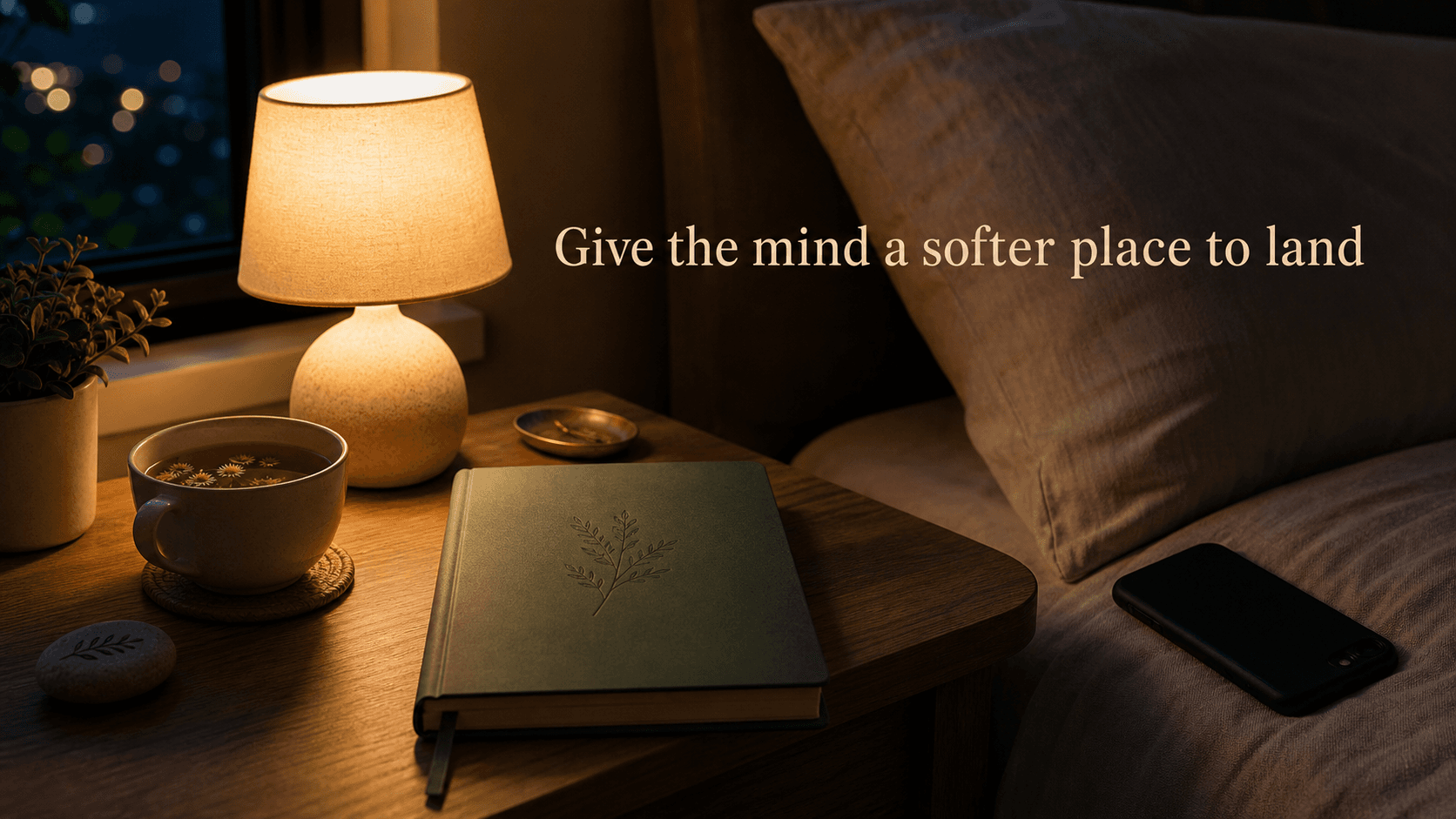
The Night Devotional Songs Helped
One night, while putting my daughter to bed, I started singing devotional songs.
Not quietly. I sang properly, with my full voice. One song became another, then another. By the fourth song, both of us were yawning.
Within minutes, we were asleep.
At first, I thought it was coincidence. Maybe we were simply exhausted. But I tried again on another night. The same thing happened. Not every night perfectly, but often enough that I noticed a pattern: singing changed the direction of my attention.
Instead of arguing with my worries, I gave my mind a different rhythm.
The words gave me meaning. The melody gave my breathing a slower pace. The repetition gave my thoughts a path to follow. The shared moment with my daughter made the room feel safe instead of lonely.
That mattered.
Many calming practices work partly because they change what the nervous system is doing. Slow breathing, meditation, prayer, singing, gentle music, journaling, and bedtime routines can all give the mind a signal that it is allowed to step down from alert mode. The exact practice may differ. The principle is similar: the body often needs repeated cues of safety before the mind believes it.
What Faith Changed for Me
Faith did not remove every problem from my life.
The bills still existed. Work still had pressure. Parenting still came with responsibility. Health questions still needed practical decisions.
What changed was the feeling that I had to carry every fear alone.
When I prayed, sang, or thought about God, I was not always asking for a miracle. Sometimes I was only admitting the truth: "This is too heavy for me to hold by myself tonight."
That sentence created space.
It helped me stop treating every worry as an emergency that needed immediate solving. Some worries needed action the next day. Some needed a conversation. Some needed planning. Some were simply fear wearing the costume of responsibility.
Faith helped me separate those categories.
It also made me ask a harder question: what kind of life was I building?
Purpose Reduced a Different Kind of Stress
Around this period, I started questioning my work.
I am a software developer. Earlier, my motivation had become narrow: earn more, buy more, upgrade more, prove more. There is nothing wrong with earning, but my mind had turned every goal into a comparison.
That comparison made peace feel impossible.
Slowly, my focus shifted. I began asking:
- Can I build something useful?
- Can my work reduce confusion for someone?
- Can I create something that serves instead of only sells?
This did not magically remove stress, but it changed the emotional background of my work. Purpose made effort feel less empty. It gave me a reason to continue that was not only money or approval.
For me, that mattered for health because worry was not only happening at night. It was being produced during the day by the way I measured my own worth.
Writing Helped Me Stop Carrying Everything Privately
Another small practice helped: writing things down.
At first, I wrote privately. Later, I began posting some thoughts online. I was not trying to become popular. I simply needed to stop storing every worry inside my head.
Writing changed vague fear into words.
Once a fear had words, I could see it more clearly. Sometimes it was practical: "I need to pay this bill." Sometimes it was emotional: "I feel like I am not enough." Sometimes it was distorted: "Everything will collapse," when the real situation was difficult but not hopeless.
That distinction helped.
Not everyone needs to post publicly. In fact, private writing is often safer for sensitive topics. But some form of expression matters: a journal, a message to a trusted friend, a conversation with a counselor, a prayer, or a note before a doctor's visit.
The point is not performance. The point is release and clarity.
Where Faith Needs Boundaries
This is the section I would add if I could speak to my past self more carefully.
Faith can support mental health, but it should not become a reason to ignore serious symptoms.
If someone is sleeping poorly for many weeks, having panic attacks, feeling persistently depressed, using alcohol or substances to cope, losing the ability to function, or having thoughts of self-harm, they need more than encouragement. They need support from qualified people.
That support might include:
- a primary care visit to rule out physical contributors
- counseling or therapy
- sleep evaluation when symptoms suggest a sleep disorder
- medication discussion when anxiety or depression is significantly impairing life
- community, family, or faith-based support that does not shame the person
Faith and care can work together. A prayer can happen before a therapy session. A devotional song can be part of a sleep routine. A religious community can offer companionship while a clinician helps with treatment. These are not enemies.
The risky version is when someone says, directly or indirectly, "If you really had faith, you would not need help."
That is not compassion. It can make people hide their symptoms until they are worse.
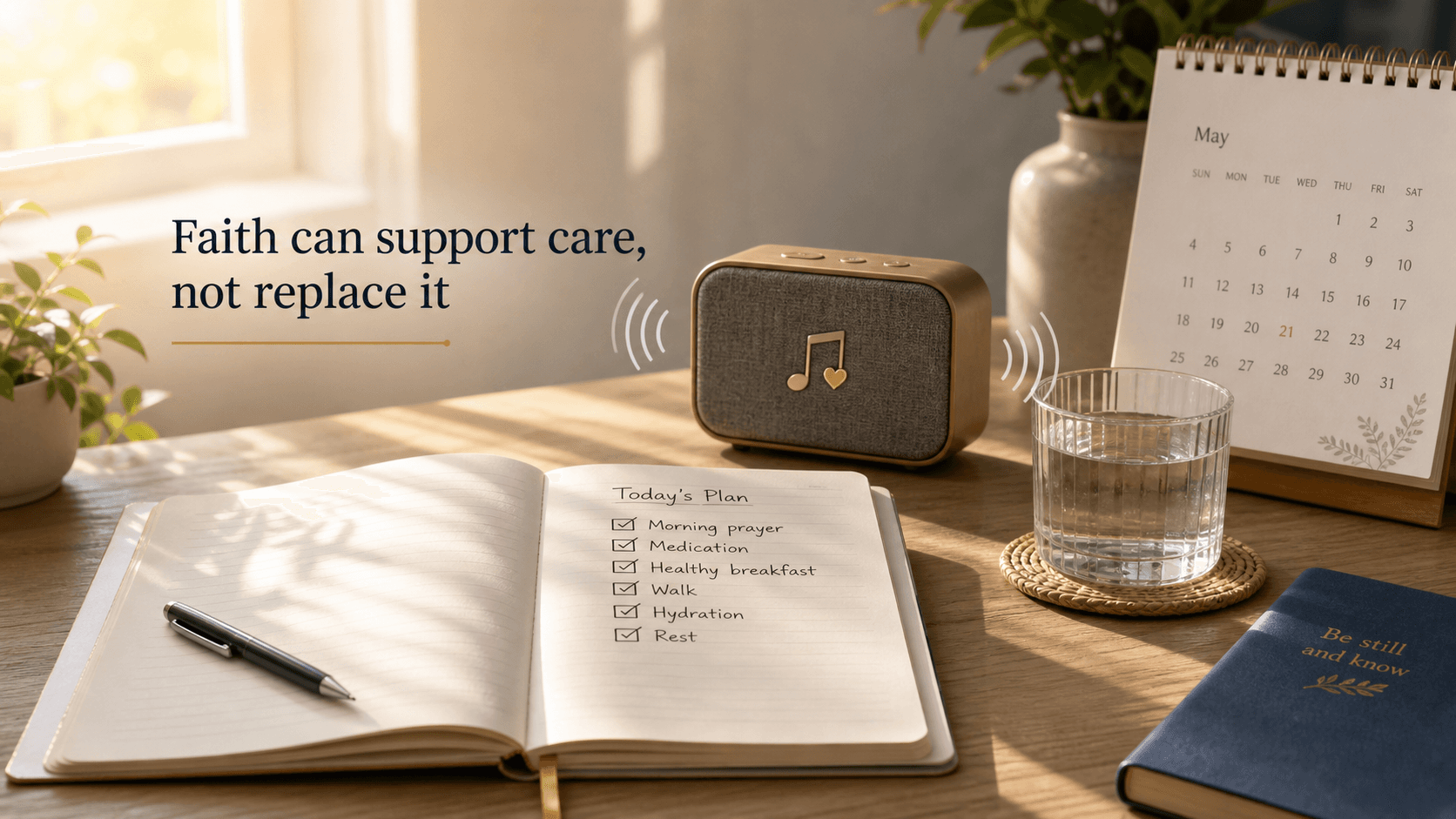
A Gentle Routine That Helped Me
The routine that helped me was not complicated.
At night, I tried to make the room less stimulating. I kept the phone away from my hand. I sang devotional songs with my daughter when it felt natural. If my thoughts were too loud, I wrote a few lines instead of arguing with them silently.
During the day, I tried to move toward purpose:
- do one useful task before checking for approval
- avoid turning every problem into a life verdict
- speak worries out loud earlier
- treat sleep as preparation, not laziness
- build something that serves people
- remember that peace is also a form of health
None of this made me perfectly calm. But it made the worry less total.
That is an important difference. Healing is not always the disappearance of every symptom. Sometimes it is the return of enough steadiness to live with more clarity.
When to Seek Help
Consider speaking with a qualified healthcare professional or mental health professional if worry, low mood, panic, or poor sleep:
- lasts for weeks and does not improve
- interferes with work, school, parenting, relationships, or daily tasks
- causes repeated panic attacks or intense physical symptoms
- leads to alcohol, sedative, or substance use to cope
- comes with loud snoring, choking during sleep, severe daytime sleepiness, or unsafe drowsy driving
- comes with hopelessness, self-harm thoughts, or thoughts that others would be better off without you
If there is immediate danger, thoughts of self-harm, or fear that you may harm yourself or someone else, seek emergency help now through local emergency services or a crisis hotline in your country.
What I Believe Now
So, will God help you to be healthy?
My honest answer is: faith helped me become healthier, but not because every problem disappeared.
Faith helped me pause. It helped me sing when my mind wanted to spiral. It helped me write instead of silently carry everything. It helped me think about service instead of only comparison. It helped me stop treating every negative thought as something I had to solve alone at midnight.
But I also believe this: God can help through people, routines, doctors, therapists, rest, honest conversation, and practical care.
For me, devotional songs were not an escape from real life. They were a doorway back into it with a calmer mind.
That is the kind of health I trust more now: not only a body that functions, but a life where the mind has a softer place to land.
References
- National Institute of Mental Health: Anxiety Disorders
- CDC: About Sleep
- National Center for Complementary and Integrative Health: Meditation and Mindfulness
- MedlinePlus: Insomnia
Related HealthUnspoken Reading
Disclaimer: This article shares a personal experience and general educational context. It is not medical advice, mental health diagnosis, sleep treatment, or spiritual counseling. Anxiety, depression, panic, insomnia, and sleep disorders can have many causes and may need professional support. If symptoms are persistent, severe, or unsafe, please seek help from a qualified professional or emergency service.
Related Reading
Continue reading after Will God Help You to Be Healthy? My Experience With Worry, Sleep, and Faith

When the Mind Influences the Body: A Long Journey Through Unexplained Physical Symptoms
A deeply personal story of recurring physical symptoms that began in childhood and the long, confusing journey of trying to understand what was really happening.
GERD, Reflux, and the Fear Loop: What Took Me Years to Understand
A long-form lived-experience pillar on chronic reflux, nighttime pain, anticipatory anxiety, daily tradeoffs, and what helped create stability over time.
I Kept Pushing Through the Pain… Until It Took Everything From Me
A personal journey through years of untreated back pain, difficult decisions, and the emotional reality of living with sciatica and surgery aftermath.
Share on WhatsApp
2–3 line summary is copied. Tap to open WhatsApp and share.
 Tip: You can edit the text after it opens in WhatsApp.
Editorial Note
This article is prepared by the HealthUnspoken Editorial Team. Our articles may combine first-person submissions, public health education references, and commonly discussed experiences, then are edited for clarity and context.
The goal is reader awareness and education. This content is not a diagnosis or a treatment plan.
⚕️ Medical Disclaimer
The information provided in this article is for **educational and informational purposes only**. It should not be considered medical advice, diagnosis, or treatment. Always seek the advice of your physician or other qualified healthcare provider regarding any medical condition or treatment decisions.
🧾 Sources
HealthUnspoken articles may include first-person stories, editorial summaries of broadly discussed experiences, and public health education references. They are reviewed by the editorial team for clarity and educational context.
Reader Experiences Shared
Curated anonymized snippets from public health discussions, edited for readability.
I kept thinking will god help would settle on its own, but what helped most was tracking patterns and asking clearer questions in appointments.
The hardest part for me was uncertainty around will god help. Once I stopped changing everything at once, I could finally see what was helping.
I used to delay care because I was embarrassed about will god help. Earlier conversations would have saved me a lot of stress.
A second opinion around will god help changed my decisions completely. The issue was still real, but the plan felt calmer and more practical.
For me, progress with will god help came from boring consistency, not one dramatic fix. That mindset reduced panic a lot.
I learned to separate fear from facts with will god help. Writing down symptoms before visits made discussions more useful.