
The Gut-Brain Connection: How Psychobiotics Helped Me Think Differently About Depression and Anxiety
- Authors

- Name
- Author: HealthUnspoken Editorial Team
- Published on
- Last updated:
- Country
- Country
- 🌍Country: USA
For most of my life, depression and anxiety felt like problems living only in my head. Treatment conversations focused on thoughts, medication, therapy, stress, and coping. Those things mattered. But eventually I began wondering whether my body was part of the story too.
That question led me to the gut-brain axis.
I want to be careful from the beginning: probiotics did not "cure" me. They are not a replacement for therapy, medication, crisis care, sleep treatment, or medical evaluation. The science around psychobiotics is still developing, and results are not guaranteed.
But learning about the gut-brain connection changed how I paid attention to myself.
It helped me stop treating mood, digestion, sleep, food, and stress as separate problems that never spoke to each other.
The Long Years of Trial and Error
I was still young when depression and anxiety became part of my life.
The symptoms did not stay neatly in one category. Depression made basic tasks feel far away. Anxiety made my body feel unsafe even when nothing obvious was happening. Sleep became fragile. Food became inconsistent. Some days I felt heavy and shut down. Other days I felt wired and restless.
I tried different forms of support over the years.
Some helped. Some did not. Some caused side effects. Some gave me enough stability to keep going, even if they did not make life feel easy. Looking back, I do not want to dismiss any of that care. For many people, medication or therapy is life-saving. For some, it takes time to find the right combination. For others, treatment-resistant symptoms require specialist support.
What wore me down was the cycle of hope and disappointment.
Every new option came with the same quiet question:
What if this still is not enough?
That exhaustion made me vulnerable to big promises. When you have struggled for years, a new theory can feel like a door opening.
That is both hopeful and risky.
Discovering the Gut-Brain Axis
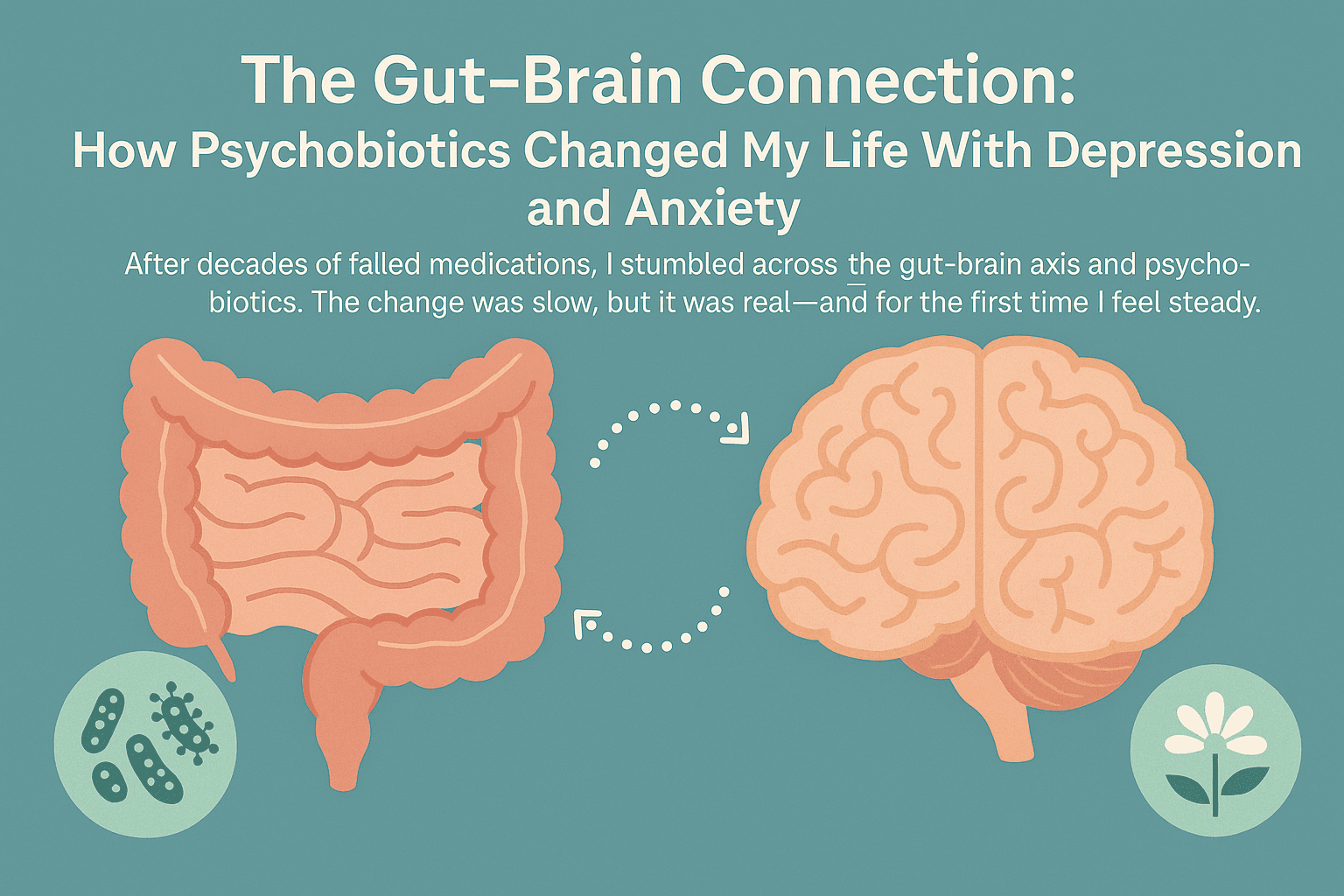
The gut-brain axis is the communication network between the digestive system and the brain. It involves nerves, immune signaling, hormones, metabolism, inflammation, gut barrier function, and the microbes that live in the digestive tract.
That does not mean the gut controls every emotion.
It means the body and brain are connected in more ways than most of us notice day to day.
I first came across the idea through articles about probiotics and "psychobiotics," a term often used for microbes or microbial products being studied for possible mental-health effects. At first, it sounded too trendy. Every health topic eventually gets turned into a miracle claim online.
But the more I read, the more careful the better sources sounded.
They were not saying, "Take this capsule and your depression will disappear."
They were saying that gut microbes may influence stress pathways, inflammation, immune activity, digestion, and brain signaling, and that specific strains are being studied for possible effects on mood and anxiety symptoms.
That difference mattered.
It turned a promise into a question worth tracking.
What Comment Patterns Showed
Before rewriting this article, I reviewed anonymized health-comment patterns around gut health, probiotics, anxiety, depression, IBS, fermented foods, sleep, and supplements. I did not publish raw comments.
The patterns were mixed.
Some people described digestive symptoms and mental-health symptoms rising together: bloating during stress, IBS with anxiety, reflux disturbing sleep, food changes affecting energy, or depression making self-care harder.
Others shared very strong claims. Probiotics "fixed" everything. Magnesium and probiotics changed sleep overnight. Gut healing changed life. Certain diets were described as the answer for everyone.
There were also cautionary patterns:
- people stopping medication because a lifestyle tool felt promising
- people trying many supplements without professional guidance
- people with severe depression looking for help in comment sections
- people confusing temporary improvement with proof of a universal cure
- people with digestive symptoms repeatedly cycling through diets, teas, charcoal, probiotics, and restriction without durable relief
The useful takeaway was this:
Gut patterns can be worth noticing, but they should not become another reason to avoid care.
My First Real Experiment Was Tracking
At first, I wanted a product answer.
Which probiotic? Which strain? Which brand? How many billion CFU? How long until it works?
Those questions are understandable, but they were not the best starting point for me.
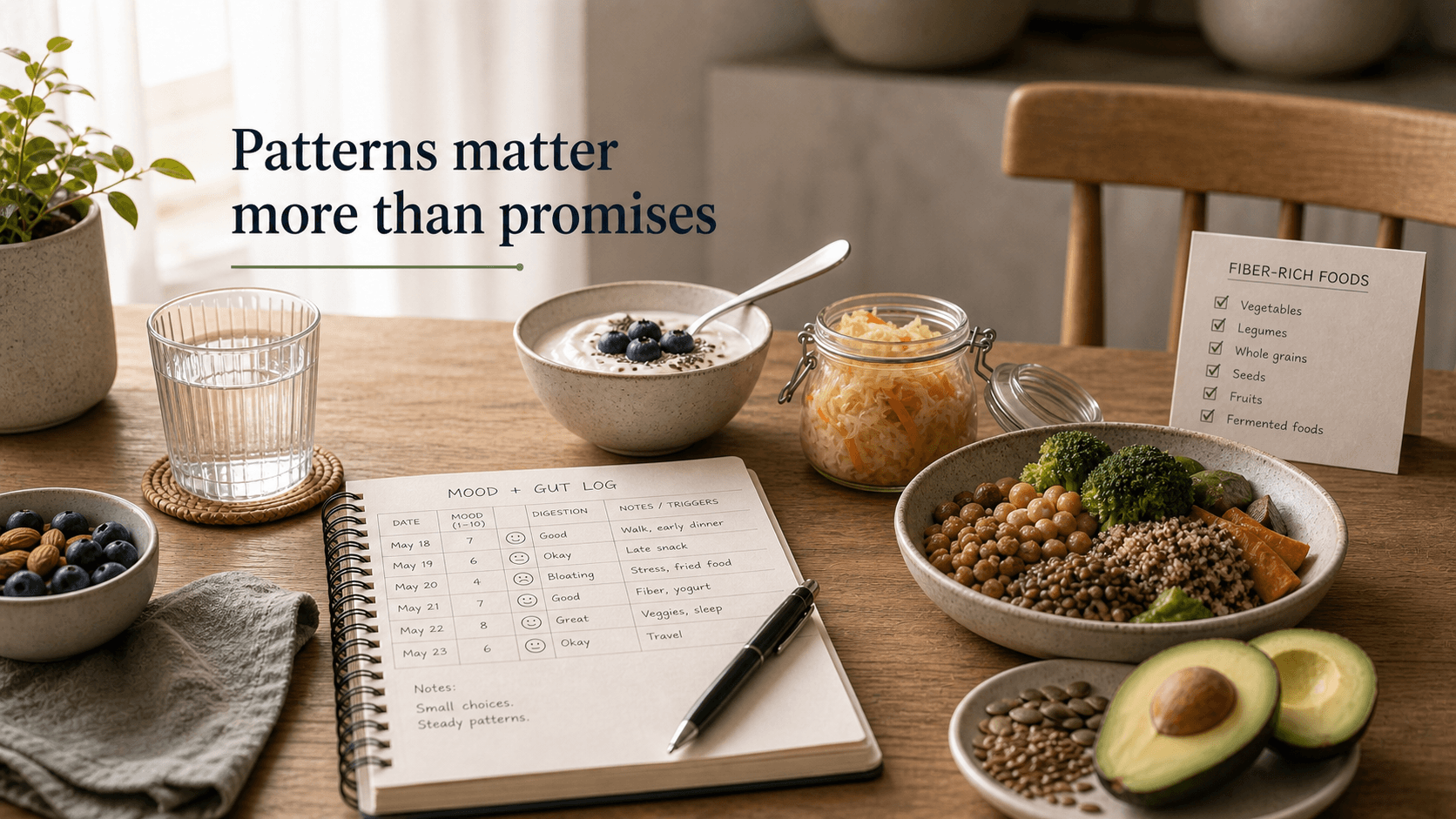
The better first step was tracking.
I started paying attention to:
- sleep timing and sleep quality
- digestion, bloating, reflux, constipation, or diarrhea
- alcohol, caffeine, and late meals
- high-sugar days
- fermented foods and fiber-rich meals
- medication changes
- stress level
- mood, anxiety, and energy
The point was not to prove one cause. It was to stop guessing.
When I looked across weeks, I could see patterns I had missed. Poor sleep made anxiety louder. Digestive discomfort made mornings harder. High-stress weeks affected both my gut and my mood. Regular meals helped more than random restriction. Walking after meals helped me feel less stuck in my body.
None of that was a cure.
But it gave me levers I could actually adjust.
Trying Probiotics Without Turning Them Into Magic
Eventually, I tried a probiotic.
I chose one after reading about strains that had been studied in stress or mood research, especially some Lactobacillus and Bifidobacterium strains. I also tried to avoid changing ten other things at the same time, because then I would not know what was helping.
The first few weeks were uneventful.
Then I noticed small changes. My digestion felt steadier. I had fewer mornings where dread seemed to arrive before thought. My mood did not become bright, but it felt less jagged. I still had hard days, but I recovered from them more easily.
Could that have been the probiotic? Possibly.
Could it have been the routine around taking it, better meals, more tracking, improved sleep, a steadier home environment, or normal symptom fluctuation? Also possible.
That uncertainty matters.
Personal experience is real, but it is not the same as proof. I can say a probiotic seemed to be part of a helpful period in my life. I cannot honestly say it was the single missing piece for everyone with depression or anxiety.
Food Was Not a Cure, But It Was Not Irrelevant
One thing the gut-brain conversation changed was how I viewed food.
Before, I often thought of food only in terms of calories, cravings, or guilt. Later, I started thinking about steadiness.
Meals that helped me feel steadier tended to be simple:
- enough protein
- enough fiber
- fruits, vegetables, legumes, or whole grains when tolerated
- fermented foods if they agreed with me
- less alcohol
- less late-night sugar
- enough water
- regular meal timing instead of long chaos followed by overeating
This is not a universal prescription. People with IBS, inflammatory bowel disease, food allergies, histamine intolerance, eating disorders, diabetes, kidney disease, pregnancy, or medication-related needs may require individualized guidance.
The point is not that everyone should copy one diet.
The point is that gut comfort, nutrition, sleep, and mental health can interact. Ignoring that interaction left me with fewer options.
Where Gut Support Fits Beside Mental-Health Care
Gut support belongs in the "supportive care" category for me.
It can sit beside:
- therapy
- medication when prescribed
- sleep care
- movement
- social support
- stress management
- medical evaluation for digestive symptoms
- nutrition guidance when needed
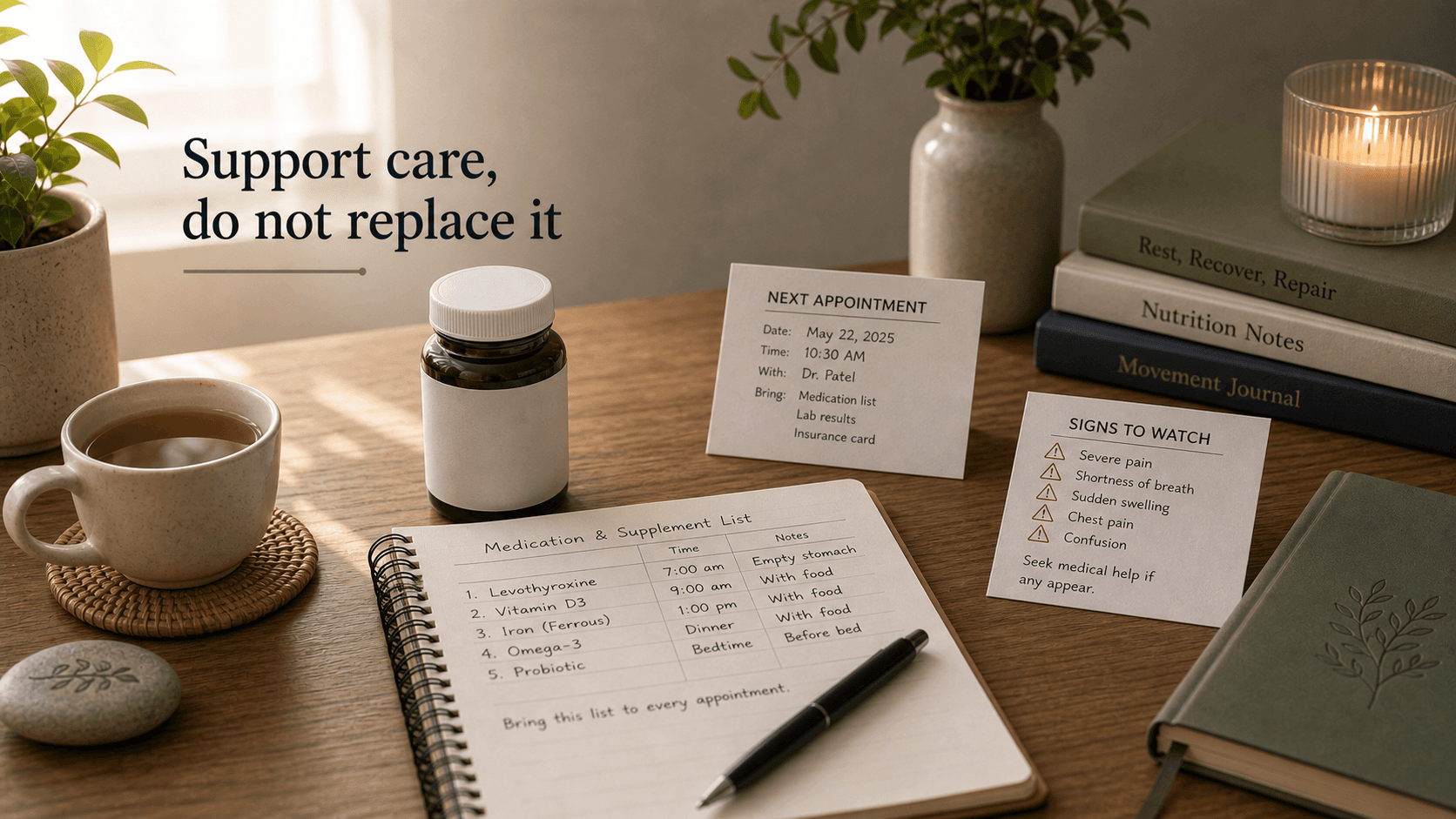
It should not replace them.
If someone is severely depressed, suicidal, unable to function, having panic attacks, unable to sleep, or rapidly losing weight, the answer is not "just heal your gut." That kind of advice can be dangerous, even when it comes from a well-meaning person.
If medication has helped you, do not stop it because a supplement sounds promising online. If medication has not helped enough, that is still a conversation for a qualified clinician. The related story on fear of restarting medication may be useful if treatment itself has become emotionally loaded.
When to Seek Medical or Mental-Health Support
Seek professional support promptly if depression, anxiety, digestive symptoms, or sleep disruption are affecting daily life.
Get urgent help now if you have thoughts of self-harm, feel unsafe, or fear you may harm yourself or someone else.
Also speak with a qualified professional if you have:
- persistent depression, panic, or anxiety that interferes with work, school, parenting, or basic care
- new or worsening suicidal thoughts, hopelessness, or feeling like others would be better off without you
- blood in stool, black stools, unexplained weight loss, persistent vomiting, fever, or severe abdominal pain
- diarrhea or constipation that persists or keeps returning
- symptoms after starting a supplement or probiotic
- a weakened immune system, central line, serious illness, pregnancy, or recent surgery before using probiotics
- restrictive eating, fear foods, bingeing, purging, or food rules becoming more rigid
Probiotics are usually discussed as low-risk for many healthy people, but "natural" does not mean appropriate for everyone.
What I Believe Now
I still believe the gut-brain connection matters.
I believe it because I have felt the overlap between digestion, sleep, stress, food, and mood in my own life. I believe it because research is actively exploring these pathways. I believe it because ignoring the body made my mental-health picture feel incomplete.
But I believe it more cautiously now.
The gut is not a magic control panel for the mind.
Probiotics are not guaranteed antidepressants.
Diet is not a moral test.
Mental illness is not a personal failure caused by eating the wrong thing.
For me, the gut-brain axis became useful when it stopped being a miracle claim and became a pattern map. It gave me a reason to track sleep, digestion, meals, stress, movement, and mood together. It gave me a way to participate in my care without pretending I could replace care.
That is the balance I trust:
curiosity without desperation, hope without hype, and support without abandoning proven help.
References
- NCCIH: Probiotics - What You Need To Know
- National Institute of Mental Health: Depression
- National Institute of Mental Health: Anxiety Disorders
- American Gastroenterological Association: Probiotics Clinical Practice Guideline
Disclaimer: This article shares a personal experience and general educational context. It is not medical advice, mental-health treatment, nutrition therapy, supplement guidance, or a recommendation to start or stop medication. Depression, anxiety, digestive symptoms, IBS, and sleep problems can have many causes and may require professional care. Talk with a qualified healthcare professional before using probiotics if you are immunocompromised, pregnant, seriously ill, recently had surgery, or have complex medical conditions.
Related Reading
Continue reading after The Gut-Brain Connection: How Psychobiotics Helped Me Think Differently About Depression and Anxiety
Can Anxiety Cause Chest Tightness? What People Describe and When to Seek Help
A human-centered guide to anxiety chest tightness, panic, health anxiety, and the safety line between familiar anxiety symptoms and chest pain that needs urgent care.
GERD, Reflux, and the Fear Loop: What Took Me Years to Understand
A long-form lived-experience pillar on chronic reflux, nighttime pain, anticipatory anxiety, daily tradeoffs, and what helped create stability over time.
Living With a Dry Mouth, Burning Pain, and No Easy Answers
A lived experience of chronic dry mouth, burning pain, medication side effects, dental damage, broken sleep, and the slow search for safer support.
Share on WhatsApp
2–3 line summary is copied. Tap to open WhatsApp and share.
 Tip: You can edit the text after it opens in WhatsApp.
Editorial Note
This article is prepared by the HealthUnspoken Editorial Team. Our articles may combine first-person submissions, public health education references, and commonly discussed experiences, then are edited for clarity and context.
The goal is reader awareness and education. This content is not a diagnosis or a treatment plan.
⚕️ Medical Disclaimer
The information provided in this article is for **educational and informational purposes only**. It should not be considered medical advice, diagnosis, or treatment. Always seek the advice of your physician or other qualified healthcare provider regarding any medical condition or treatment decisions.
🧾 Sources
HealthUnspoken articles may include first-person stories, editorial summaries of broadly discussed experiences, and public health education references. They are reviewed by the editorial team for clarity and educational context.
Reader Experiences Shared
Curated anonymized snippets from public health discussions, edited for readability.
I kept thinking finding calm through would settle on its own, but what helped most was tracking patterns and asking clearer questions in appointments.
The hardest part for me was uncertainty around finding calm through. Once I stopped changing everything at once, I could finally see what was helping.
I used to delay care because I was embarrassed about finding calm through. Earlier conversations would have saved me a lot of stress.
A second opinion around finding calm through changed my decisions completely. The issue was still real, but the plan felt calmer and more practical.
For me, progress with finding calm through came from boring consistency, not one dramatic fix. That mindset reduced panic a lot.
I learned to separate fear from facts with finding calm through. Writing down symptoms before visits made discussions more useful.