What Leaving Healthcare Taught Me About Real Healing
- Authors

- Name
- Author: HealthUnspoken Editorial Team
- Published on
- Last updated:
- Country
- Country
- 🌍Country: India
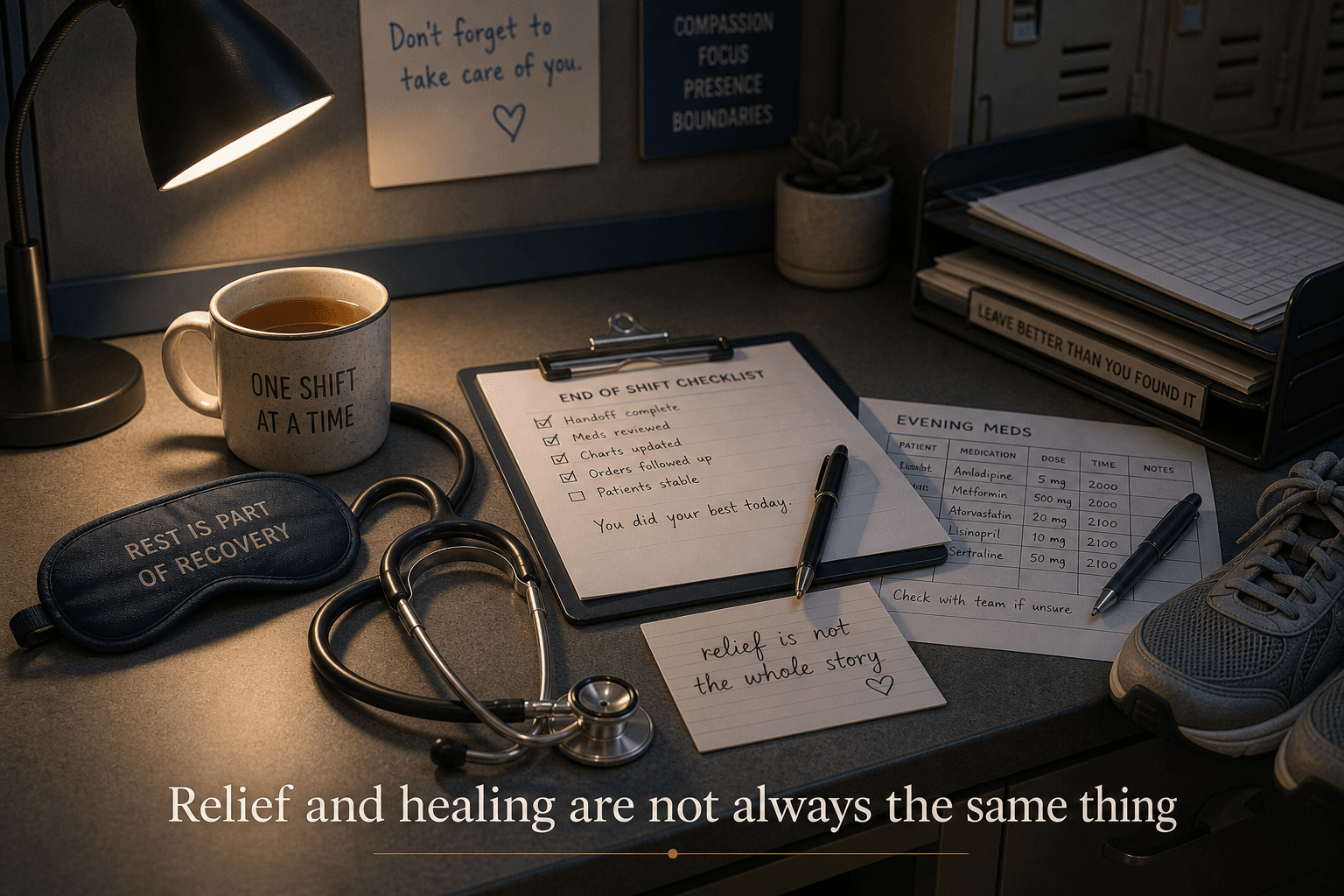
Leaving healthcare did not make me anti-medicine. If anything, it made me more precise about what medicine does well and what it cannot do alone. I came away with more respect for emergency care, infection treatment, surgery, diagnostics, and properly used medication. I also came away with a harder truth: relief and healing are not always the same thing.
That distinction changed how I think about health now.
What I Saw From Inside the System
For years, my work followed a rhythm that looked sensible from the outside.
A person arrived uncomfortable, frightened, exhausted, or in pain. The team listened. Tests were ordered. Medication was prescribed. A number improved. A symptom softened. The person left lighter than they came in.
That mattered. I do not want to diminish it.
There are many situations where symptom relief is not superficial at all. It is the first humane thing that must happen. Nobody with severe pain, dangerous blood pressure, pneumonia, a mental health crisis, asthma, or a surgical emergency needs a lecture about sunlight before they need treatment.
Still, after enough years, I noticed another pattern.
Some people kept returning with the same problems arranged in slightly different ways:
- poor sleep
- unrelenting stress
- isolation
- no time to move
- no rhythm to meals
- no energy left for follow-through
The prescription was often real help.
But it was not always enough to change the conditions that kept feeding the problem.
The Comment Patterns Were Familiar
I pulled bounded MySQL samples for burnout, lifestyle change, sleep, movement, stress, medication, and symptom relief before rewriting this piece. I did not use raw comments in the article.
The recurring patterns were recognizable:
- people often said medication helped, but did not fully restore them
- work stress and burnout kept showing up as force multipliers
- some noticed that better sleep, walking, food structure, or time outdoors changed how they felt more than they expected
- many were drawn toward all-or-nothing thinking: either pills are the answer or pills are the enemy
- a lot of people felt abandoned in the gap between acute care and day-to-day recovery
That middle ground is where my thinking changed.
Not "medicine failed."
More like:
medicine did its part, but nobody can outsource the rest of recovery forever.
Where the System Gets Trapped
The people I worked with were not lazy or indifferent. Most were stretched.
Doctors had too little time. Nurses carried too much at once. Patients arrived late in the course of preventable problems because life had already become too crowded or too expensive or too chaotic.
That means the healthcare system often meets people after the background damage is already deep:
- years of short sleep
- years of stress hormones running high
- years of sitting
- years of erratic food
- years of postponing care
By then, the immediate clinical task is rarely elegant. Stabilize what can be stabilized. Lower the number that needs lowering. Reduce the symptom that is making daily function impossible.
That is not cynicism. It is reality.
But it also means a person can leave technically treated and still be living inside the same body conditions that helped create the problem.
What Changed After I Stepped Back
Once I stepped away from the clinical environment, I began noticing how much health is built in the unremarkable parts of a day.
Not the dramatic parts. The repetitive ones.
Things like:
- whether you sleep enough times in a row to actually recover
- whether you move at all on ordinary weekdays
- whether food is steady or chaotic
- whether stress gets processed or simply stored
- whether you have any margin between your responsibilities and your symptoms
This did not make me believe every disease is reversible through discipline. That would be careless.
It made me notice that many bodies are trying to recover inside conditions that never allow recovery to happen.
That is different.
The Danger of Swinging Too Far
One reason I wanted to rewrite this article is that healthcare disappointment can easily drift into bad thinking.
People who feel unseen by the system are especially vulnerable to promises like:
- "you do not need doctors"
- "all medication only masks symptoms"
- "real healing is always natural"
- "if you are still sick, you are not trying hard enough"
I do not believe any of that.
Medication can be life-saving. Therapy can be essential. Surgery can be correct. Blood pressure control, antidepressants, insulin, antibiotics, asthma treatment, and pain relief all have real places in real lives.
At the same time, a person can be properly treated and still need:
- better sleep
- better food structure
- more movement
- a lower stress load
- social support
- time to recover from burnout
Those are not anti-medical ideas.
They are often the missing infrastructure around good medical care.
What Helped Me Think More Clearly About Healing
The most useful shift for me was learning to ask two different questions:
- What helps this person right now?
- What will help this body function better six months from now?
Sometimes the answer to the first question is medication, rest, imaging, or urgent treatment.
Sometimes the answer to the second question is slower and less glamorous:
- going to bed earlier
- eating at more regular times
- walking daily
- strength work
- better boundaries
- lighter alcohol use
- fewer stimulants late in the day
- less living in permanent emergency mode
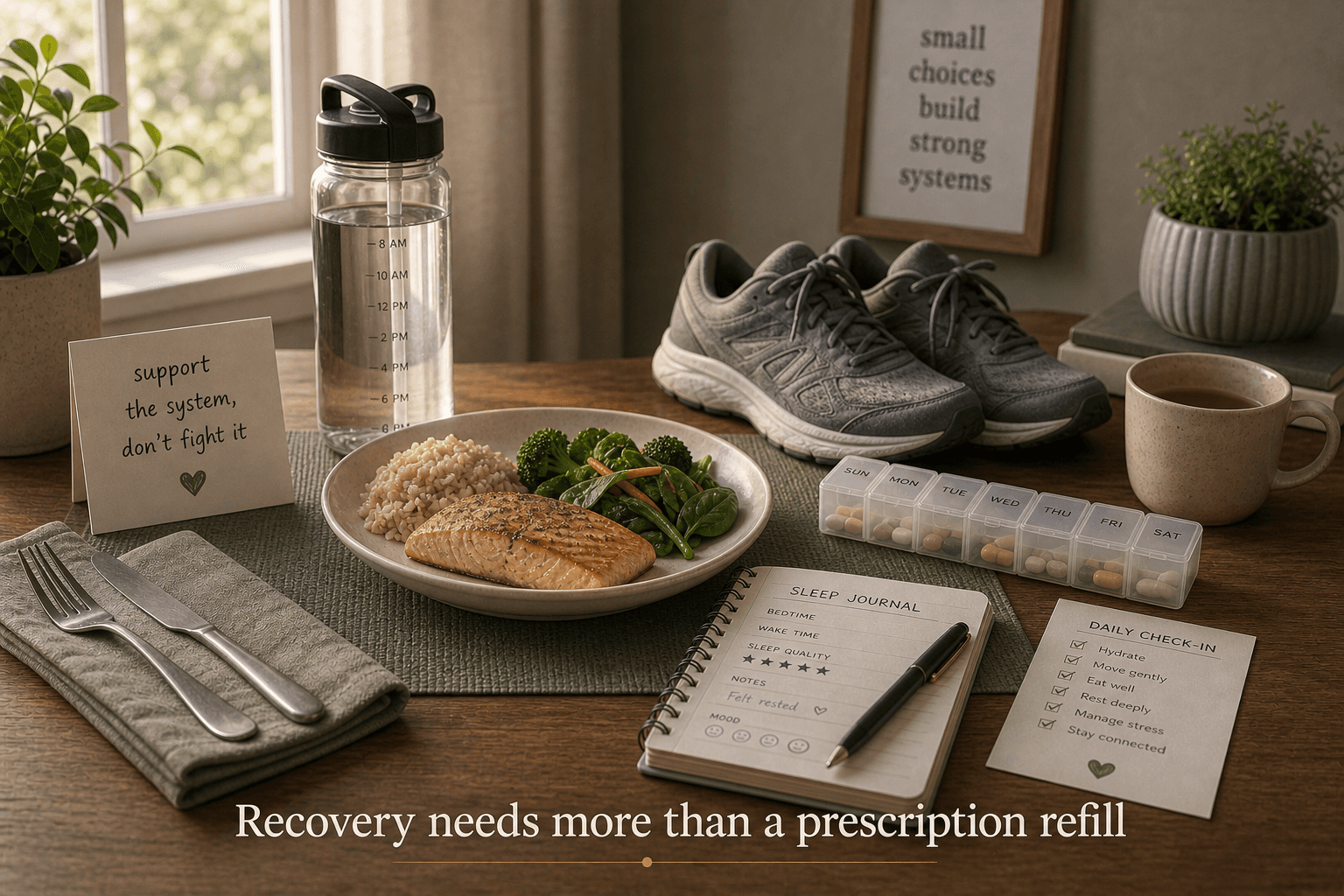
That second list can sound boring. It can also be the difference between a body that is barely coping and one that slowly starts to stabilize.
Why Burnout Deserves More Respect
Burnout is not a poetic complaint. Chronic stress changes how people sleep, eat, move, recover, and cope.
It can amplify:
- pain
- anxiety
- blood pressure problems
- binge-restrict cycles
- irritability
- insomnia
- emotional flatness
- the feeling that there is no point trying anything harder than survival
A person living in that state may look noncompliant from the outside when what they really lack is capacity.
That changed how I think about responsibility. Personal responsibility matters. But it has to be framed honestly. People take better care of themselves when they have enough physical and mental room to do it.
Where I Landed
I did not leave healthcare believing that nature heals everything.
I left believing that care works best when three things can coexist:
- proper medical treatment when it is needed
- honest limits around what treatment can and cannot do alone
- daily habits that make the body easier to live in
That is less exciting than a miracle-cure story.
It is also more defensible.
Sometimes healing means antibiotics. Sometimes it means trauma therapy. Sometimes it means physical therapy. Sometimes it means sleep, food, movement, and stepping back before the whole system collapses.
Most of the time it means some combination.
When to Seek Professional Help
Do not use lifestyle ideas as a reason to delay proper medical care.
Please seek qualified care if you have:
- chest pain
- shortness of breath
- thoughts of self-harm
- severe depression or panic
- fainting
- unexplained weight loss
- persistent pain
- blood pressure concerns
- worsening fatigue that affects safety or daily function
And if you are burned out enough that eating, sleeping, concentrating, or working safely is becoming hard, treat that seriously too. Burnout may not be a single diagnosis, but it can still become a medical and mental health problem.
References
Related HealthUnspoken Reading
Disclaimer: This article is for educational purposes only and is not medical advice. It does not recommend stopping medication or replacing professional care with lifestyle changes alone. If you have ongoing symptoms, mental health concerns, or worsening function, seek help from a qualified clinician.
Related Reading
Continue reading after What Leaving Healthcare Taught Me About Real Healing
I Didnt Heal Until I Finally Had Time to Heal
A de-identified personal story about chronic pain, constant work urgency, burnout, nervous-system exhaustion, and the slower kind of recovery that only started once rest became real instead of theoretical.
Why Taking Care of My Teeth Started Feeling Like a Battle Instead of a Routine
A lived-experience editorial on dental uncertainty, trust friction, cost pressure, routine fatigue, and how steadier oral care starts with better questions.
GERD, Reflux, and the Fear Loop: What Took Me Years to Understand
A long-form lived-experience pillar on chronic reflux, nighttime pain, anticipatory anxiety, daily tradeoffs, and what helped create stability over time.
Share on WhatsApp
2–3 line summary is copied. Tap to open WhatsApp and share.
 Tip: You can edit the text after it opens in WhatsApp.
Editorial Note
This article is prepared by the HealthUnspoken Editorial Team. Our articles may combine first-person submissions, public health education references, and commonly discussed experiences, then are edited for clarity and context.
The goal is reader awareness and education. This content is not a diagnosis or a treatment plan.
⚕️ Medical Disclaimer
The information provided in this article is for **educational and informational purposes only**. It should not be considered medical advice, diagnosis, or treatment. Always seek the advice of your physician or other qualified healthcare provider regarding any medical condition or treatment decisions.
🧾 Sources
HealthUnspoken articles may include first-person stories, editorial summaries of broadly discussed experiences, and public health education references. They are reviewed by the editorial team for clarity and educational context.
Reader Experiences Shared
Curated anonymized snippets from public health discussions, edited for readability.
I kept thinking stepped back healthcare would settle on its own, but what helped most was tracking patterns and asking clearer questions in appointments.
The hardest part for me was uncertainty around stepped back healthcare. Once I stopped changing everything at once, I could finally see what was helping.
I used to delay care because I was embarrassed about stepped back healthcare. Earlier conversations would have saved me a lot of stress.
A second opinion around stepped back healthcare changed my decisions completely. The issue was still real, but the plan felt calmer and more practical.
For me, progress with stepped back healthcare came from boring consistency, not one dramatic fix. That mindset reduced panic a lot.
I learned to separate fear from facts with stepped back healthcare. Writing down symptoms before visits made discussions more useful.