
Four Collapsed Lungs, Years of Misdiagnosis — My Life With Ehlers-Danlos Syndrome
- Authors

- Name
- Author: HealthUnspoken Editorial Team
- Published on
- Last updated:
- Country
- Country
- 🌍Country: Unknown
Some illnesses hurt because of what they do to the body. Others hurt because of how long it takes for anyone to understand what is really going on. My Ehlers-Danlos story involved four collapsed lungs, surgery, medical dismissal, and years of learning that being believed can be part of care.
When Everything Began
My story started when I was still a teenager.
At seventeen, something happened that most people never expect to experience. My lung collapsed.
It was sudden and frightening. One moment everything felt normal, and the next it felt like the air had been pulled out of my chest. Breathing became difficult in a way that was not like being winded or anxious. It felt mechanical, wrong, and urgent.
At first, it seemed like a one-time medical emergency.
But it did not stop there.
Over time it happened again, and then again. Eventually both of my lungs had collapsed multiple times: two times on each side.
Each episode came with the same question.
Why was this happening?
Mayo Clinic describes pneumothorax, or collapsed lung, as air leaking into the space between the lung and chest wall, putting pressure on the lung so it partially or fully collapses. The classic symptoms are sudden chest pain and shortness of breath. That sounds clean in a medical description. Living it felt like terror inside the rib cage.
The Surgeries
Doctors eventually found weak spots in the upper portions of my lungs. Those fragile areas could rupture, allowing air to leak into the chest cavity and causing the lung to collapse again.
The solution was surgery.
During the second collapse on each side, surgeons removed sections of lung tissue where those weak areas were most visible. The goal was to remove the part of the lung that kept failing and reduce the chance of recurrence.
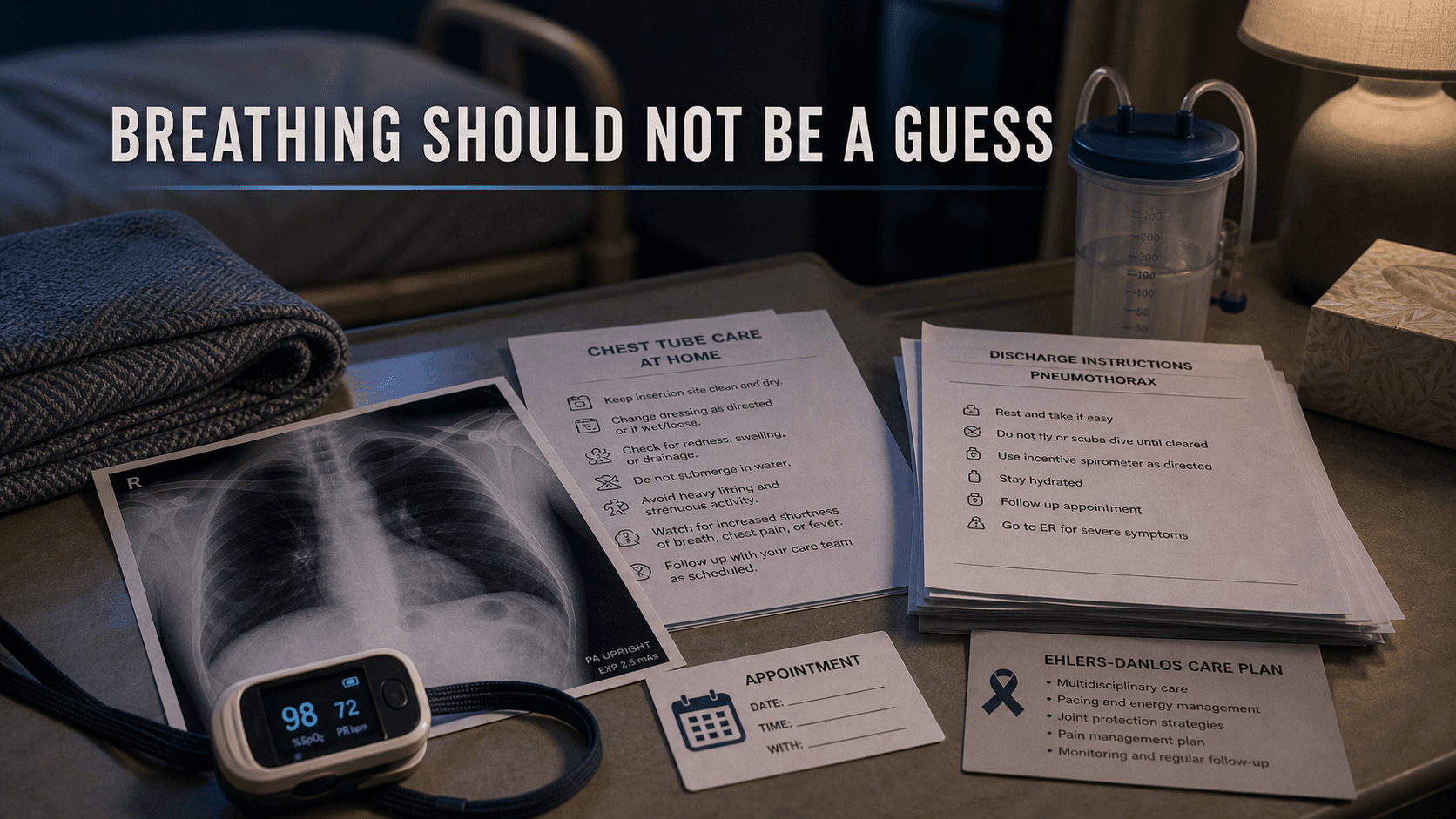
The procedures left several scars across my chest.
One incision was between my ribs where chest tubes were inserted. Two larger surgical cuts were made between ribs as well: one toward my back and another toward the front, where damaged lung tissue had to be removed.
Physically, recovery was slow but manageable.
Emotionally, it was harder to understand. I was young, but my body was already teaching me hospital language: scans, chest tubes, air leaks, scars, follow-up appointments, and the strange quiet that comes after a medical emergency when everyone else goes back to ordinary life.
A Procedure I Will Never Forget
Even after surgery, my lungs struggled to stay inflated. Doctors eventually recommended another procedure designed to help the lungs adhere to the chest wall so they would be less likely to collapse again.
To do that, they introduced a chemical solution into the chest cavity. The goal was to create scar tissue that would attach the lung to the chest wall. This is the kind of procedure people may hear described as pleurodesis, though individual techniques vary.
On paper, it sounds clinical.
Experiencing it was different.
Because of my unusually low blood pressure and the way my body reacts to medications, doctors could not fully sedate me. The medications normally used for heavier sedation were not safe in my situation.
So I stayed awake.
For about 45 minutes, the solution remained in contact with the inside of my chest cavity.
Even years later, I remember it vividly. It was the most intense pain I had ever felt.
Living With Ehlers-Danlos Syndrome
Eventually doctors discovered the underlying cause of many of my medical issues: Ehlers-Danlos Syndrome, often called EDS.
EDS is not one single condition. MedlinePlus Genetics describes it as a group of disorders that affect connective tissues supporting skin, bones, blood vessels, organs, and other structures. The Ehlers-Danlos Society currently describes 13 types, each with its own features and diagnostic criteria.
That distinction matters.
For some people, the main signs are joint hypermobility, instability, chronic pain, easy bruising, skin stretchiness, or delayed wound healing. For others, especially with certain rarer types, blood vessels, organs, gums, bones, eyes, or lungs can be involved.
In my case, EDS helped explain the combination of lung problems, rib instability, pain, and the way my body seemed to injure or shift in ways other people did not understand.
Because connective tissue is weaker or behaves differently, joints and bones can move more easily than they should. Occasionally my ribs partially dislocate. When that happens, the pain is immediate and overwhelming. It can stop me mid-step.
Most episodes pass quickly, sometimes within seconds. But during those moments there is nothing to do except stay still, breathe carefully, and wait for the body to settle.
What Diagnosis Changed
The diagnosis did not undo the damage.
It did not erase scars. It did not make my ribs stable. It did not remove the memory of procedures or infections or being dismissed.
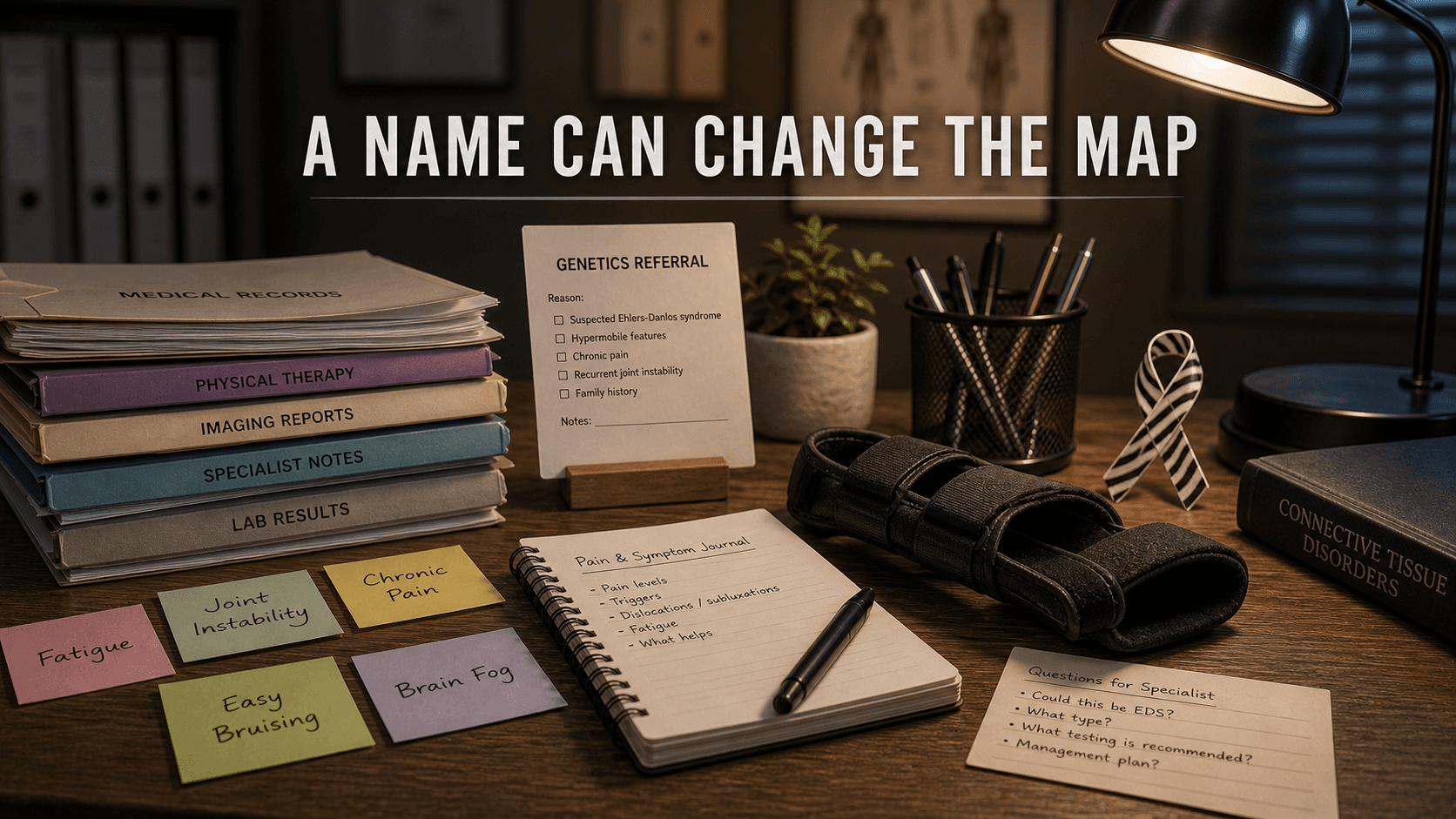
But it changed the map.
Before diagnosis, every symptom felt like a separate mystery. After diagnosis, the pieces started belonging to the same body. Not every problem was automatically "because of EDS," but the diagnosis gave doctors a better question to ask:
How does connective tissue change this situation?
That question matters before procedures. It matters when thinking about wound healing, anesthesia, joint positioning, physical therapy, pain management, and emergency care. It matters when deciding which symptoms can be monitored and which ones need fast attention.
What Similar EDS Stories Often Reveal
When I reviewed broader EDS, hypermobility, dislocation, and collapsed-lung conversations from doctor-channel and health-influencer comment sources, the same themes kept appearing. I am not publishing raw comments or personal details, only the patterns.
Many people described diagnosis delay. Some were first labeled with anxiety, fibromyalgia, growing pains, stress, or vague chronic pain before hypermobility or EDS entered the conversation. Others talked about needing to learn medical language themselves because nobody connected the symptoms.
Another pattern was instability being misunderstood as flexibility. People said they could do "party tricks" with joints, but the reality was pain, subluxations, braces, canes, physical therapy, jaw problems, rib slipping, neck concerns, and muscles constantly working to stabilize joints.
There were also many comments about overlap: POTS, MCAS, gastroparesis, neurodivergence, chronic fatigue, migraine, digestive issues, and medical trauma. Those comments are not proof that every person with EDS has those conditions, but they show why good care often needs a whole-person view instead of treating each symptom in isolation.
The strongest emotional theme was familiar: people were tired of trying to convince others that their bodies were not exaggerating.
The Part No One Talks About
The physical pain was only part of the experience.
The harder part, in many ways, was being taken seriously.
Throughout childhood and adolescence, many doctors assumed my symptoms were exaggerated or psychological. Some believed anxiety might be the real cause. Others suggested there simply was not anything physically wrong.
Those assumptions followed me.
Medical notes have power. A label written too early can shape how future clinicians interpret you. Once a person is seen as dramatic, anxious, difficult, or unreliable, they may have to work twice as hard to get basic symptoms taken seriously.
I was 26 before I finally received the correct diagnosis.
That gap changed how I behaved around healthcare. I learned to edit myself. I learned to understate. I learned to avoid sounding too emotional, even when the situation was frightening.
That kind of self-protection can look calm from the outside. Inside, it is exhausting.
Learning to Stay Quiet Was Dangerous
Over time, something changes when you repeatedly feel dismissed.
Eventually it becomes easier not to speak up.
I stopped mentioning injuries. I stopped explaining pain. Sometimes I ignored symptoms longer than I should have.
That silence nearly cost me my life more than once.
There were times when infections became severe before anyone realized how serious things had become. On one occasion, I collapsed with a dangerously high fever after trying to push through illness on my own. Other infections eventually led to hospitalization.
Looking back, those situations are frightening reminders that resilience is not the same as silence.
Pushing through can be useful for ordinary discomfort. It is dangerous when breathing, fever, infection, fainting, or sudden severe symptoms are involved.
How I Think About Care Now
I no longer treat every symptom as an emergency.
But I also no longer treat every symptom as something to hide.
EDS care often works best when the care team understands the condition and the person. That may include primary care, genetics, pulmonology, cardiology, physical therapy, pain management, occupational therapy, mental health support, and specialists for specific symptoms.
The practical questions I ask now are more specific:
- Does this symptom fit my known pattern, or is it new?
- Could this be injury, infection, pneumothorax, medication reaction, or something unrelated to EDS?
- Does my care team need to know before a procedure that I have low blood pressure or unusual medication responses?
- Are my joints being protected during exams, dental work, imaging, or surgery positioning?
- Is physical therapy focused on stability and control, not stretching for the sake of flexibility?
- What symptoms mean I should go to urgent care or the ER?
- Who is coordinating the whole picture?
That last question matters because rare conditions can scatter care across too many rooms.
When to Seek Medical Care
Please seek urgent or emergency care for symptoms that could suggest a collapsed lung, including sudden chest pain, shortness of breath, trouble breathing, blue lips or nails, fainting, rapid worsening, or severe one-sided chest pain with breathing.
Seek prompt medical care if you have:
- a hot, swollen, or severely painful joint after injury or dislocation
- numbness, weakness, loss of function, or symptoms after head/neck trauma
- fever, chills, confusion, fainting, or signs of infection
- wounds that are opening, draining, spreading redness, or not healing
- severe abdominal, pelvic, or chest pain
- new neurological symptoms
- repeated dislocations, unexplained bruising, unusual scarring, or sudden changes in symptoms
- pregnancy planning concerns with possible vascular EDS or family history of serious rupture events
Also tell clinicians about EDS or suspected EDS before surgery, anesthesia, dental procedures, physical therapy, chiropractic manipulation, or procedures that involve joint positioning, skin/wound healing, blood vessels, or the chest.
Continuing Forward
Living with a chronic condition does not mean life stops.
It means life becomes more planned.
I carry a different awareness now. I notice breathing changes. I respect fever. I pay attention to ribs that shift, joints that feel unstable, and infections that are not improving. I also try to protect the part of me that still expects not to be believed.
Medical trauma can make appointments feel unsafe even when the clinician in front of you is trying to help. That is real. But silence is not the only alternative. A written timeline, a medication and reaction list, a diagnosis summary, a support person, and clear red-flag instructions can all make care less chaotic.
Looking back, the most difficult part of the journey was not only the surgeries or the pain.
It was the years spent searching for answers while trying to stay credible.
Being heard and believed can make an enormous difference for someone living with a rare condition. Sometimes that recognition is the first real step toward safer care.
Related Reading
References
- MedlinePlus Genetics: Ehlers-Danlos Syndrome
- Mayo Clinic: Ehlers-Danlos Syndrome Symptoms and Causes
- The Ehlers-Danlos Society: What Is EDS?
- Mayo Clinic: Pneumothorax Symptoms and Causes
- Cleveland Clinic: Pneumothorax
Disclaimer: This article is for educational purposes only and is not medical advice. Individual symptoms, risks, and treatment decisions vary. Always consult a qualified healthcare professional for diagnosis and personalized care. If you have severe, worsening, or emergency symptoms, seek urgent medical attention immediately.
Related Reading
Continue reading after Four Collapsed Lungs, Years of Misdiagnosis — My Life With Ehlers-Danlos Syndrome
I Kept Pushing Through the Pain… Until It Took Everything From Me
A personal journey through years of untreated back pain, difficult decisions, and the emotional reality of living with sciatica and surgery aftermath.

Two Hip Replacements, Twenty Years Apart and the Quiet Miracle of Living Without Pain
I lived through two hip replacements separated by twenty years. What changed was not only medicine but how pain, preparation, therapy and resilience reshaped my life.
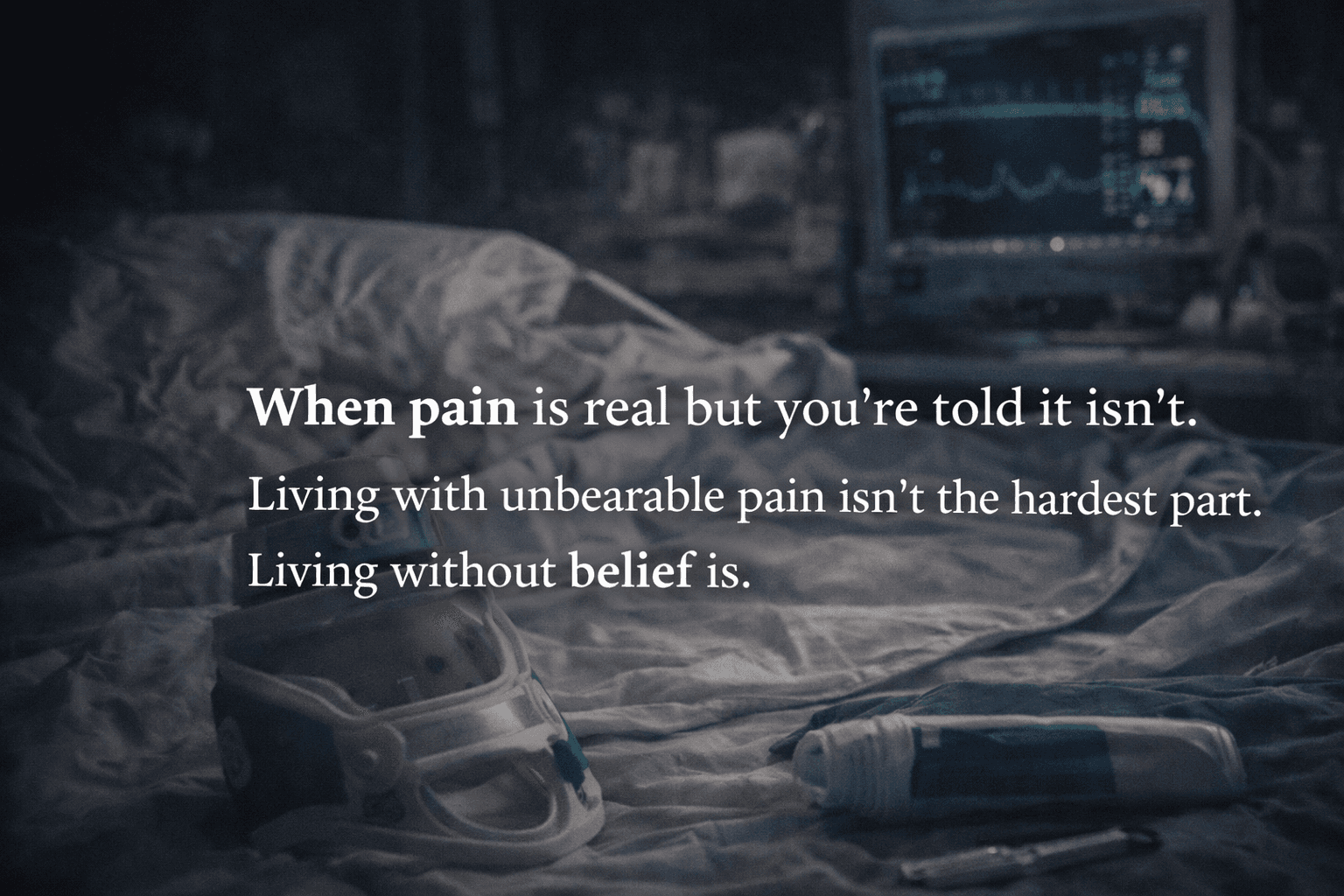
When Pain Is Real but Youre Told It Isnt
A de-identified personal story about chronic pain, delayed diagnosis, hypermobility, rare-disease patterns, and the medical trauma that can build when the body is dismissed for too long.
Share on WhatsApp
2–3 line summary is copied. Tap to open WhatsApp and share.
 Tip: You can edit the text after it opens in WhatsApp.
Editorial Note
This article is prepared by the HealthUnspoken Editorial Team. Our articles may combine first-person submissions, public health education references, and commonly discussed experiences, then are edited for clarity and context.
The goal is reader awareness and education. This content is not a diagnosis or a treatment plan.
⚕️ Medical Disclaimer
The information provided in this article is for **educational and informational purposes only**. It should not be considered medical advice, diagnosis, or treatment. Always seek the advice of your physician or other qualified healthcare provider regarding any medical condition or treatment decisions.
🧾 Sources
HealthUnspoken articles may include first-person stories, editorial summaries of broadly discussed experiences, and public health education references. They are reviewed by the editorial team for clarity and educational context.
Reader Experiences Shared
Curated anonymized snippets from public health discussions, edited for readability.
I kept thinking eds health would settle on its own, but what helped most was tracking patterns and asking clearer questions in appointments.
The hardest part for me was uncertainty around eds health. Once I stopped changing everything at once, I could finally see what was helping.
I used to delay care because I was embarrassed about eds health. Earlier conversations would have saved me a lot of stress.
A second opinion around eds health changed my decisions completely. The issue was still real, but the plan felt calmer and more practical.
For me, progress with eds health came from boring consistency, not one dramatic fix. That mindset reduced panic a lot.
I learned to separate fear from facts with eds health. Writing down symptoms before visits made discussions more useful.