
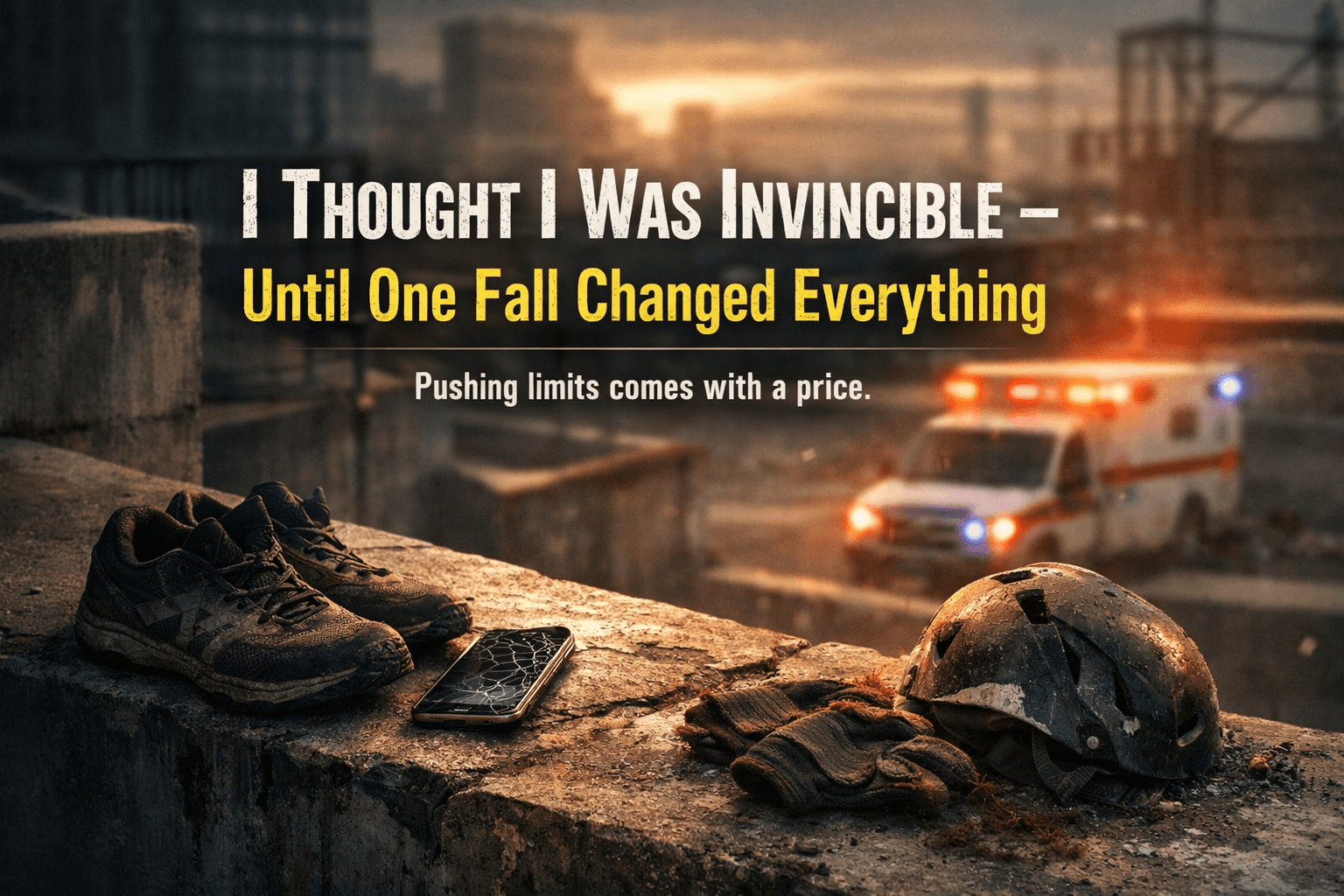
I Thought I Was Invincible — Until One Fall Changed Everything
- Authors

- Name
- Author: HealthUnspoken Editorial Team
- Published on
- Last updated:
- Country
- Country
- 🌍Country: USA
When you are young, your body can make risk feel invisible. You jump, climb, land badly, laugh it off, and try again. For a while, nothing serious happens, so confidence starts to feel like proof.
That was how parkour started for me.
It was not disciplined at first. It was not coached. It was not a structured training plan with progressions, warmups, landing drills, and rest days.
It was curiosity mixed with ego.
Jump over this. Climb that. Drop from there. Try it again. Go higher next time.
I thought I was learning freedom. In some ways, I was. But I was also learning the hard way that the body keeps records even when the mind forgets.
The Pre-Writing Brief
Article URL: /blog/parkour-journey-story
Before upgrade: 899 words, no in-body images, no references, no disclaimer, no lastUpdated.
Core themes to keep:
- early parkour felt exciting and confidence-building
- skill improved more slowly than confidence
- one fall caused hip pain and forced rest
- recovery changed the way training was approached
- technique, progression, and listening to pain became more important than height
Themes rejected or softened:
- glamorizing high drops or risky jumps
- framing pain as weakness
- suggesting young bodies can absorb unlimited impact
- treating self-taught training as enough for high-risk movements
- making recovery sound simple when injury severity can vary widely
Where It Started
At the beginning, I would not call what I was doing real parkour.
It was experimenting.
I jumped over low walls. I climbed playground structures. I tested gaps that looked possible. I used railings, steps, benches, and whatever else felt like a challenge.
The first rewards were immediate:
- a little more confidence
- a cleaner jump
- a friend noticing
- the feeling of doing something that had scared me yesterday
That feedback is powerful. Parkour can make movement feel creative again. It can teach balance, coordination, courage, and problem solving. It can turn an ordinary environment into a training space.
But in the early phase, I had almost no understanding of load.
I did not know how much force a poor landing sends through the ankles, knees, hips, and back. I did not understand that a "successful" jump can still be a sloppy repetition. I did not think about fatigue changing technique. I definitely did not think about what would happen if my foot clipped something at the wrong moment.
I was only asking one question:
Can I do it?
I should have been asking another:
Can I do it well, repeatedly, and recover from it?
When Confidence Grew Faster Than Skill
As time went on, I improved.
My jumps got better. My climbing felt smoother. I became more comfortable with height. That comfort was real, but it was not the same as mastery.
The dangerous part was that confidence was easier to feel than skill was to measure.
I could feel brave. I could feel fast. I could feel like the person who would not hesitate. But I could not always see the small errors:
- landing too stiff
- letting my knees collapse inward
- rolling late
- jumping when tired
- choosing bigger drops before smaller ones felt automatic
- copying movements without understanding the preparation behind them
Nothing terrible happened for a while, and that became its own kind of misinformation.
It is easy to confuse "I got away with it" with "I am ready."
Those are not the same thing.
The Fall That Changed the Story
The moment I remember most clearly was a jump over a railing.
The height was not the only issue. The hesitation was.
There was a split second where I was not fully committed and not fully backing out. That in-between moment changed everything. My foot clipped. My body rotated awkwardly. I tried to recover in the air, but there was no clean way to fix it.
I hit the ground hard.
At first, I did what many people do after a fall: I took inventory quickly and hoped the answer would be "fine."
Nothing looked obviously broken. I could still move. That made me want to dismiss it.
But my right hip had taken most of the impact, and walking became difficult. Sitting hurt. Standing hurt. The pain did not disappear after a few minutes. It stayed.
For weeks, ordinary movement reminded me that one mistake can keep speaking long after the moment ends.
That was the first time I understood this clearly:
Surviving an impact is not the same as absorbing it safely.
What Other Training Stories Repeated
Before rewriting this article, I reviewed anonymized health and fitness comment patterns around training injuries, falls, ankle injuries, back pain, jumps, and technique. I did not publish raw comments.
The useful patterns were familiar:
- people often underestimate injuries when they can still move
- ankle, knee, hip, and back pain are commonly minimized at first
- technique advice helps, but only when people respect progression
- some injuries happen during movements that look simple from the outside
- recovery is emotionally frustrating because it interrupts identity, not only exercise
- people often learn safety only after pain forces them to slow down
The strongest theme was not "avoid all risk." It was more practical:
If movement matters to you, protect the ability to keep moving.
That means skill, recovery, and judgment are not boring extras. They are part of training.
The Hardest Part Was Slowing Down
Pain was frustrating, but stopping was worse.
Before the fall, progress felt active. I was always trying something, learning something, or planning the next attempt. After the fall, progress looked like doing less.
That felt almost insulting.
I had to watch other people train. I had to think about movements I could not try. I had to accept that pushing through pain might make the recovery longer instead of proving discipline.
This is where many active people struggle. Rest can feel like losing momentum. But if pain changes your gait, sleep, mood, or daily function, ignoring it is not toughness. It is bad information processing.
The body was giving me feedback. I had to stop treating that feedback like an enemy.
What Changed Afterward
When I returned to training, I paid attention differently.
Before, I cared about height and distance.
After, I cared about control.
I started noticing whether my landings were quiet. I paid attention to whether I could repeat a move when tired. I cared more about whether a roll felt smooth instead of dramatic. I watched experienced practitioners and realized that the best ones did not make everything look violent.
They made movement look controlled.
That changed my idea of progress.
Progress became:
- clean foot placement
- lower-impact repetitions
- gradual height increases
- bailing safely when a movement felt wrong
- warming up instead of rushing
- respecting surfaces
- training strength and mobility outside the exciting parts
- stopping before fatigue turned technique sloppy
Those things are less exciting than a huge jump, but they are what allow a person to train longer.
Technique Is Not Just Style
Technique can sound like a detail, but in parkour it is safety language.
A good landing is not only about looking smooth. It spreads force better. A good roll is not only a trick. It helps redirect impact. A controlled vault is not only cleaner. It gives the body more options if something shifts.
Poor technique can still work once.
That is the problem.
You can land badly and walk away. You can drop from too high and feel fine that day. You can skip a warmup and still finish the session. Each successful shortcut teaches the wrong lesson until the day it does not.
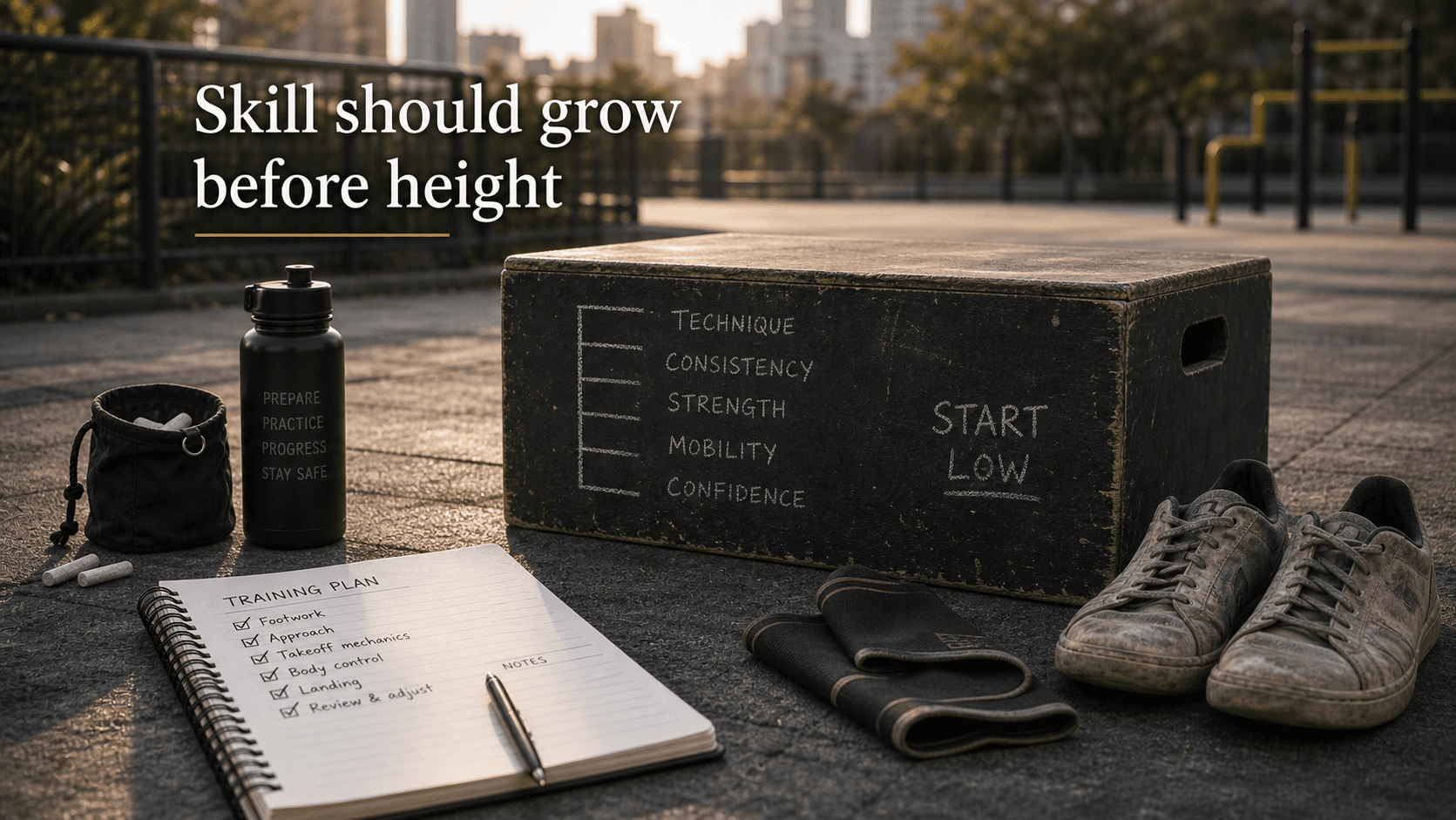
The more I trained, the more I understood that safer movement is built in layers:
- mobility before range
- strength before height
- low repetitions before big attempts
- controlled surfaces before unpredictable environments
- recovery before another hard session
The goal is not fear. The goal is respect.
When Pain Needs Attention
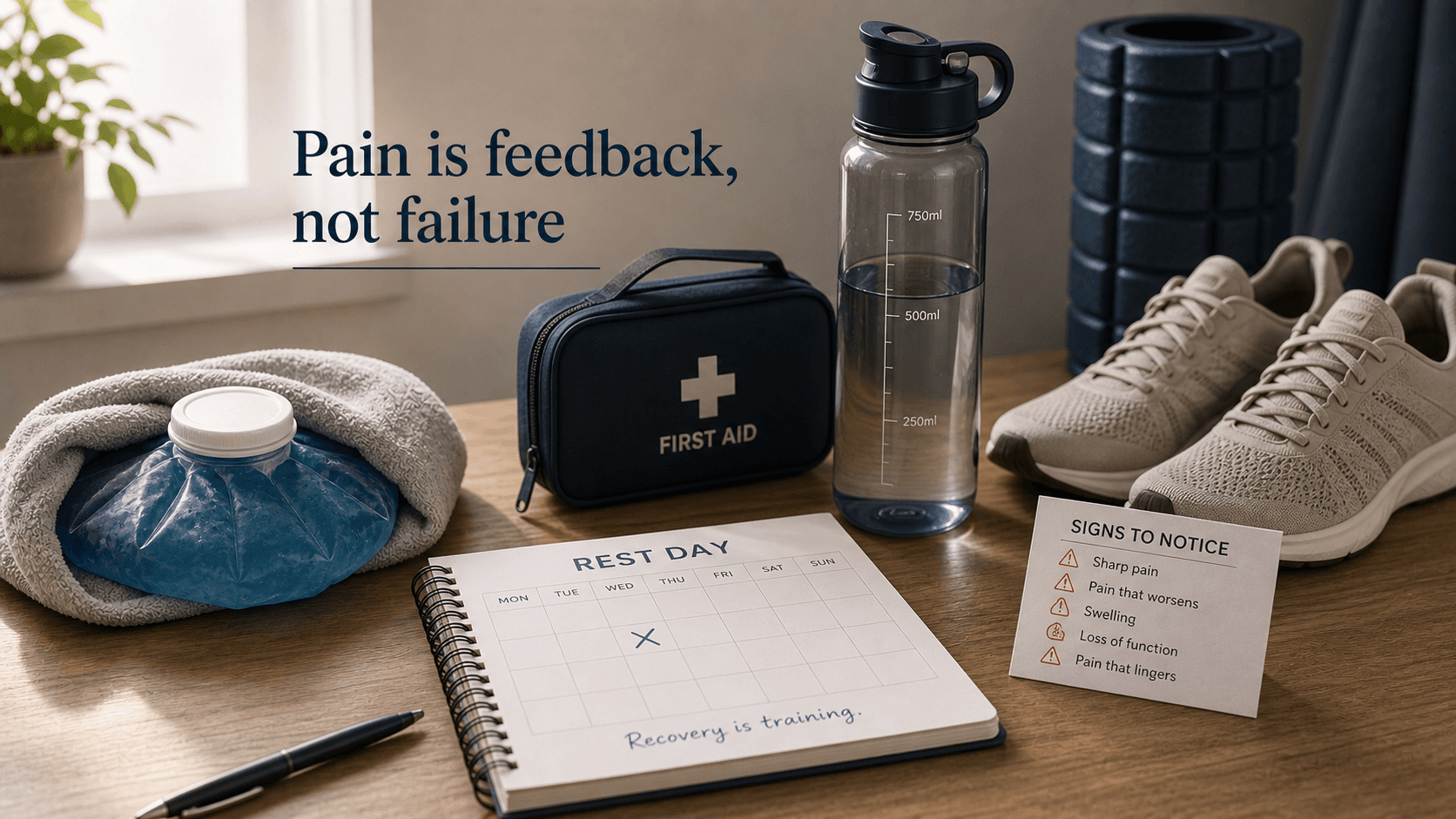
Minor soreness after training can happen. But some signs deserve more caution, especially after a fall, awkward landing, twist, or direct impact.
Seek medical care promptly if you have:
- severe pain, deformity, or inability to bear weight
- swelling or bruising that worsens quickly
- numbness, tingling, weakness, or loss of function
- hip, back, neck, or head pain after a significant fall
- pain that does not improve with rest
- pain that changes the way you walk
- repeated joint instability or the feeling that something gives way
- fever, redness, warmth, or signs of infection after a wound
If a head impact causes loss of consciousness, confusion, vomiting, worsening headache, seizure, vision changes, or unusual behavior, treat it as urgent.
For less severe sprains and strains, rest, protection from further injury, appropriate ice or compression when advised, gradual return, and professional guidance can help. But the right plan depends on the injury. A painful hip after a fall is not something to diagnose from a social media comment or a motivational quote.
How I Would Start Differently Now
If I could go back, I would still let myself start.
Parkour gave me something valuable. It made me more aware of space, balance, fear, and effort. It made movement feel less like exercise and more like problem solving.
But I would start differently.
I would spend more time on the basics:
- landing mechanics
- rolling on soft surfaces before hard ones
- ankle, hip, and trunk strength
- mobility and warmups
- small vaults before bigger ones
- planned exits before attempts
- saying no when a movement felt wrong
- learning from someone experienced when possible
Most importantly, I would remove the pressure to prove courage.
Parkour is not only about whether you can jump. It is about whether you can read the environment, read your body, make a good decision, and come back tomorrow.
What the Fall Taught Me
The fall did not end my interest in movement.
It changed my relationship with it.
I stopped seeing pain as an interruption and started seeing it as information. I stopped treating fear as something to crush and started treating it as something to understand. I stopped chasing the biggest version of a movement and started respecting the cleanest version.
That lesson applies beyond parkour.
Confidence is useful, but it can outrun preparation. Progress is good, but not when it depends on ignoring feedback. Courage matters, but courage without judgment can become recklessness wearing a better name.
The body is not invincible.
That does not make it weak.
It makes it worth training with patience.
References
- AAOS OrthoInfo: Sprains, Strains and Other Soft-Tissue Injuries
- Mayo Clinic: Sprain - Diagnosis and Treatment
- CDC: Adult Physical Activity Guidelines
- NHS: Sports Injuries
Related HealthUnspoken Reading
Disclaimer: This article is for educational purposes only and is not medical advice. Individual symptoms, risks, and treatment decisions vary. Always consult a qualified healthcare professional for diagnosis and personalized care. If you have severe, worsening, or emergency symptoms, seek urgent medical attention immediately.
Related Reading
Continue reading after I Thought I Was Invincible — Until One Fall Changed Everything
Why Did I Start Throwing Up Bile When I Was Just Hungry
A lived-experience story about hunger-triggered nausea, yellow-green vomiting, gastritis, ulcers, bile reflux concerns, and why recurring symptoms deserve medical review.
When Retirement Finally Gave Me the Time to Heal
A personal story about back and hip pain, overwork, physiotherapy, walking, gardening, and how recovery became possible only after life finally slowed down.
The Nosebleeds That Followed Me From Childhood Until One Small Surgery Changed Everything
A personal story about recurrent childhood nosebleeds, dry weather, a hidden wound, one frightening travel episode, and the small ENT procedure that finally broke the pattern.
Share on WhatsApp
2–3 line summary is copied. Tap to open WhatsApp and share.
 Tip: You can edit the text after it opens in WhatsApp.
Editorial Note
This article is prepared by the HealthUnspoken Editorial Team. Our articles may combine first-person submissions, public health education references, and commonly discussed experiences, then are edited for clarity and context.
The goal is reader awareness and education. This content is not a diagnosis or a treatment plan.
⚕️ Medical Disclaimer
The information provided in this article is for **educational and informational purposes only**. It should not be considered medical advice, diagnosis, or treatment. Always seek the advice of your physician or other qualified healthcare provider regarding any medical condition or treatment decisions.
🧾 Sources
HealthUnspoken articles may include first-person stories, editorial summaries of broadly discussed experiences, and public health education references. They are reviewed by the editorial team for clarity and educational context.
Reader Experiences Shared
Curated anonymized snippets from public health discussions, edited for readability.
I kept thinking parkour would settle on its own, but what helped most was tracking patterns and asking clearer questions in appointments.
The hardest part for me was uncertainty around parkour. Once I stopped changing everything at once, I could finally see what was helping.
I used to delay care because I was embarrassed about parkour. Earlier conversations would have saved me a lot of stress.
A second opinion around parkour changed my decisions completely. The issue was still real, but the plan felt calmer and more practical.
For me, progress with parkour came from boring consistency, not one dramatic fix. That mindset reduced panic a lot.
I learned to separate fear from facts with parkour. Writing down symptoms before visits made discussions more useful.