
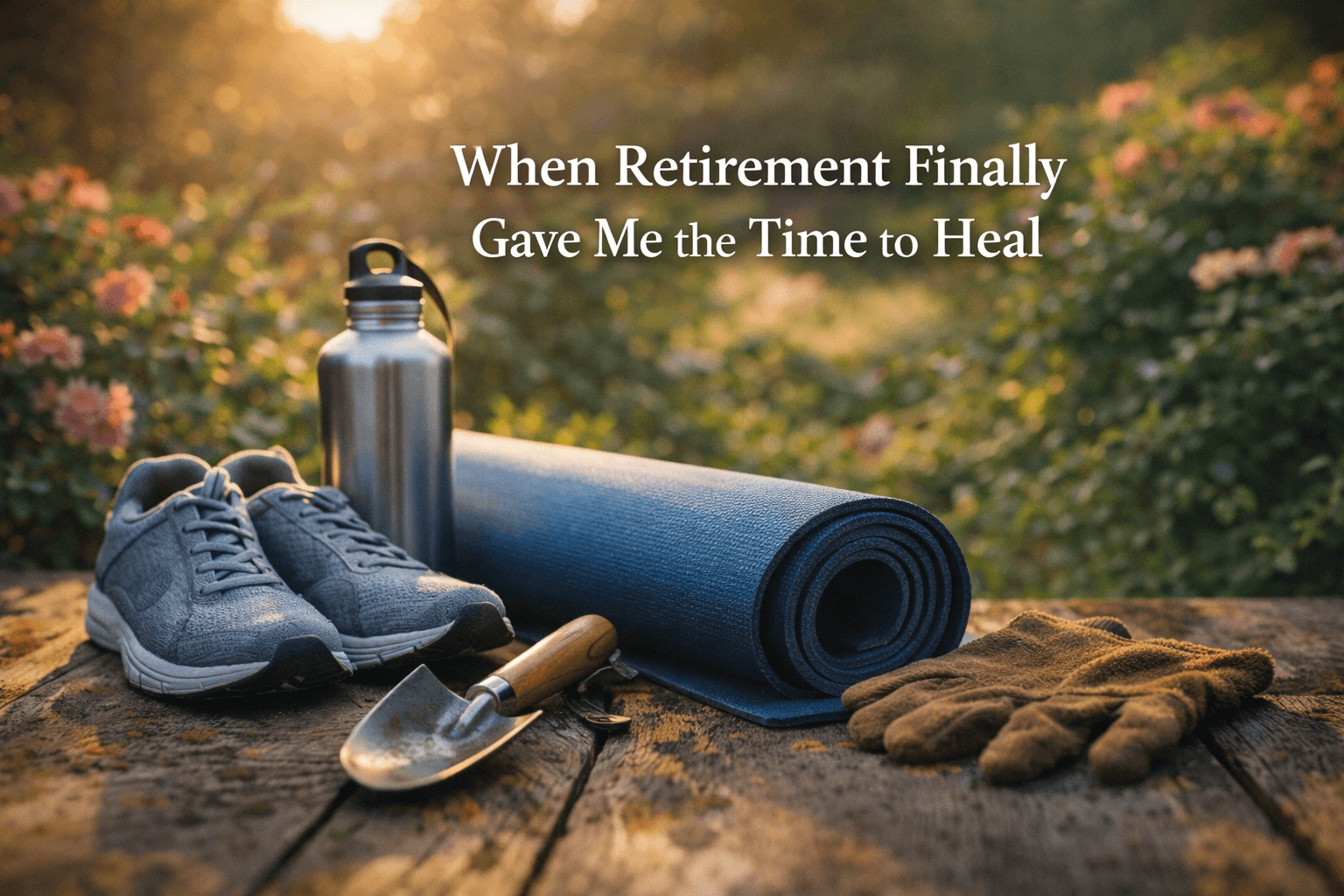
When Retirement Finally Gave Me the Time to Heal
- Authors

- Name
- Author: HealthUnspoken Editorial Team
- Published on
- Last updated:
- Country
- Country
- 🌍Country: Unknown
There was no dramatic breakthrough in my recovery. No single injection, surgery, or miracle week. What changed first was pace. After years of back and hip pain inside a seventy-hour work life, I finally reached a point where the body had no room left to keep adapting quietly.
Retirement did not heal me by itself.
What it gave me was time to do the things recovery had been asking for all along:
- regular movement
- actual rest
- physiotherapy that was not constantly squeezed between deadlines
- sunlight and time outside
- patience instead of panic
That difference mattered more than I expected.
The Pain Arrived Slowly, Then Took Over More Space
My pain did not begin with a fall or a dramatic injury.
It started as a low back ache I blamed on too much sitting. Then it spread into my hip and surrounding muscles. Walking looked slightly off before it felt clearly wrong. Some days I noticed a small limp. Other days I told myself I was just tired.
Pain often expands that way.
First the parking lot feels longer. Then stairs feel more expensive. Then you start planning your movements around what hurts least.
By the time I admitted something was seriously wrong, the problem was no longer just discomfort. It was function.
Work Was Not Neutral in the Story
At the same time, life at work was moving in the opposite direction.
I was working more than seventy hours a week in a high-pressure role with constant deadlines and emergencies. Our team had once been larger. Over time it shrank, but the responsibilities did not. The work simply redistributed itself across fewer people.
That matters because chronic pain is not only about tissue.
It is also about load:
- physical load from sitting, commuting, and poor recovery time
- mental load from stress and hypervigilance
- emotional load from feeling unable to slow down
Comment patterns from the bounded MySQL review for pain, retirement, working from home, physical therapy, and recovery kept circling the same themes:
- back and hip pain building quietly over years
- walking getting harder before people fully acknowledged it
- stress making pain feel louder and more persistent
- retirement or schedule changes creating the first real chance to recover
- people discovering that ordinary walking, yard work, and consistency mattered more than dramatic fixes
I did not use raw comments in this article, but those patterns fit my experience almost exactly.
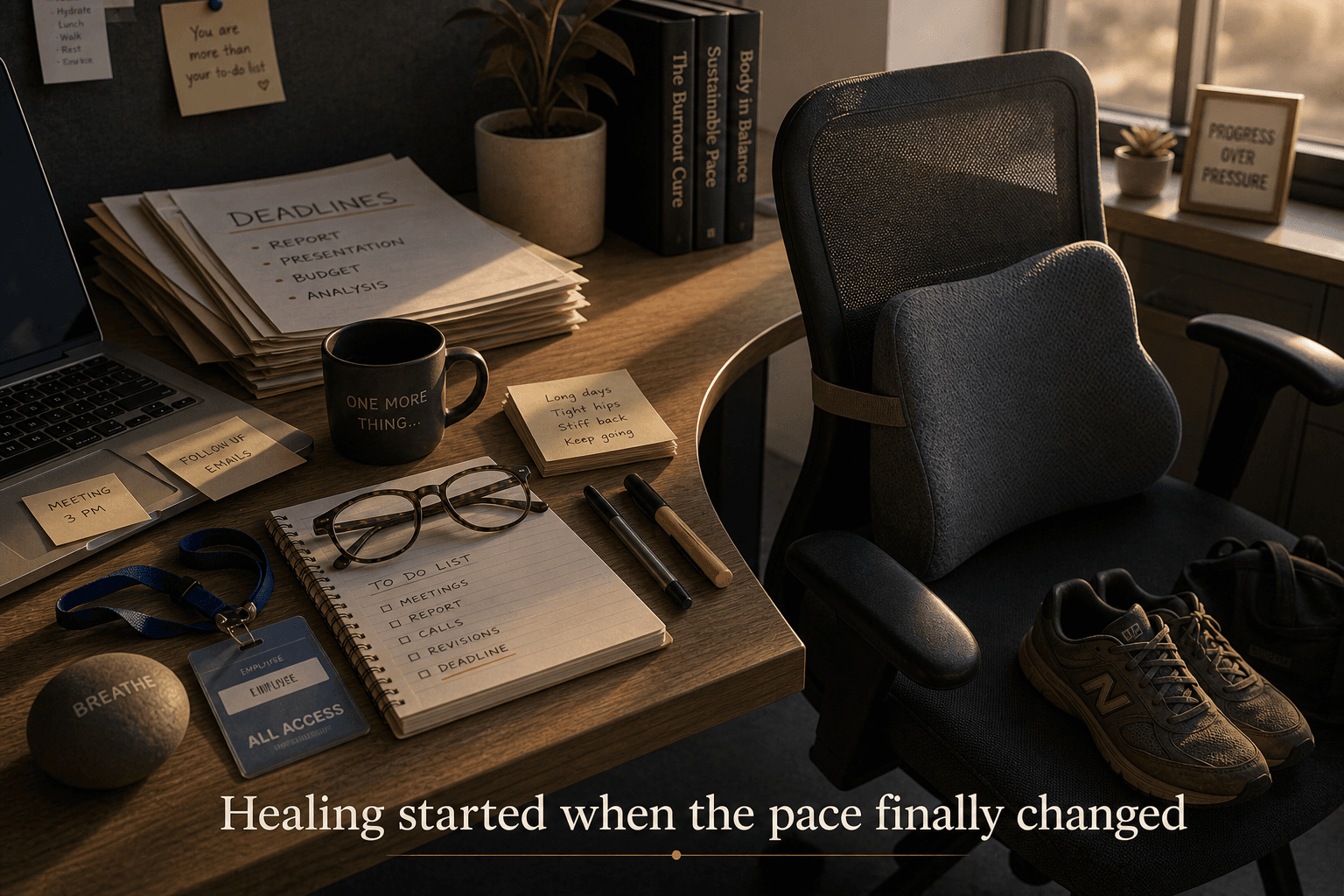
Physiotherapy Helped, but It Needed More Room Than I Had
Eventually my doctor referred me to physiotherapy.
For months I kept showing up. Bridges, clamshells, and core work became familiar. Some sessions left me hopeful. Others felt almost invisible because the rest of the week kept undoing the space my body needed.
That is one of the hardest parts of pain recovery when life is overloaded:
you can be doing the right exercises inside the wrong overall system.
I was still rushing, still working long after appointments, still sleeping poorly, still carrying the kind of daily pressure that keeps muscles braced and recovery delayed.
This is not an argument against physiotherapy. It is the opposite.
It is an argument for giving good therapy a life it can actually work inside.
Retirement Changed the Recovery Environment
When I retired, I was not suddenly well.
I still had hip pain. Walking still triggered symptoms. My back still felt unreliable. But for the first time in years, I had actual room to respond instead of merely coping.
That room changed several things at once:
- I could rest before the pain became overwhelming
- I could move at a steadier pace instead of in rushed fragments
- I could notice patterns more clearly
- I could build routines that were not constantly interrupted by work emergencies
Retirement gave me a calmer recovery environment.
And that turned out to be medically important, not just emotionally pleasant.
The Gym Was Not the Only Therapy
Before retirement, I had already joined a gym and hired a trainer once a week. Those early sessions were humbling. Movements that used to be simple now required concentration and restraint.
But the bigger surprise came outside the gym.
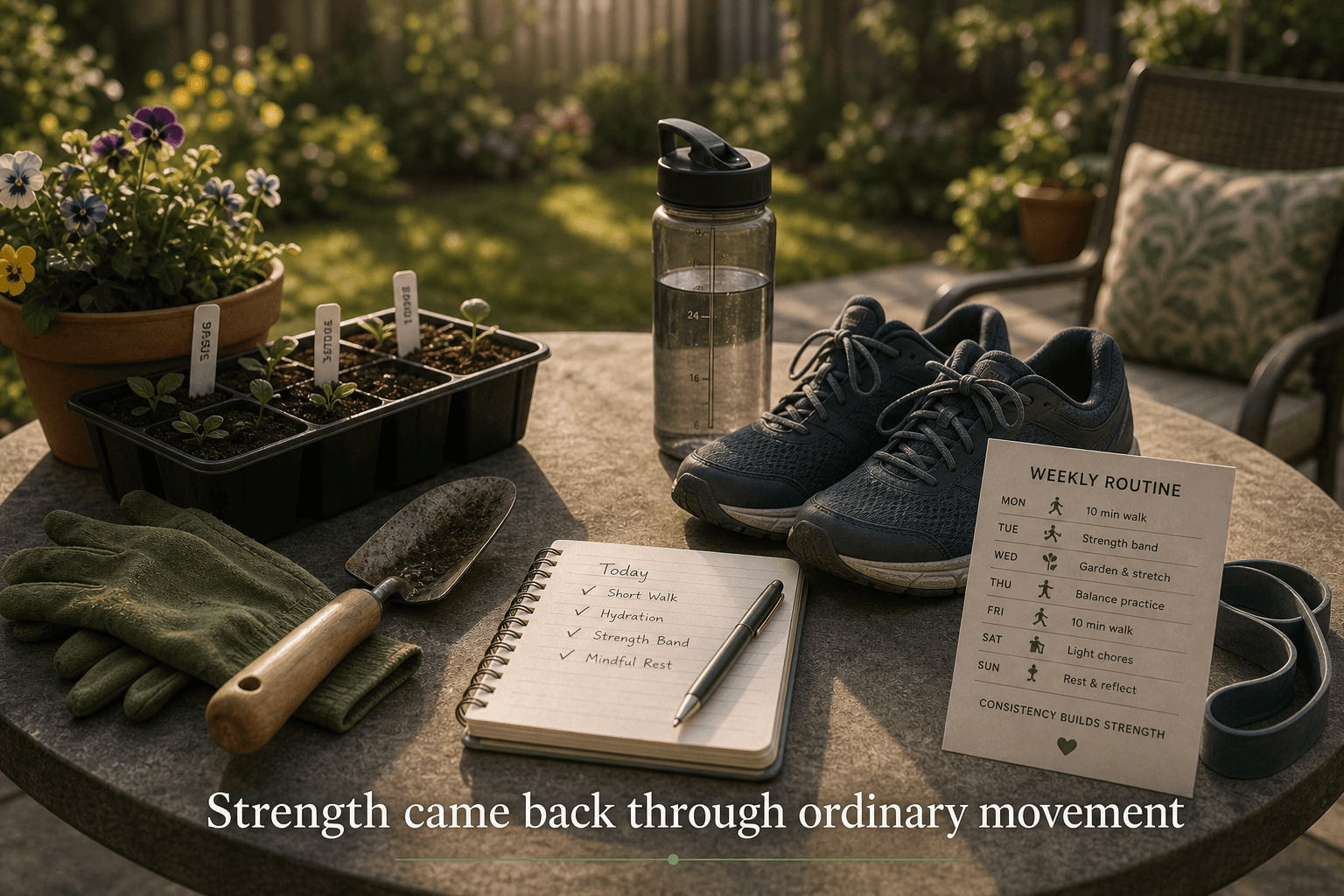
I started spending more time in the yard. Gardening, planting, pulling weeds, clearing neglected areas, bending carefully, kneeling when I could, standing up again, walking back and forth, carrying small loads.
Those activities did not feel like workouts.
They felt like living.
That difference mattered because the body often tolerates meaningful, ordinary movement better than abstract exercise done under pressure. Gardening gave me repetition, sunlight, balance practice, light strengthening, and a reason to keep moving without framing every motion as a test.
What Quietly Helped the Most
No single change explains everything, but several themes became obvious:
- regular walking mattered
- strength work mattered
- time outdoors improved my mood and consistency
- sleep and lower stress made pain easier to manage
- journaling helped me notice progress instead of measuring each day emotionally
- daily function improved when I stopped demanding dramatic results
The improvement was not linear. Some days still hurt. Some weeks felt slower than I wanted. But the direction changed. I was no longer only losing ground.
That shift is easy to underestimate if you focus only on pain scores.
Functional recovery often starts with smaller wins:
- a longer walk
- fewer pain-driven interruptions
- more confidence on stairs
- less fear around bending or standing
- an afternoon outside that does not end in collapse
Healthy Aging Is Not the Same as Forcing It
At seventy-three, I did not need a heroic comeback story.
I needed a body that felt safer to live in.
That is why I am careful with the message here. This is not proof that retirement solves chronic pain, or that every older adult just needs to push through with exercise. Some people have spinal stenosis, fractures, nerve compression, arthritis, inflammatory disease, medication side effects, or other conditions that need targeted medical care.
The lesson is narrower and more useful:
Recovery tends to go better when the body has enough time, enough support, and enough repeatable movement to adapt.
That may include:
- structured physical therapy
- strength and balance work
- walking
- home exercise
- pacing
- better sleep
- less all-day stress load
When Pain Needs Medical Reassessment
Persistent back or hip pain should not be waved away forever, especially in older adults.
Please seek medical review if pain comes with:
- new weakness
- numbness
- pain shooting down the leg
- bowel or bladder changes
- fever, unexplained weight loss, or night pain
- repeated falls
- severe pain after even a small injury
- worsening walking tolerance instead of gradual improvement
If physical therapy is not helping, that does not automatically mean you failed. It may mean the diagnosis, the plan, the intensity, or the surrounding life conditions need review.
What Retirement Really Gave Me
The gift was not idleness.
It was enough unclaimed space for healing habits to become real:
- go to the gym
- take the walk
- sit in the sun
- work in the yard
- rest before the body revolts
- notice what hurts and what helps
That sounds simple, but many adults live in a pace where simple things become medically unavailable.
Looking back, I do not think my body recovered because I stopped working.
I think it recovered because I finally had enough capacity to participate in my own recovery every day.
References
- National Institute on Aging: Exercise and Physical Activity
- CDC: About Chronic Pain
- MedlinePlus: Back Pain
Related HealthUnspoken Reading
Disclaimer: This article is for educational purposes only and is not medical advice. Back pain, hip pain, walking problems, falls, numbness, weakness, or worsening function should be evaluated by a qualified clinician, especially in older adults.
Related Reading
Continue reading after When Retirement Finally Gave Me the Time to Heal
I Didnt Heal Until I Finally Had Time to Heal
A de-identified personal story about chronic pain, constant work urgency, burnout, nervous-system exhaustion, and the slower kind of recovery that only started once rest became real instead of theoretical.
Two Hip Replacements, Twenty Years Apart and the Quiet Miracle of Living Without Pain
I lived through two hip replacements separated by twenty years. What changed was not only medicine but how pain, preparation, therapy and resilience reshaped my life.
When Pain Is Real but Youre Told It Isnt
A de-identified personal story about chronic pain, delayed diagnosis, hypermobility, rare-disease patterns, and the medical trauma that can build when the body is dismissed for too long.
Share on WhatsApp
2–3 line summary is copied. Tap to open WhatsApp and share.
 Tip: You can edit the text after it opens in WhatsApp.
Editorial Note
This article is prepared by the HealthUnspoken Editorial Team. Our articles may combine first-person submissions, public health education references, and commonly discussed experiences, then are edited for clarity and context.
The goal is reader awareness and education. This content is not a diagnosis or a treatment plan.
⚕️ Medical Disclaimer
The information provided in this article is for **educational and informational purposes only**. It should not be considered medical advice, diagnosis, or treatment. Always seek the advice of your physician or other qualified healthcare provider regarding any medical condition or treatment decisions.
🧾 Sources
HealthUnspoken articles may include first-person stories, editorial summaries of broadly discussed experiences, and public health education references. They are reviewed by the editorial team for clarity and educational context.
Reader Experiences Shared
Curated anonymized snippets from public health discussions, edited for readability.
I kept thinking retirement healing would settle on its own, but what helped most was tracking patterns and asking clearer questions in appointments.
The hardest part for me was uncertainty around retirement healing. Once I stopped changing everything at once, I could finally see what was helping.
I used to delay care because I was embarrassed about retirement healing. Earlier conversations would have saved me a lot of stress.
A second opinion around retirement healing changed my decisions completely. The issue was still real, but the plan felt calmer and more practical.
For me, progress with retirement healing came from boring consistency, not one dramatic fix. That mindset reduced panic a lot.
I learned to separate fear from facts with retirement healing. Writing down symptoms before visits made discussions more useful.