
Living With Gout: A 20-Year Battle of Pain, Misdiagnosis, and Small Victories
- Authors

- Name
- Author: HealthUnspoken Editorial Team
- Published on
- Last updated:
- Country
- Country
- 🌍Country: USA
For many people, gout is just a word they have heard tossed around as an “old man’s disease.” For me, it has been a 20-year education in pain, dismissal, medication access, kidney concerns, and the small victories that keep a chronic illness from taking over the whole story.
The First Attack
I still remember my first gout attack at 36 years old.
I woke up with searing pain in my foot, so intense I could not stand. It felt like shards of glass were grinding inside the joint. The skin was so sensitive that even light pressure felt personal.
Before that morning, I thought pain had a predictable scale. A sprain hurt. A pulled muscle hurt. A stubbed toe hurt for a minute and then became funny later.
This was different.
It did not feel like my body was warning me. It felt like my body had already declared war.
I went to the doctor because that is what you do when you suddenly cannot walk. The problem was that the answer did not come quickly. Over the next four years, I saw more than 20 doctors. Tests were run. Possibilities were mentioned. Some visits ended with a shrug.
The pain kept returning.
That was the part that wore me down: not just the flare itself, but the repeated experience of leaving appointments without a clear explanation.
Finally, Someone Listened
Everything changed when I met Dr. Anna Voytek, an orthopedic surgery specialist.
She did something that should not feel rare but often does when you have lived with unexplained pain: she listened from beginning to end.
She did not interrupt every sentence. She did not make me feel dramatic. She let the pattern become visible.
Within 30 minutes, she pieced together what others had missed.
I had gout.
That diagnosis brought relief and anger at the same time. Relief because pain with a name is easier to fight than pain without one. Anger because it had taken years to get there.
NIAMS describes gout as a form of inflammatory arthritis caused by urate crystal buildup in and around joints. Flares can cause sudden intense pain, swelling, warmth, and redness, often beginning in the big toe or lower limb, though other joints can be involved too.
That description finally made my experience make sense.
What a Flare Really Does to a Day
People who have never had gout sometimes imagine it as a sore toe.
That misses the reality.
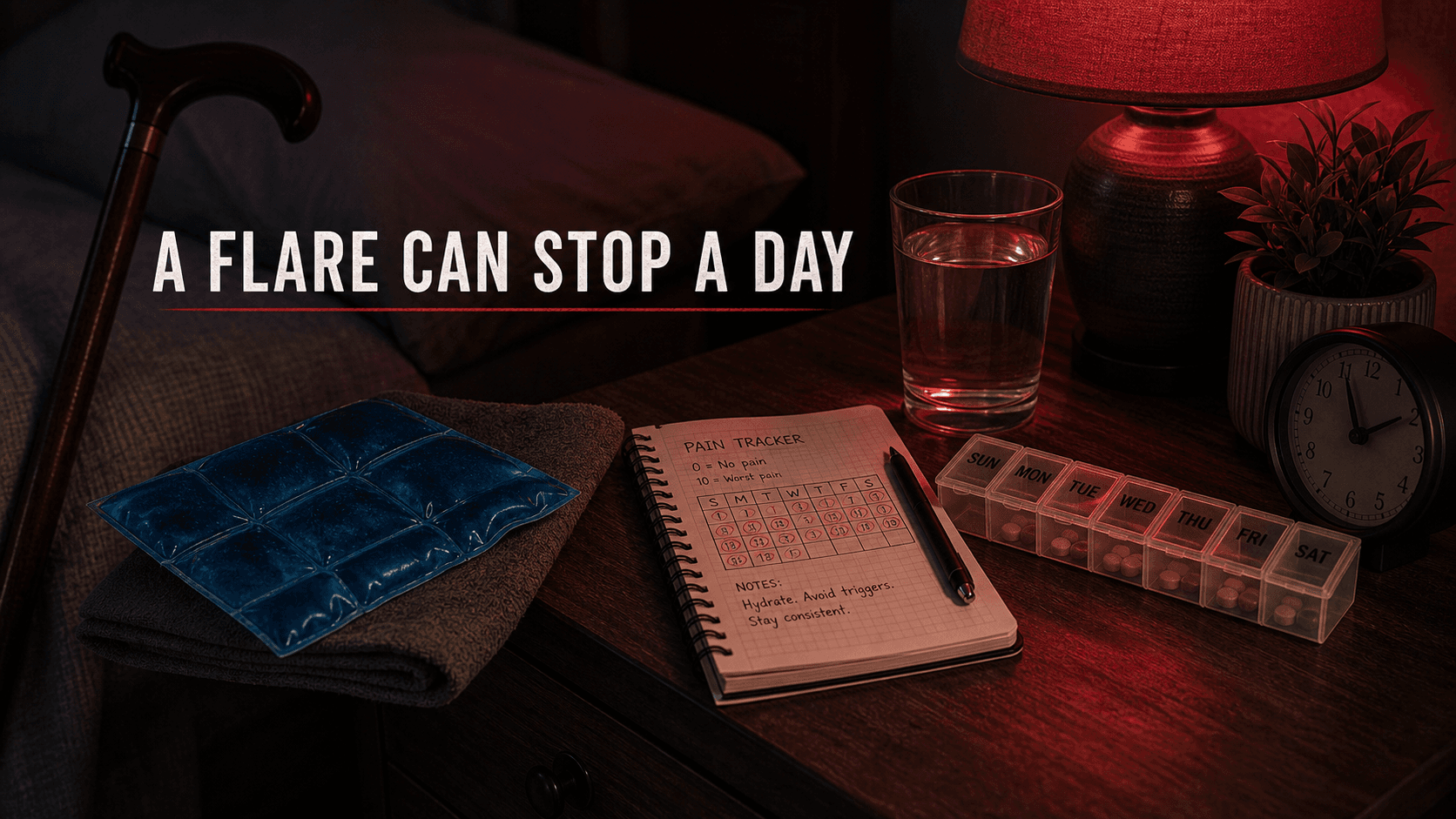
A flare can stop a day before it begins. It can turn walking to the bathroom into a negotiation. It can make a bedsheet feel too heavy. It can make you cancel plans, miss work, avoid shoes, avoid stairs, and sit still while everyone else keeps moving.
Over the years, I have had flare-ups in my feet, wrists, elbows, and even my neck. I have spent months essentially one-handed, unable to grip or lift. Simple tasks became tests:
- buttoning a shirt
- holding a coffee mug
- opening a jar
- stepping into the shower
- getting through a workday without showing how much I was hurting
That last one matters. Gout can be visible when a joint is swollen, but the emotional work is often invisible. You learn to explain why you are walking differently. You learn to say no. You learn to hide pain until hiding it becomes its own exhaustion.
Diet Helped, But It Was Not the Whole Answer
In the beginning, diet felt like the only tool I had.
I cut back on red meat, beer, shellfish, and other foods I associated with flares. For a while, that discipline gave me some control. I could almost predict when an attack might be coming and adjust.
Food still matters for me.
But I had to learn that gout is not always a simple food mistake. Mayo Clinic lists risk factors that include diet, alcohol, sugar-sweetened drinks, weight, medical conditions, family history, age, sex, recent surgery or trauma, and certain medications. NIAMS also notes that chronic kidney disease, high blood pressure, metabolic syndrome, diabetes, and kidney stones can overlap with gout risk.
That helped me stop treating every flare as a moral failure.
Diet can be part of gout management. It is not always enough by itself, especially when flares are frequent, uric acid stays high, kidneys are affected, or joint damage starts becoming a concern.
The Medication Problem Nobody Sees
For years, colchicine was my lifeline.
When I felt a flare starting, it was the medicine I trusted. Back then, it was affordable. Then the price changed, and suddenly a bottle that used to be manageable became expensive enough to change how I made decisions.
That kind of cost pressure does not show up on a pain scale.
Without prescription drug insurance, I tried cheaper alternatives. Some did not help. Some seemed to make things worse. I felt stuck in a loop where the condition was painful, the treatment was complicated, and the financial side made every decision heavier.
For about 10 years, I relied heavily on diclofenac. It gave me relief, but long-term use started affecting my kidneys. Prednisone helped in bursts, but it was not something I could treat like a simple long-term answer either.
This is where gout management gets serious. NSAIDs, colchicine, steroids, and urate-lowering medications all have roles, but they also have risks and interactions. Kidney function, stomach bleeding risk, blood pressure, diabetes, other medicines, age, and infection risk can all change what is safe.
Recently, I found a coupon that brought colchicine down to a price I could manage again. It might sound small, but affordable relief felt like hope.
What Similar Gout Stories Kept Repeating
When I reviewed broader gout and uric-acid conversations from doctor-channel and health-influencer comment sources, the same themes kept appearing. I am not publishing raw comments or personal details here, only the patterns.
People described gout as disabling, not minor. Some talked about crawling, missing work, being unable to put pressure on a foot, or having attacks in wrists, knees, elbows, and fingers. Several linked gout with kidney stones, diabetes, weight change, high blood pressure, or kidney worries.
The diet stories were intense. Some people credited low-carb diets, fasting, cutting sugar, giving up beer, drinking more water, cherries, celery, lemon, magnesium, or other routines. A few described life-changing improvement. Others were still in tears during flares despite trying hard.
The useful lesson is not that one internet remedy cures gout.
The useful lesson is that people are searching for control because gout takes control away.
That search deserves respect, but it also needs guardrails. Extreme diet changes, fasting, high-dose supplements, stopping medication, or relying only on home remedies can be risky, especially for people with kidney disease, diabetes, gout plus kidney stones, pregnancy, eating-disorder history, or multiple prescriptions.
Flare Treatment and Long-Term Control Are Different
This is one of the most important things I wish I had understood earlier.
Treating a gout flare is not the same as controlling gout long term.
The American College of Rheumatology explains that flare medicines may include colchicine, NSAIDs, or glucocorticoids, depending on the person. Those medicines aim to reduce inflammation and pain during an attack.
Long-term prevention is different. For people who need it, urate-lowering therapy aims to lower uric acid enough that crystals can dissolve or stop forming. ACR patient guidance describes a uric acid target of 6 mg/dL or lower for many people with gout, though individual plans belong with a clinician.
That distinction matters because it is easy to think, "I have flare medicine, so I have a plan."
Sometimes you do.
Sometimes you only have a fire extinguisher and still need to reduce the conditions that keep starting fires.

Questions I Ask Differently Now
After years with gout, I ask better questions.
Not perfect questions. Better ones.
- Is this definitely gout, or should infection, injury, rheumatoid arthritis, pseudogout, or another cause be considered?
- What is my uric acid level, and should it be rechecked?
- Are my kidneys safe with this medication plan?
- If I use NSAIDs, what warning signs mean I should stop and call?
- If I need steroids, how does that affect blood sugar, sleep, mood, infection risk, or blood pressure?
- Am I a candidate for long-term urate-lowering therapy?
- If I start urate-lowering medicine, do I need flare-prevention medicine during the first months?
- Could any of my current medicines be raising gout risk?
- What should I do if cost makes the recommended plan unrealistic?
That last question is not small. An unaffordable plan is not a plan. It is a document.
What Helps Me Cope
Over time, I have built a practical routine around gout.
At the first twinge, I take it seriously. I do not try to prove toughness by ignoring the pattern. Early treatment tends to work better for me than waiting until the flare is fully grown.
I rest the joint when I can. I use cold packs when they help. I keep water nearby. I avoid known personal triggers, especially when I am already under stress or dehydrated.
I also try to protect my mind from the shame spiral.
Gout can make you feel as if your body is punishing you for every meal, every drink, every imperfect choice. But chronic illness is rarely that simple. Responsibility is useful. Shame is not.
The goal is not to become perfect.
The goal is to become consistent enough, informed enough, and supported enough that flares no longer run the whole life.
When to Seek Medical Care
Please seek medical evaluation for suspected gout, especially if this is your first severe joint attack or if the diagnosis has never been confirmed.
Seek prompt care if you have:
- sudden severe joint pain, swelling, redness, or warmth
- fever, chills, or feeling seriously ill with a hot swollen joint
- pain after an injury or fall
- inability to bear weight or use the joint
- rapidly spreading redness or swelling
- a wound, drainage, or skin breakdown near the painful area
- kidney disease, one kidney, diabetes, immune suppression, or complex medication needs
- repeated flares, kidney stones, visible lumps, or worsening joint function
A hot swollen joint is not always gout. Infection in a joint can be dangerous and needs urgent medical assessment. Also speak with a clinician before starting, stopping, restarting, or combining gout medicines, NSAIDs, steroids, supplements, fasting plans, or major diet changes.
Small Victories Still Count
At 62, the attacks still come.
Sometimes they are harder than before. Sometimes they remind me that management is not the same as control. But I have also learned to notice small victories: a week without pain, a flare that fades sooner, an affordable prescription, a doctor who listens, a lab result that gives direction, a day when I can hold a cup without wincing.
Gout has forced me to slow down and respect my body’s limits.
It has also taught me to keep advocating. Pain deserves attention. Cost deserves honesty. Kidney concerns deserve monitoring. And a person living with gout deserves more than jokes about rich food or old age.
If you are struggling with gout, I will not tell you it is easy.
I will say this: you are not alone, and you are not weak for needing a plan.
Related Reading
References
- NIAMS: Gout
- Mayo Clinic: Gout Symptoms and Causes
- Mayo Clinic: Gout Diagnosis and Treatment
- American College of Rheumatology: Gout
Disclaimer: This article is educational and experience-based, not medical advice. Gout, severe joint pain, uric-acid levels, kidney disease, kidney stones, medication access, NSAID use, colchicine, steroids, urate-lowering therapy, supplements, fasting, and diet changes require individualized medical guidance. Seek urgent care for fever, chills, a hot swollen joint, spreading redness, severe uncontrolled pain, inability to use the joint, or symptoms that feel unsafe.
Related Reading
Continue reading after Living With Gout: A 20-Year Battle of Pain, Misdiagnosis, and Small Victories
When Pain Is Real but Youre Told It Isnt
A de-identified personal story about chronic pain, delayed diagnosis, hypermobility, rare-disease patterns, and the medical trauma that can build when the body is dismissed for too long.
Living With a Dry Mouth, Burning Pain, and No Easy Answers
A lived experience of chronic dry mouth, burning pain, medication side effects, dental damage, broken sleep, and the slow search for safer support.
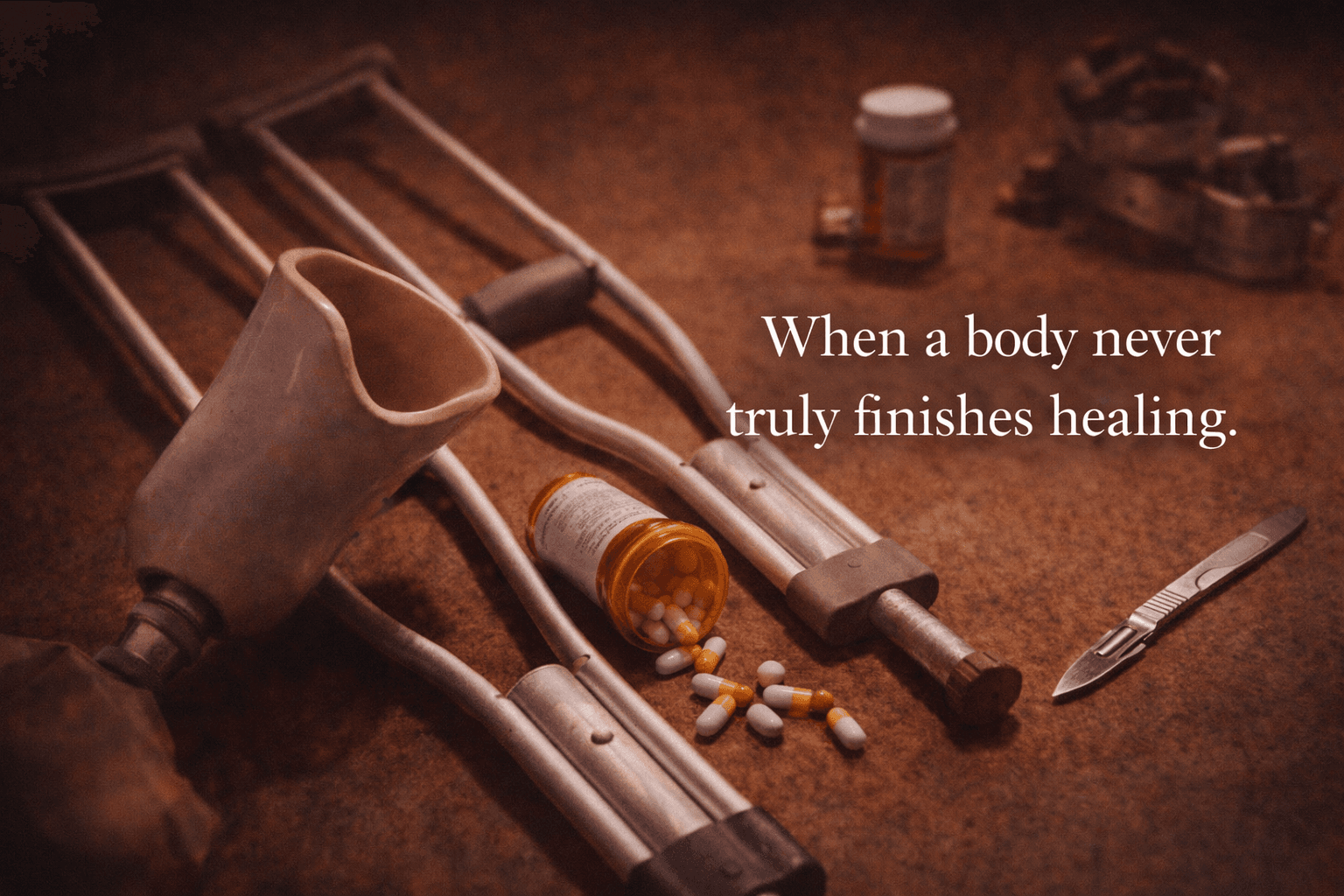
Living in a Body That Never Gets a Break
A personal story about disability, crutch overuse, shoulder injuries, repeated surgeries, chronic pain, and finding dignity while living in a body that keeps needing repairs.
Share on WhatsApp
2–3 line summary is copied. Tap to open WhatsApp and share.
 Tip: You can edit the text after it opens in WhatsApp.
Editorial Note
This article is prepared by the HealthUnspoken Editorial Team. Our articles may combine first-person submissions, public health education references, and commonly discussed experiences, then are edited for clarity and context.
The goal is reader awareness and education. This content is not a diagnosis or a treatment plan.
⚕️ Medical Disclaimer
The information provided in this article is for **educational and informational purposes only**. It should not be considered medical advice, diagnosis, or treatment. Always seek the advice of your physician or other qualified healthcare provider regarding any medical condition or treatment decisions.
🧾 Sources
HealthUnspoken articles may include first-person stories, editorial summaries of broadly discussed experiences, and public health education references. They are reviewed by the editorial team for clarity and educational context.
Reader Experiences Shared
Curated anonymized snippets from public health discussions, edited for readability.
I kept thinking gout diagnosis would settle on its own, but what helped most was tracking patterns and asking clearer questions in appointments.
The hardest part for me was uncertainty around gout diagnosis. Once I stopped changing everything at once, I could finally see what was helping.
I used to delay care because I was embarrassed about gout diagnosis. Earlier conversations would have saved me a lot of stress.
A second opinion around gout diagnosis changed my decisions completely. The issue was still real, but the plan felt calmer and more practical.
For me, progress with gout diagnosis came from boring consistency, not one dramatic fix. That mindset reduced panic a lot.
I learned to separate fear from facts with gout diagnosis. Writing down symptoms before visits made discussions more useful.