
Living With Mysterious Back Pain: My 20-Month Search for Relief

- Authors

- Name
- Author: HealthUnspoken Editorial Team
- Published on
- Last updated:
- Country
- Country
- 🌍Country: USA
Living with pain is hard. Living with pain that stays unnamed is harder. For nearly twenty months, I moved through each day with a tight, guarded body while my scans kept saying there was nothing major to explain it. The pain was real. The uncertainty was real. The part that wore me down most was trying to hold both truths at the same time.
Expectation vs Reality
What I expected
I expected this to be a short injury story.
Rest for a while. Do rehab. Return to normal.
I was physically active most of my life and believed discipline would carry me through.
What happened instead
Pain did not resolve in a straight line.
It changed shape. It moved across regions. It became a daily planning factor.
The deeper shock was not only physical discomfort. It was uncertainty. Each new test gave temporary hope, then the same unanswered question returned: if nothing dangerous is obvious on imaging, why is my body still locked in distress?

How the Pattern Actually Started
The first day was abrupt. I woke with severe lower-back pain and assumed it was a strain. By afternoon, the intensity was high enough to send me to emergency care.
Initial scans ruled out some urgent causes. I was relieved for a moment.
Then the next day came. Then the next week. Then the next month.
Instead of fading, the pattern settled:
- right-sided spinal muscle guarding from thoracic to lumbar zones
- recurrent right-hip spasm after ordinary activity
- persistent flank-area numbness
- partial relief mainly when lying flat for a sustained period
That was the beginning of the long middle: not acute collapse, not clear recovery, just prolonged functional struggle.
The Long Diagnostic Loop
Over twenty months, I moved through repeated medical pathways: orthopedics, neurology, pain medicine, rehabilitation settings, and multiple hospital systems.
I had multiple rounds of imaging and specialist review. Much of it returned with language like: "no major abnormality," "nonspecific findings," or "not enough to explain current severity."
People who have lived this pattern know the emotional contradiction:
- serious disease being ruled out is good news
- persistent pain despite that news is still life-changing
The part I was least prepared for was interpretive drift. When a case stays unclear, some conversations can become subtly dismissive. Not always openly, but enough to make you feel that your experience is being reduced to stress, exaggeration, or personality.
That erosion of trust can be as damaging as the symptom itself.
When Treatment Becomes Trial-and-Error Fatigue
Like many chronic pain patients, I tried almost every commonly suggested route:
- physiotherapy blocks
- manual therapies
- injections and procedure-based options
- medication cycles
- home routines, position modifications, and activity adjustments
Some strategies helped briefly. Some helped only specific regions. Some did nothing measurable.
A repeated theme in cross-community experiences is this: people often stack too many interventions at once because they are scared, desperate, or pressured. Then when symptoms change, they cannot tell what helped and what harmed.
I made that mistake too.
Eventually I had to move from panic experimentation to structured iteration:
- fewer changes at a time
- longer trial windows
- explicit stop criteria
- symptom + function tracking together
That did not produce an instant cure, but it restored some decision clarity.
Nights and Mornings Were the Hardest
One of the strongest themes from lived experiences across both comment datasets was sleep disruption.
People repeatedly described:
- severe pain when trying to settle into bed
- waking from pain spikes overnight
- slow, painful first movement in the morning
- fear of bedtime because they expected another bad night
I recognized myself in that pattern.
Daytime function can be misleading. A person can look "mostly okay" for a few hours and still spend the night cycling through pain, tension, and worry. Repeated broken sleep then worsens pain sensitivity, emotional resilience, and cognitive clarity the next day.
That cycle can make recovery feel impossible, even when some objective metrics are stable.
The Mental Load of "Unexplained" Pain
I used to think emotional impact came after physical symptoms. In long-duration pain, they often feed each other in real time.
As months passed, my mind adapted to threat anticipation:
- scanning for flare signals before routine tasks
- calculating risk in ordinary movement
- reducing social plans to avoid symptom spikes
- feeling guilty when I canceled
I was not catastrophizing for attention. I was trying to prevent collapse.
But hypervigilance has a cost. It keeps the nervous system on alert and narrows life to management mode. At some point, you are not only treating pain; you are treating fear of pain.
Experience Blocks
1) "My scan said one thing, my day said another"
"I was told there was nothing significant on MRI, but I still needed 20 minutes every morning to stand fully upright. I did not need dramatic labels. I needed practical help for the life I was actually living."
2) "I looked fine outside and broken at home"
"At work I could hold myself together for short windows. At home I crashed. By bedtime the pain would surge, and sleep became a negotiation. People saw my public version and assumed recovery was going well."
3) "I kept changing treatments too quickly"
"Every bad flare made me abandon the previous plan and start a new one. It took me months to realize I had no stable baseline. Progress began only when I reduced variables and tracked function weekly."
4) "Not being believed changed me"
"Pain is hard. Explaining pain repeatedly to doubtful listeners is harder. I started entering appointments already defensive, which made communication worse. Better outcomes came when I brought concise notes and asked focused questions instead of trying to justify my entire story each time."
What Felt Common
Across thousands of comments and lived narratives around chronic back and nerve pain, several patterns repeated:
- pain severity and imaging findings do not always correlate neatly
- sleep disruption amplifies both pain and distress
- treatment fatigue builds when plans keep changing
- people feel isolated when symptoms are visible only in private
- dismissive communication delays useful care
- hope improves when expectations become realistic and structured
Another strong theme was role loss. People did not only grieve pain. They grieved versions of themselves: the active worker, the reliable parent, the person who moved without calculations.
The bounded MySQL pull for this article was broad, but the usable signals were still consistent:
- people spending years in physical therapy or medication cycles without confidence about the real driver
- fear and frustration rising when scans or labs looked less severe than day-to-day function felt
- sleep disruption making pain harder to interpret and harder to tolerate
- surgery or procedure talk appearing before people felt they understood the pattern well enough
That does not mean every unexplained pain story is the same. It does support the article's central point: uncertainty becomes part of the burden, not just a lack of diagnosis.
What People Slowly Realized
The most useful realizations were usually unglamorous:
- "normal" does not always mean "nothing is wrong"
- reducing volatility can be a valid early goal
- function tracking beats memory-based summaries
- slow improvement is still meaningful improvement
- follow-up quality matters as much as first diagnosis
Many people also realized that certainty is not always available quickly. A better short-term target is building a safer, clearer process while uncertainty is being worked through.
Practical Stabilizers That Helped
These were not miracle fixes. They were repeatable supports.
1) Structured pacing
I stopped treating good hours as permission to overdo everything. Balanced activity windows reduced crash-and-burn cycles.
2) Sleep protection as treatment infrastructure
I treated bedtime setup as part of pain management, not optional self-care:
- lower stimulation before bed
- consistent wind-down timing
- position planning
- pre-decided response for night flares
3) Weekly function tracking
I tracked a small set of functional markers:
- sitting tolerance
- walking tolerance
- sleep quality
- next-day recovery
This made trends visible that daily emotion often hides.
4) Better appointment framing
I began bringing concise summaries:
- what changed since last visit
- what worsened pain
- what improved function
- what concerns remained unanswered
And I asked direct planning questions:
- What is most likely now?
- What alternatives are still plausible?
- What signs should trigger escalation?
- What specific 4-6 week plan should I follow?
5) Emotional support without dramatization
The most helpful support was neither minimizing nor catastrophizing. It was practical: transport help during severe flares, flexible scheduling, and one or two people who listened without debating my reality.
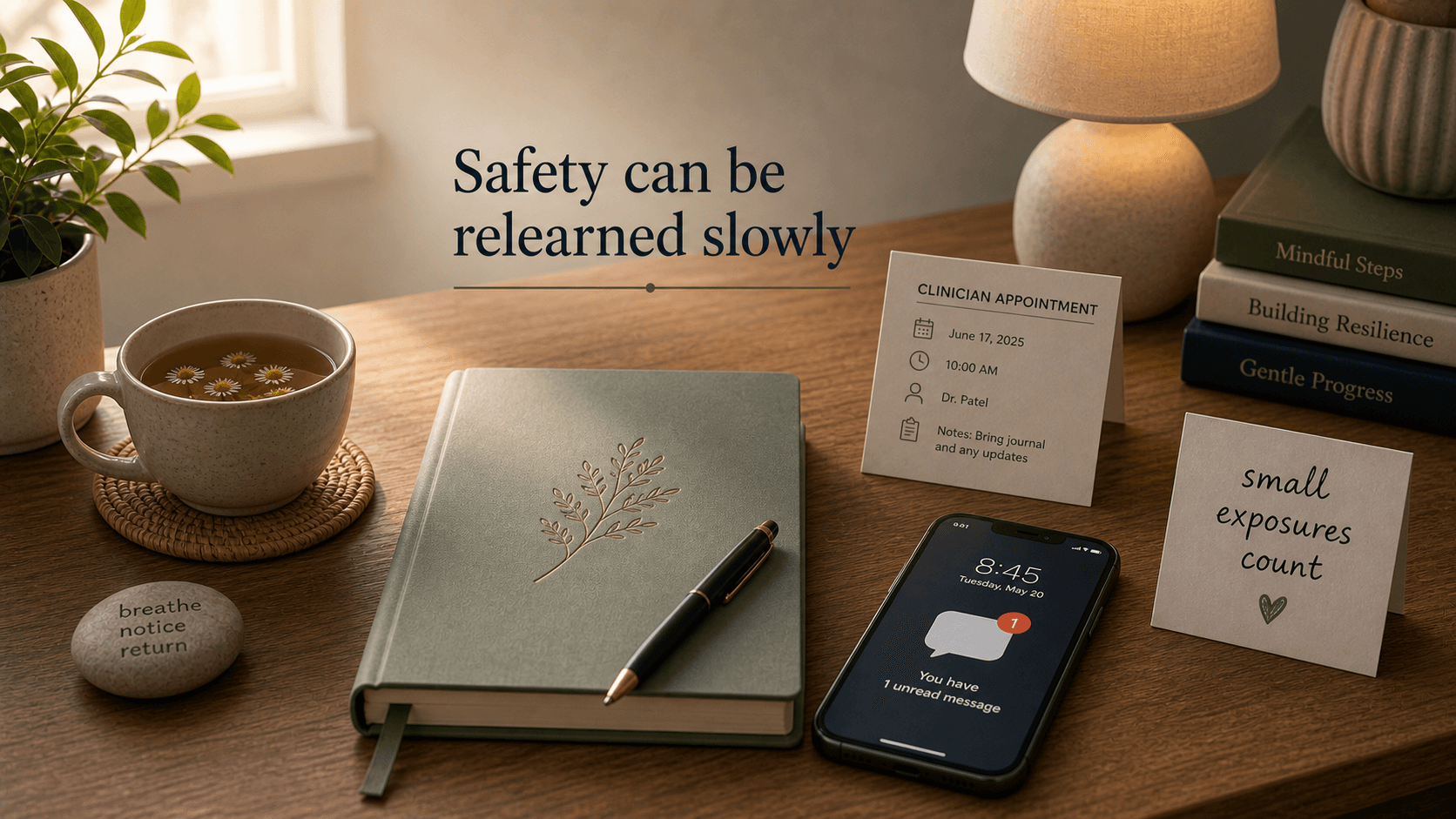
What Should Not Be Ignored
Persistent back pain deserves proper evaluation, and some symptoms should be treated as urgent.
Seek urgent medical care for:
- new or worsening leg weakness
- loss of bladder or bowel control
- numbness in saddle area
- severe pain after trauma
- fever with spinal pain
- unexplained weight loss with persistent pain
- rapidly progressing neurological changes
If red-flag symptoms appear suddenly, seek emergency care.
Closing Reflection
I used to believe healing would come as one definitive answer.
This journey taught me that sometimes healing begins earlier, with a better process: clear tracking, better questions, steadier pacing, and refusing to disappear inside uncertainty.
I still want a complete explanation. I still hope for cleaner relief.
But I no longer measure progress only by whether pain vanishes completely. I measure it by whether my life is getting larger again: better sleep windows, better function, better decisions, and less fear-driven chaos.
If you are in the same grey zone, you are not failing. You are navigating a hard, real condition that deserves serious care and serious respect.
References
- MedlinePlus: Back Pain
- MedlinePlus: Sciatica
- NINDS: Low Back Pain Fact Sheet
Disclaimer: This article is for educational purposes only and is not medical advice. Persistent or unexplained back pain still needs medical evaluation, especially when weakness, numbness, bladder or bowel changes, fever, trauma, unexplained weight loss, or rapidly changing neurological symptoms are present.
Related Reading
Related Reading
Continue reading after Living With Mysterious Back Pain: My 20-Month Search for Relief
I Kept Pushing Through the Pain… Until It Took Everything From Me
A personal journey through years of untreated back pain, difficult decisions, and the emotional reality of living with sciatica and surgery aftermath.
When Retirement Finally Gave Me the Time to Heal
A personal story about back and hip pain, overwork, physiotherapy, walking, gardening, and how recovery became possible only after life finally slowed down.

Two Hip Replacements, Twenty Years Apart and the Quiet Miracle of Living Without Pain
I lived through two hip replacements separated by twenty years. What changed was not only medicine but how pain, preparation, therapy and resilience reshaped my life.
Share on WhatsApp
2–3 line summary is copied. Tap to open WhatsApp and share.
 Tip: You can edit the text after it opens in WhatsApp.
Editorial Note
This article is prepared by the HealthUnspoken Editorial Team. Our articles may combine first-person submissions, public health education references, and commonly discussed experiences, then are edited for clarity and context.
The goal is reader awareness and education. This content is not a diagnosis or a treatment plan.
⚕️ Medical Disclaimer
The information provided in this article is for **educational and informational purposes only**. It should not be considered medical advice, diagnosis, or treatment. Always seek the advice of your physician or other qualified healthcare provider regarding any medical condition or treatment decisions.
🧾 Sources
HealthUnspoken articles may include first-person stories, editorial summaries of broadly discussed experiences, and public health education references. They are reviewed by the editorial team for clarity and educational context.
Reader Experiences Shared
Curated anonymized snippets from public health discussions, edited for readability.
My scan did not show anything major, but my nights were still broken by pain. The hardest part was feeling real symptoms without clear answers.
I could function in short daytime windows, then crash at night. People saw me moving and assumed I was better, but sleep told a different story.
I kept changing treatment plans too fast because I was scared. Things improved when I tracked function weekly and stopped making panic decisions.
After multiple consultations, what helped most was bringing one-page notes: what changed, what worsened symptoms, and what I needed clarified.
Being told to rest without a clear plan made me worse. Structured pacing and better sleep routines helped more than random treatment changes.
I stopped waiting for one perfect diagnosis and focused on reducing day-to-day volatility. That mindset shift gave me my first real progress.