
I Didnt Heal Until I Finally Had Time to Heal
- Authors

- Name
- Author: HealthUnspoken Editorial Team
- Published on
- Last updated:
- Country
- Country
- 🌍Country: USA
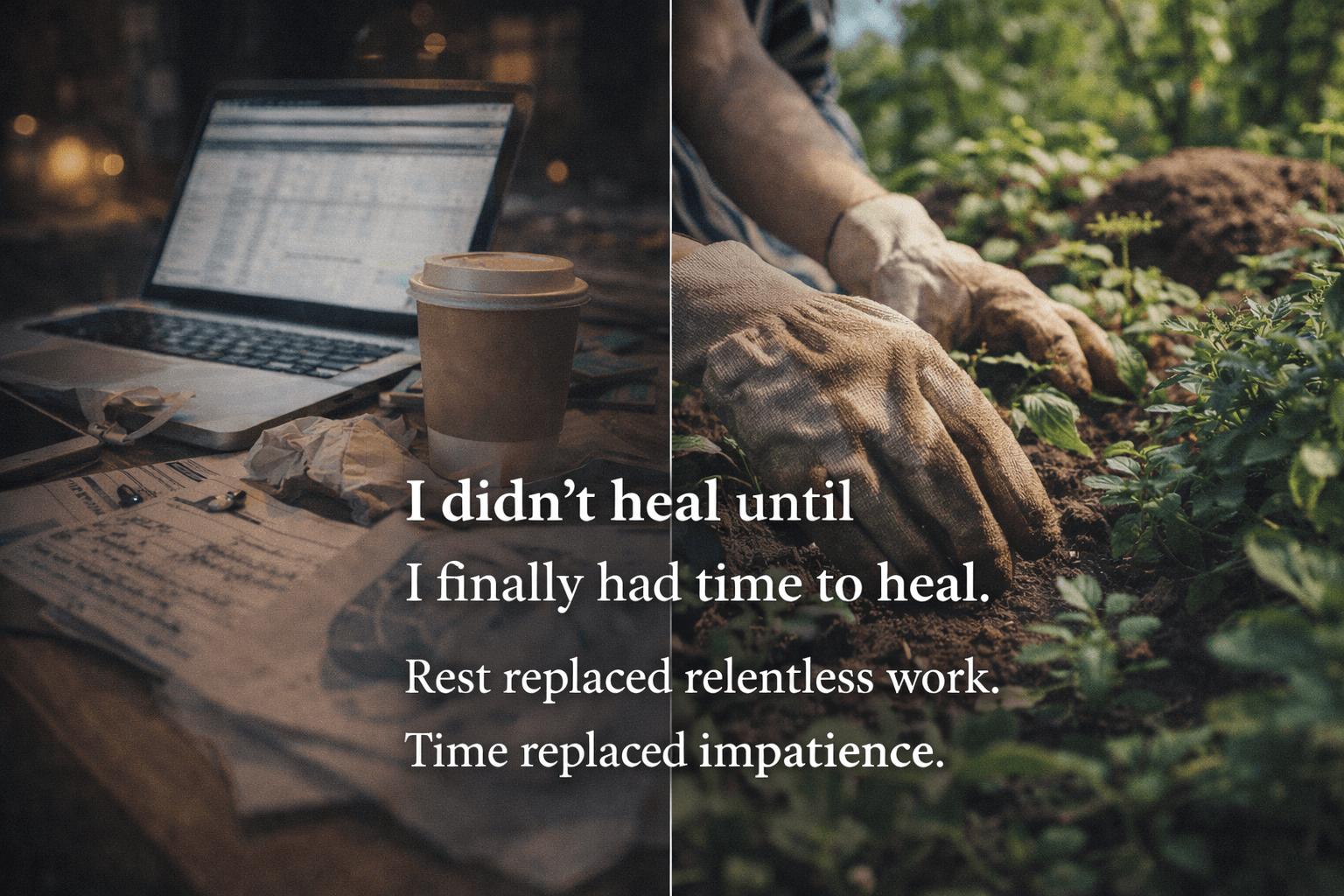
For a long time, I treated pain like a scheduling problem. If I could just push through a few more deadlines, a few more weeks, a few more emergencies, then I would rest properly later. Later kept moving. The body did not.
This article overlaps with my retirement story, but it is not the same story.
That one was about function returning through time and movement. This one is about something more basic: how constant urgency can keep the body from recovering at all, even when you are trying to do the right things.
I Was Not Only Injured. I Was Running Hot All the Time
The pain lived in my lower right back and glute. Walking became awkward. Sitting hurt. Standing hurt. Resting did not feel restorative. At its worst, I could barely walk without limping.
But the body problem was happening inside a larger system problem.
I was working seventy-plus hours a week in a deadline-driven environment where everything felt urgent. Emergencies were routine. Positions were not replaced. Criticism followed any sign that I could not operate at full pace.
That meant pain was never the only load.
There was also:
- constant pressure
- broken sleep
- mental overactivation
- guilt about slowing down
- fear of falling behind
When people talk about healing, they often describe the injured body part. They describe the back, the hip, the knee, the scan, the exercise program.
What gets left out is the atmosphere the injury is living inside.
Mine was not calm enough to heal.
The Comment Patterns Pointed to the Same Problem
I pulled bounded MySQL samples before rewriting this article, using phrases around burnout, rest, stress making symptoms worse, could-barely-walk experiences, retirement help, and nervous-system recovery. I did not use raw comments in the article.
The most useful patterns were not really about one diagnosis. They were about state:
- people describing a full-system crash after prolonged work stress
- pain and fatigue worsening when life stayed in emergency mode
- physical therapy helping only partly when the rest of life stayed overloaded
- some people saying they only improved once they had enough room to rest consistently
- recovery being slower and less dramatic than they expected, but more real once the pace changed
That matched what I lived through.
I was not failing recovery because I lacked discipline.
I was trying to recover in a body that never got out of alert mode.
Physical Therapy Was Real Help, but It Was Not Enough by Itself
I did the physiotherapy.
I learned the exercises. I showed up. I put effort into the program. Bridges, clamshells, core work, careful movement, repetition.
But I was also:
- sleeping badly
- working too long
- staying braced all day
- living in mental urgency
After five months, the pain was still there in a way that forced honesty.
That realization matters because people often blame themselves when good treatment only partly works. Sometimes the question is not "Did I try hard enough?"
Sometimes the better question is:
What else is keeping my body from adapting?
I still think physical therapy was important. What changed is that I stopped expecting it to outperform a whole lifestyle built around depletion.
Stopping Felt Like Failure Before It Felt Like Relief
One reason this period was emotionally difficult is that slowing down did not feel noble at first.
It felt frightening.
Work had shaped my identity for decades. Productivity was not just what I did. It was what told me I was still useful, dependable, and needed.
So when I finally stepped away, the first feeling was not peace.
It was restlessness.
There is a strange discomfort that comes when your body clearly needs rest but your mind still thinks rest must be justified.
That was part of the healing too:
- learning that being still was not laziness
- learning that a day on the couch was not moral failure
- learning that recovery may look unproductive before it looks successful
Rest Was Not Passive
At first I spent entire days doing very little.
That did not mean nothing was happening.
The body was finally getting what it had been missing:
- lower demand
- lower threat perception
- fewer forced decisions
- more predictable pacing
- more actual recovery time between efforts
Over time, rest became less about collapse and more about structure. I started to notice that healing did not only improve when I moved the right amount. It improved when I stopped living like every hour was an emergency.
This is where the nervous-system piece became harder to ignore.
The body does not repair well when it is constantly being told there is no room to come down.
Recovery Started to Look Ordinary
Eventually, more life came back into the routine:
- sitting outside
- short walks
- journaling
- prayer and quiet reflection
- light strength work
- small meals and better rhythm
I also experimented with personal routine changes around food and supplements, but I do not want to turn that into a formula for anyone else. The broader lesson was not "this exact diet fixed me."
It was:
consistency helped more than intensity.
And once the pressure dropped, I could finally be consistent.
The Hardest Part Was Accepting a Different Pace
This is what I wish more people understood.
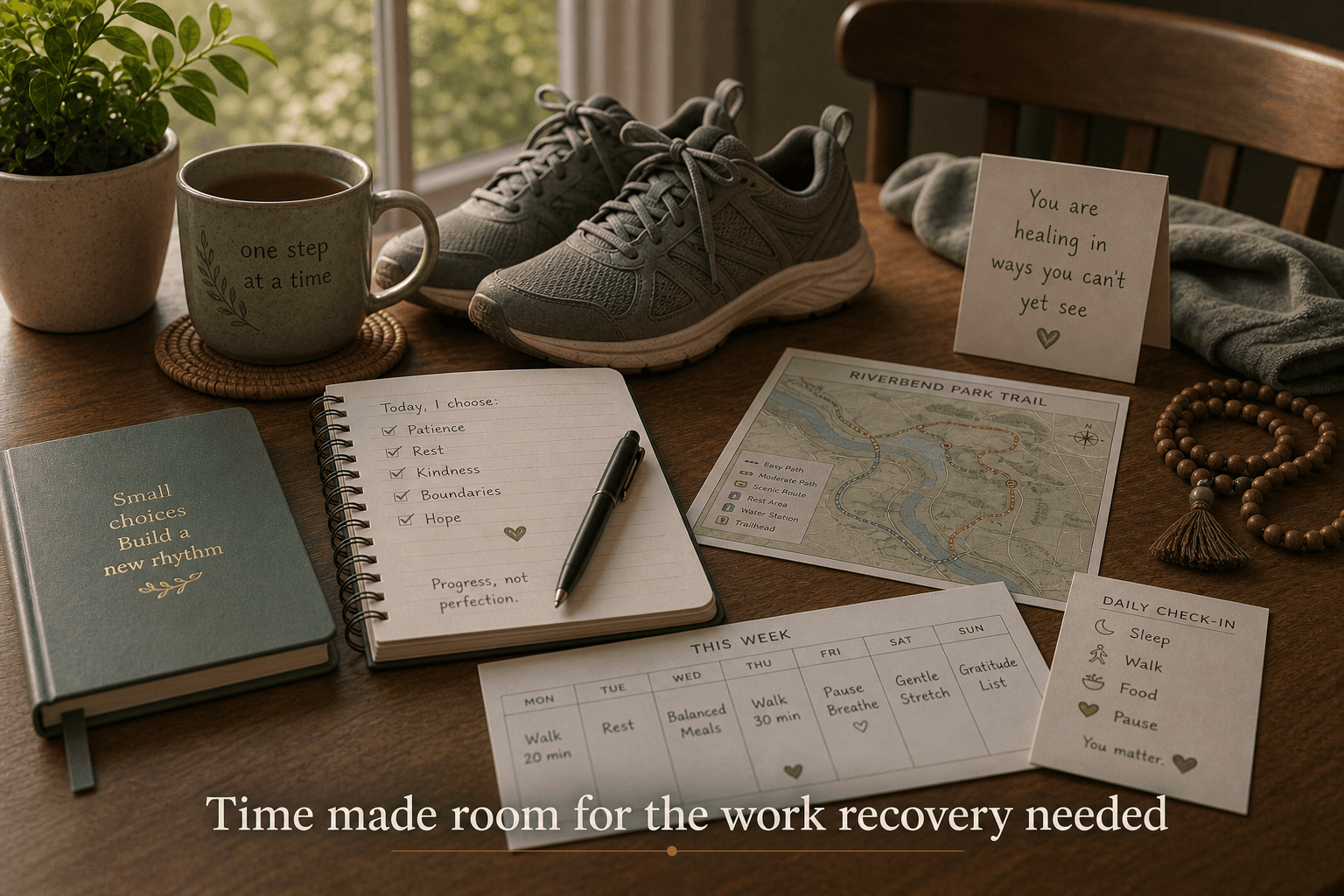
Some recoveries do not begin with motivation. They begin with permission.
Permission to:
- cancel what cannot be carried
- pause before collapse
- do less while the system stabilizes
- stop measuring worth only through output
- accept a season of slower rebuilding
That can be emotionally harder than people admit, especially after a lifetime of performance and reliability.
I was not only trying to heal my back.
I was trying to heal my relationship with urgency.
What Started Improving First
The first changes were not dramatic.
I did not wake up suddenly transformed. Instead I noticed:
- less panic around needing rest
- more tolerance for small walks
- a little less pain amplification after better sleep
- clearer thinking
- fewer hours spent feeling cornered by the day
Function improved before confidence fully caught up.
That is worth saying because many people expect healing to feel obvious early. Sometimes it looks more like the day becoming less hostile than it did a month ago.
When This Kind of Story Needs Medical Boundaries
There is a risk in articles like this: people may hear "rest helped" and conclude they should simply wait out serious symptoms.
That would be careless.
Please seek medical reassessment if you have:
- worsening weakness
- numbness
- bowel or bladder changes
- fever
- unexplained weight loss
- severe night pain
- repeated falls
- chest symptoms
- a sharp drop in function
And if burnout is so severe that you cannot sleep, think clearly, work safely, or cope with daily life, that deserves professional support too. Emotional collapse and physical breakdown often travel together longer than people admit.
What Time Actually Did
Time did not heal me in a magical sense.
Time gave me space for the things healing required:
- sleep
- pacing
- quiet
- movement without panic
- recovery between efforts
- patience long enough to let change accumulate
That is why the title still feels true to me.
I did not heal until I finally had time to heal.
Not because time is a cure by itself.
Because no plan can work well in a body that never gets to come out of emergency mode.
References
Related HealthUnspoken Reading
Disclaimer: This article is for educational purposes only and is not medical advice. It does not suggest that rest alone replaces diagnosis, physical therapy, medication, or professional care. If pain, weakness, falls, sleep problems, burnout, or worsening function are affecting your safety or daily life, seek help from a qualified clinician.
Related Reading
Continue reading after I Didnt Heal Until I Finally Had Time to Heal
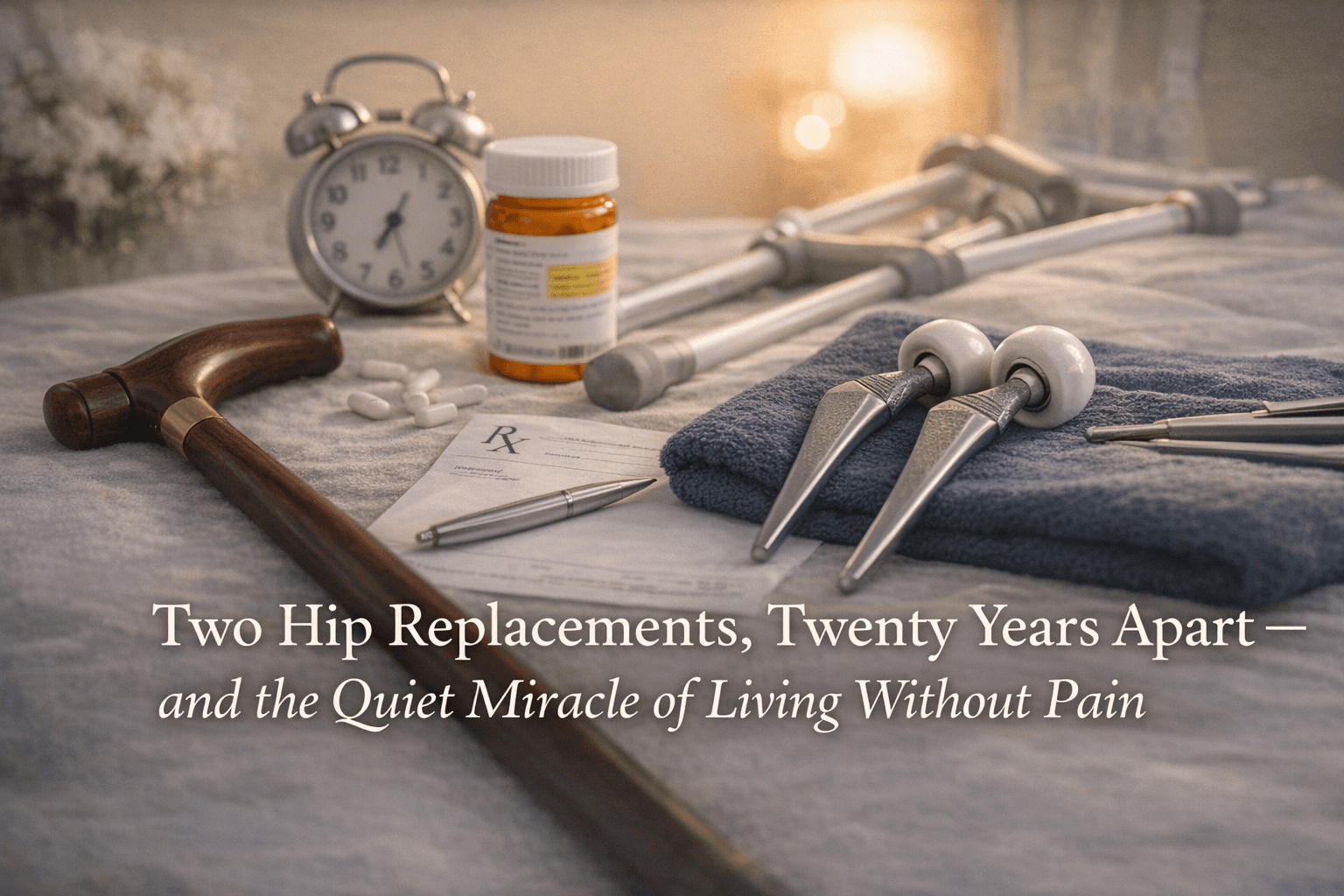
Two Hip Replacements, Twenty Years Apart and the Quiet Miracle of Living Without Pain
I lived through two hip replacements separated by twenty years. What changed was not only medicine but how pain, preparation, therapy and resilience reshaped my life.
Living With a Dry Mouth, Burning Pain, and No Easy Answers
A lived experience of chronic dry mouth, burning pain, medication side effects, dental damage, broken sleep, and the slow search for safer support.
When Retirement Finally Gave Me the Time to Heal
A personal story about back and hip pain, overwork, physiotherapy, walking, gardening, and how recovery became possible only after life finally slowed down.
Share on WhatsApp
2–3 line summary is copied. Tap to open WhatsApp and share.
 Tip: You can edit the text after it opens in WhatsApp.
Editorial Note
This article is prepared by the HealthUnspoken Editorial Team. Our articles may combine first-person submissions, public health education references, and commonly discussed experiences, then are edited for clarity and context.
The goal is reader awareness and education. This content is not a diagnosis or a treatment plan.
⚕️ Medical Disclaimer
The information provided in this article is for **educational and informational purposes only**. It should not be considered medical advice, diagnosis, or treatment. Always seek the advice of your physician or other qualified healthcare provider regarding any medical condition or treatment decisions.
🧾 Sources
HealthUnspoken articles may include first-person stories, editorial summaries of broadly discussed experiences, and public health education references. They are reviewed by the editorial team for clarity and educational context.
Reader Experiences Shared
Curated anonymized snippets from public health discussions, edited for readability.
I kept thinking time heal would settle on its own, but what helped most was tracking patterns and asking clearer questions in appointments.
The hardest part for me was uncertainty around time heal. Once I stopped changing everything at once, I could finally see what was helping.
I used to delay care because I was embarrassed about time heal. Earlier conversations would have saved me a lot of stress.
A second opinion around time heal changed my decisions completely. The issue was still real, but the plan felt calmer and more practical.
For me, progress with time heal came from boring consistency, not one dramatic fix. That mindset reduced panic a lot.
I learned to separate fear from facts with time heal. Writing down symptoms before visits made discussions more useful.