
Ten Years of Braces Taught Me Patience More Than Perfect Teeth Ever Could
- Authors

- Name
- Author: HealthUnspoken Editorial Team
- Published on
- Last updated:
- Country
- Country
- 🌍Country: India
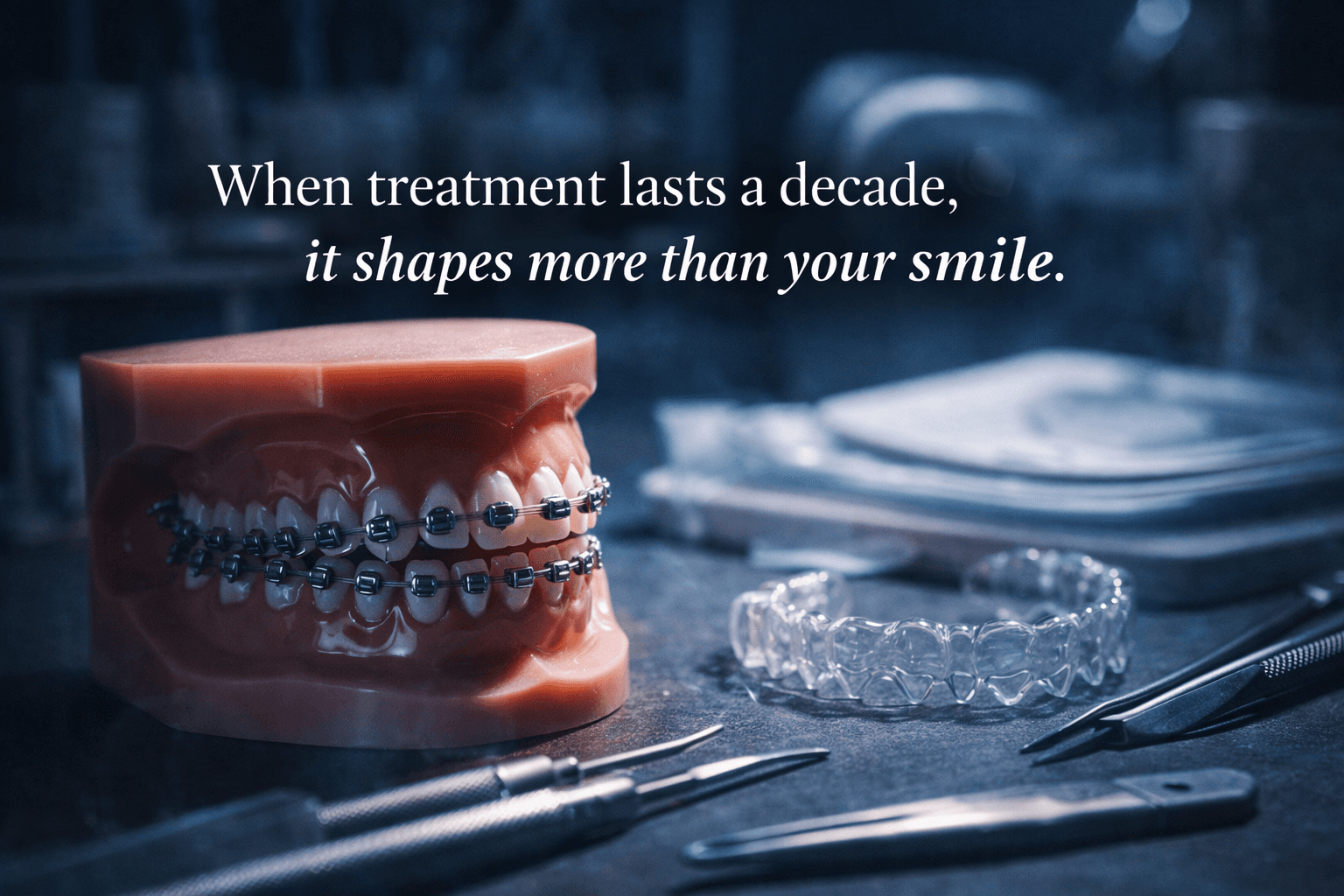
Most people talk about braces as a phase. Mine felt more like an era. For years there was always something in my mouth: a plate, wires, brackets, elastic bands, a retainer, another adjustment, another round of waiting. By the end, what the treatment changed was not only my bite.
It changed how I understood time, control, self-consciousness, and maintenance.
This is still a personal story, but I want it to be more useful than nostalgia. Long orthodontic treatment is not only cosmetic, and it is not emotionally neutral for children either.
When Adults Tell You Something Is Wrong Before You Understand It
I was still young when adults started talking about my teeth in worried tones.
I did not know what an overbite was. I did not understand jaw growth, timing windows, dental crowding, or why some children start earlier than others. I only knew that adults paused longer than usual when looking at my mouth and then discussed me with each other.
That kind of attention lands differently when you are a child.
You do not hear "clinical planning."
You hear:
something about me needs fixing.
That does not mean treatment was wrong. It means the emotional side begins earlier than most people acknowledge.
The Process Started Before I Was Old Enough to Frame It
Most people imagine braces as a middle-school or teenage milestone.
Mine started earlier and lasted longer.
Before the braces came the plate in the roof of my mouth. It changed speech, swallowing awareness, and eating. It made me constantly conscious of a part of my body most children barely think about.
Then came different phases:
- lower braces
- upper braces
- both together
- periods of waiting for growth
- periods when baby teeth had to fall out in the right order
- adjustments, repairs, and retention
From outside, it may have looked excessive.
From inside, it felt endless.
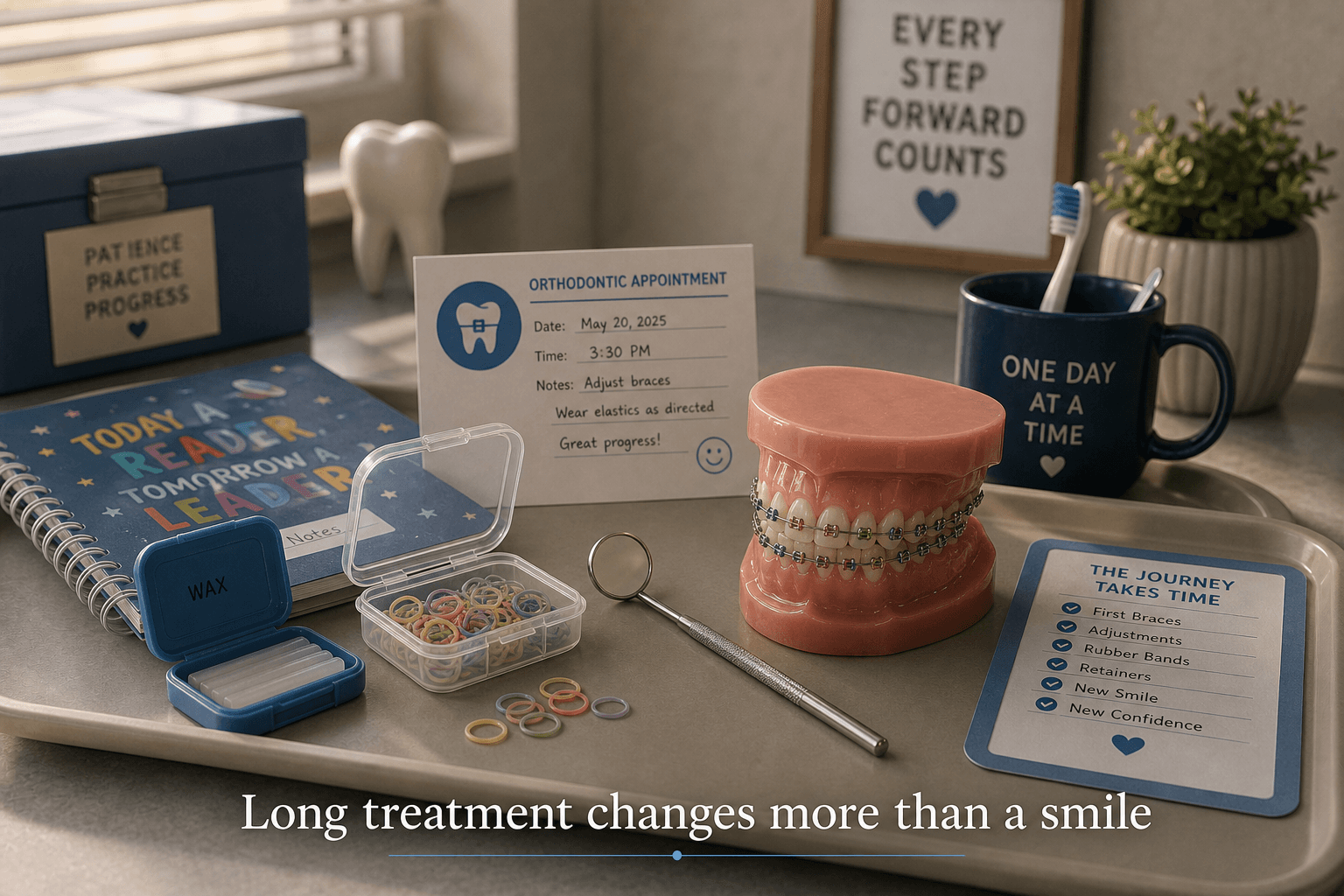
What the Comment Patterns Suggested
I pulled bounded comment samples for braces, retainers, overbite, orthodontics, rubber bands, and jaw surgery from the same curated MySQL workflow used for the other upgraded articles. I did not use raw comments in the article.
The patterns were useful:
- many people described orthodontic treatment as much longer and more emotionally tiring than others around them realized
- retainers and fixed bars often became their own maintenance problem, especially for cleaning and gum irritation
- some people connected old orthodontic decisions to later concerns around jaw position, airway, or TMJ discomfort
- extractions and long timelines were remembered less as one dramatic event and more as years of living in an unfinished body
- people often said the hardest part was not pain alone, but the duration and constant reminders
That matched my own memory.
The treatment was not one event. It was a long background condition of childhood.
Why Orthodontics Can Take So Long
One thing I understand much better now is that early orthodontic treatment is often about timing, not speed.
Children do not grow on a clean schedule. Teeth erupt in sequence. Jaws grow at different rates. Space changes. Bites change. Some problems can improve with gradual guidance; others may eventually need more intervention.
That means long stretches where the visible result seems small even when the plan is intentional.
The original article captured this well:
- baby teeth had to fall out
- adult teeth needed room
- the jaw was still changing
- some decisions were made to reduce the chance of bigger procedures later
That kind of treatment can feel frustrating to live through even when it is clinically sensible.
Growing Up "Under Construction"
There were only short windows in my childhood and adolescence when I had nothing in my mouth.
That matters because braces are not just hardware. Over time they become social and psychological context.
You learn:
- how to smile around them
- how to speak with them
- what foods to avoid
- how to deal with school photos
- how to explain the process to people who make casual comments
- how to live with the feeling that your face is still mid-edit
The emotional tone was not constant misery. It was quieter than that.
More like:
- mild self-consciousness
- constant body awareness
- a repeated sense that confidence belongs to some future version of you
That is a very long time for "later" to keep moving.
Extraction, Repairs, and All the Small Disruptions
Looking back, another reason the process felt so long was that it was not perfectly smooth.
I broke things. Wires snapped. Brackets loosened. Appointments multiplied. The treatment kept interacting with ordinary childhood in inconvenient ways.
Some plans also involve extractions, elastics, plates, or retainers that feel intense when written down but become ordinary to the child living through them.
That does not make them trivial.
It means adults around the child should be more careful about explaining what is happening and why.
When medical or dental treatment lasts years, the person inside it deserves more than "it will be worth it later."
They deserve context.
The Finish Line Was Quiet, Not Dramatic
When the braces finally came off, I expected something emotionally bigger.
It was not dramatic. It was almost surprisingly calm.
My teeth looked straight. My bite felt more normal. But the stronger feeling was not transformation. It was completion.
That distinction matters.
Orthodontic treatment does not always deliver a new identity. Sometimes it simply removes a long state of incompleteness.
That can still be a major relief.
Treatment Ending Is Not the Same as Being Finished Forever
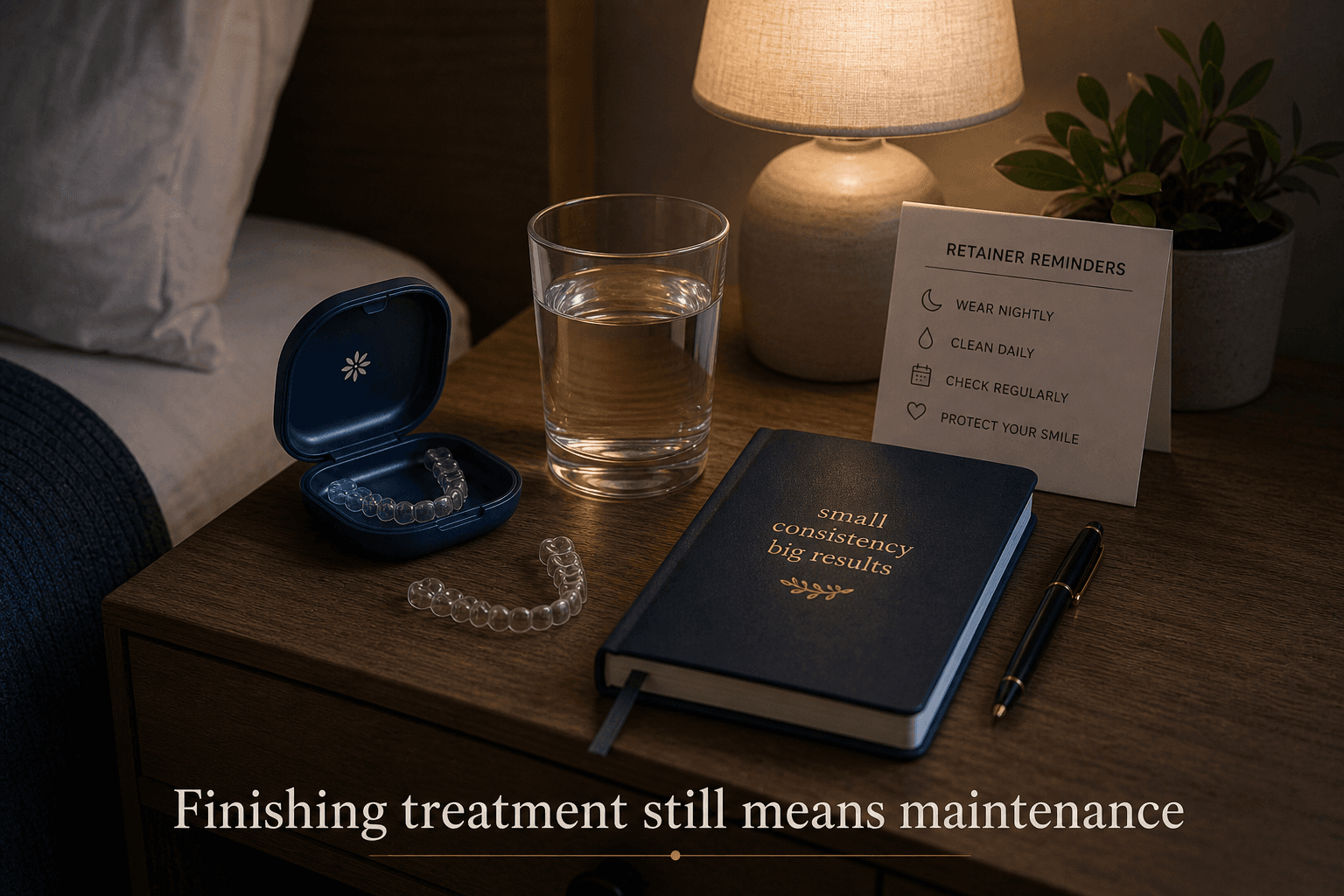
One of the more honest lessons is that orthodontics often ends in maintenance, not permanence.
Retainers matter. Cleaning matters. Follow-up matters. Some people wear retainers nightly for years. Some have fixed retainers that need extra attention. Some discover that gums, plaque, or bite comfort still need monitoring after the "big" treatment is over.
That was another repeated comment pattern:
- people were grateful treatment was done
- but many were surprised that maintenance never fully disappears
This is not failure. It is how bodies work.
Straightening, guiding, and stabilizing are not identical jobs.
What This Taught Me About Bodies
The longest lesson was patience.
Not the decorative version of patience that sounds noble in hindsight. The practical version:
- waiting while others finish sooner
- tolerating a process you did not fully choose
- trusting adults when you are too young to judge the plan yourself
- living with visible treatment while trying to feel normal
- understanding that bodies do not change on command
It also taught me that medical and dental treatment can be emotionally significant even when it is not life-threatening.
Long treatment changes how a child experiences their own body.
That deserves more acknowledgment than it usually gets.
When Orthodontic Issues Need Professional Review
Orthodontic questions are not something internet reassurance should settle alone.
Please seek review from a qualified dental or orthodontic professional if a child or adult has:
- trouble biting or chewing normally
- severe crowding or a bite that seems to worsen over time
- jaw pain, clicking, or locking
- speech concerns related to oral structure
- airway or sleep concerns that may involve oral anatomy
- gum irritation, plaque buildup, or cleaning difficulty around retainers or appliances
- uncertainty about whether a retainer still fits
And if a child is in treatment, it helps to explain the process in age-appropriate language instead of assuming they are too young to care.
They usually care more than adults think.
References
- HealthyChildren.org: Braces and Orthodontics for Children
- Cleveland Clinic: Overbite
- Cleveland Clinic: Retainer
Related HealthUnspoken Reading
Disclaimer: This article is for educational purposes only and is not dental or orthodontic advice. Questions about bite, jaw growth, retainers, gum health, or long-term orthodontic plans should be discussed with a qualified dental professional.
Related Reading
Continue reading after Ten Years of Braces Taught Me Patience More Than Perfect Teeth Ever Could
Two Hip Replacements, Twenty Years Apart and the Quiet Miracle of Living Without Pain
I lived through two hip replacements separated by twenty years. What changed was not only medicine but how pain, preparation, therapy and resilience reshaped my life.
I Didnt Heal Until I Finally Had Time to Heal
A de-identified personal story about chronic pain, constant work urgency, burnout, nervous-system exhaustion, and the slower kind of recovery that only started once rest became real instead of theoretical.
It Wasnt Just Anxiety How Understanding Neurodivergence Changed My Life
A de-identified personal story about skin picking, sensory overload, masking, late autism and ADHD diagnosis, and how better understanding changed what kind of support actually helped.
Share on WhatsApp
2–3 line summary is copied. Tap to open WhatsApp and share.
 Tip: You can edit the text after it opens in WhatsApp.
Editorial Note
This article is prepared by the HealthUnspoken Editorial Team. Our articles may combine first-person submissions, public health education references, and commonly discussed experiences, then are edited for clarity and context.
The goal is reader awareness and education. This content is not a diagnosis or a treatment plan.
⚕️ Medical Disclaimer
The information provided in this article is for **educational and informational purposes only**. It should not be considered medical advice, diagnosis, or treatment. Always seek the advice of your physician or other qualified healthcare provider regarding any medical condition or treatment decisions.
🧾 Sources
HealthUnspoken articles may include first-person stories, editorial summaries of broadly discussed experiences, and public health education references. They are reviewed by the editorial team for clarity and educational context.
Reader Experiences Shared
Curated anonymized snippets from public health discussions, edited for readability.
I kept thinking long orthodontic would settle on its own, but what helped most was tracking patterns and asking clearer questions in appointments.
The hardest part for me was uncertainty around long orthodontic. Once I stopped changing everything at once, I could finally see what was helping.
I used to delay care because I was embarrassed about long orthodontic. Earlier conversations would have saved me a lot of stress.
A second opinion around long orthodontic changed my decisions completely. The issue was still real, but the plan felt calmer and more practical.
For me, progress with long orthodontic came from boring consistency, not one dramatic fix. That mindset reduced panic a lot.
I learned to separate fear from facts with long orthodontic. Writing down symptoms before visits made discussions more useful.