
When My Brain Randomly Switched Off And No One Believed Me
- Authors

- Name
- Author: HealthUnspoken Editorial Team
- Published on
- Last updated:
- Country
- Country
- 🌍Country: India
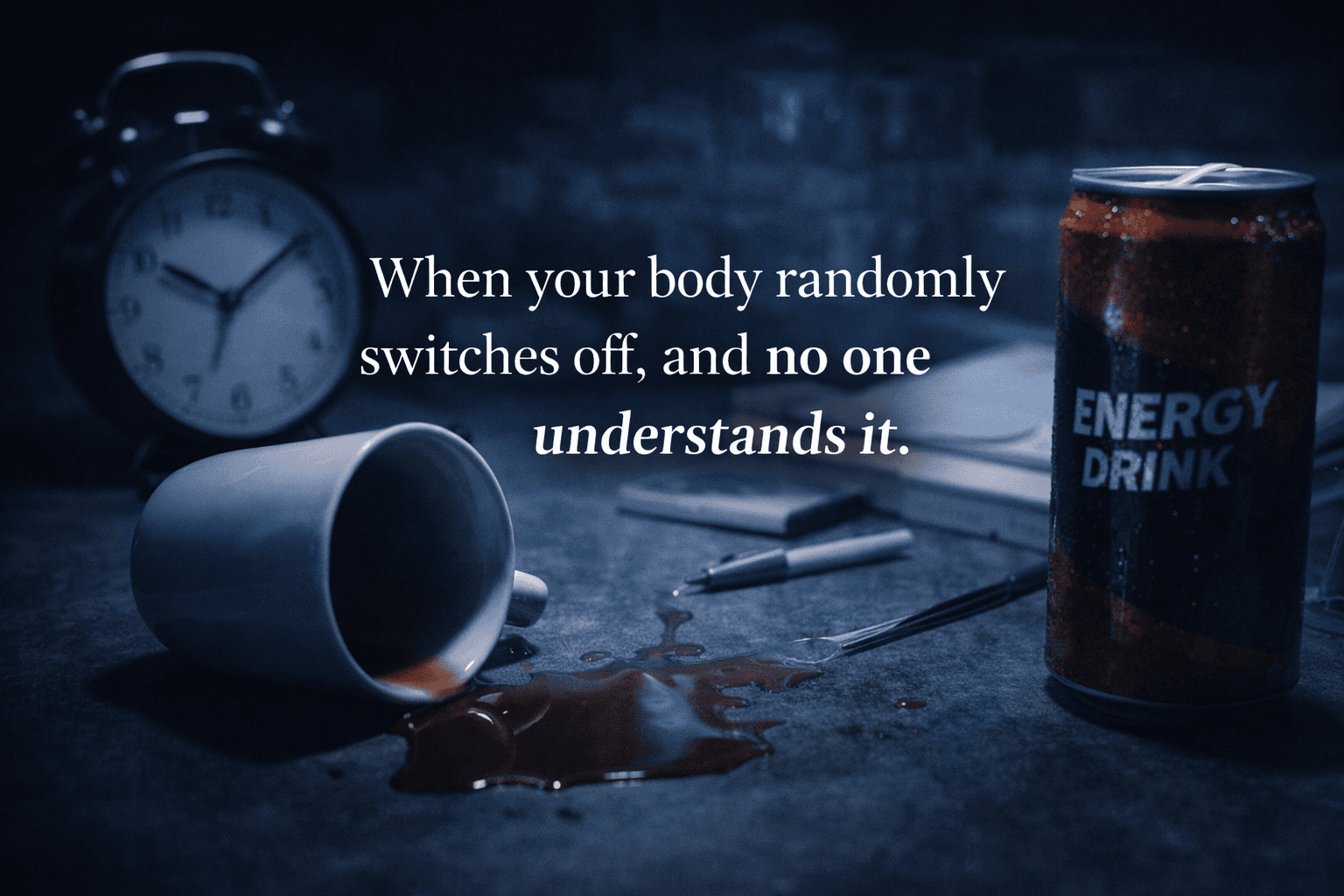
I used to think something was wrong with my discipline. Or my motivation. Or my character. There were moments, usually in the middle of the day, when my brain would simply shut down no matter how much I wanted it not to.
Sleepiness That Did Not Make Sense
This did not start when I was exhausted or burnt out.
It started when I was young.
Sometimes I had slept badly the night before, yes. But other times I felt completely fine. Awake. Alert. Even motivated.
And yet, if I had to sit still for any length of time, there was always a chance it could happen. A meeting. A lecture. A quiet workspace. A long explanation from someone else. The situation did not need to be boring. It only needed to be still.
Not every time. Not predictably.
But often enough that I began to fear it.
Expectation vs Reality
The expectation was that sleepiness had an obvious explanation.
You stayed up late. You were bored. You did not care enough. You needed coffee. You lacked discipline.
The reality felt stranger.
Sometimes I cared deeply about what was happening in front of me and still felt my brain fade out. Sometimes I had slept enough and still felt the pull. Sometimes I fought it with everything I had and still lost.
That is what made it so hard to explain. It did not feel like choosing to rest. It felt like a switch being flipped somewhere outside my control.
The Danger of Sitting Still
Stillness was the strongest trigger.
If I was moving, talking, walking, solving something, or physically engaged, I was usually okay. But the moment things slowed down, something inside me flickered.
My eyes would grow heavy. My head would dip. My thoughts would blur. I could hear words but not hold them. I could stare at a page and realize I had stopped reading it.
It was not ordinary boredom.
It was more like my brain deciding, without asking me, that it was done.
Trying to Fight It With Willpower
I tried everything I could think of.
Posture. Fidgeting. Cold water. Mental pep talks. Sitting forward. Standing when I could. Writing notes just to keep my hand moving.
I would tell myself: stay awake, pay attention, do not let this happen.
Sometimes I could shake it off.
Sometimes I could not.
And when I could not, shame arrived immediately. I did not need anyone else to judge me. I had already judged myself.
When Other People Notice
The worst part was not only the sleepiness.
It was the visibility.
Occasionally, someone would notice. A coworker. A supervisor. A peer. Sometimes it was teasing. Sometimes it was criticism. Sometimes it was only a look.
Either way, the message landed the same:
You are not trying hard enough.
So I learned to hide it. I would stretch, cough, adjust something on my desk, take a sip of water, or pretend I was looking down to read.
But hiding takes energy. And energy was the very thing I was losing.
What Similar Sleepiness Stories Often Mention
When I looked at broader sleep and fatigue conversations, the same emotional pattern showed up again and again. I am not publishing raw comments or personal details here, but the themes were clear.
People described being called lazy, slow, distracted, unmotivated, or dramatic when they were actually fighting heavy daytime sleepiness. Some had sleep apnea and felt embarrassed about needing treatment. Some had brain fog and fatigue even after enough sleep. Some noticed caffeine helped for a short time but worsened anxiety, sleep, or crashes later. Others described food-related dips, especially after sugary or heavy meals.
The most important pattern was this: people often waited a long time before taking the symptom seriously because they had absorbed everyone else's judgment.
That matters. Shame can delay care.
The Fear That Something Was Seriously Wrong
At some point, I started wondering if this was more than being tired.
The episodes felt too sudden. Too complete.
It was like the lights went off without warning.
I remember wondering whether I had some low-level sleep disorder. Something subtle enough to go unnoticed, but strong enough to interfere with daily life.
I did not pursue that thought very far. Mostly because I did not know how, and partly because I worried I would not be taken seriously.
Now I wish I had been more direct about it. Not because every daytime shutdown means narcolepsy or sleep apnea. It does not. But persistent sleepiness is a symptom worth evaluating, especially when it interferes with work, driving, school, relationships, or safety.
The Caffeine Patch
Like many people, I turned to caffeine.
Coffee. Energy drinks. Whatever was easily available.
They helped sometimes.
But they were not a guarantee.
There were days when no amount of caffeine could fully prevent those moments. It might delay them, soften them, or make me feel more alert for a while. But it did not explain the pattern.
Relying on stimulants came with its own tradeoffs: jitters, anxiety, crashes, stomach discomfort, and worse sleep later on. At times it felt like patching a leak without knowing where the pipe was broken.
Caffeine can be useful. It is not a diagnosis.
When Food Started Playing a Role
Later, I noticed another pattern.
Sometimes the shutdown feeling followed meals.
Not only huge meals. Not only holiday meals. Sometimes ordinary meals. Certain carbohydrates seemed to make the dip more obvious, especially if I had already slept badly or sat still afterward.
It was not dramatic every time. But it was real enough that I stopped dismissing it.
I began to understand that "sleepiness" can have layers. Sometimes it is poor sleep. Sometimes it is sleep quality. Sometimes it is meal timing, blood sugar swings, stress, medication effects, low iron, thyroid issues, depression, anxiety, sleep apnea, circadian rhythm disruption, or something else entirely.
That is why simple explanations fail. The body is not a motivational poster.
What Changed As I Got Older
Somewhere along the way, in my late thirties or early forties, I noticed the episodes became less frequent.
Not gone. But quieter.
I am not entirely sure why.
Maybe I started sleeping more regularly. Maybe I became better at recognizing my limits. Maybe my work patterns changed. Maybe food timing mattered. Maybe stress changed. Maybe I simply learned how to manage my energy better.
Honestly, I do not know.
That uncertainty used to bother me. Now I treat it as part of the story. Not every symptom gives you a neat ending.
What Helped Me Think More Clearly
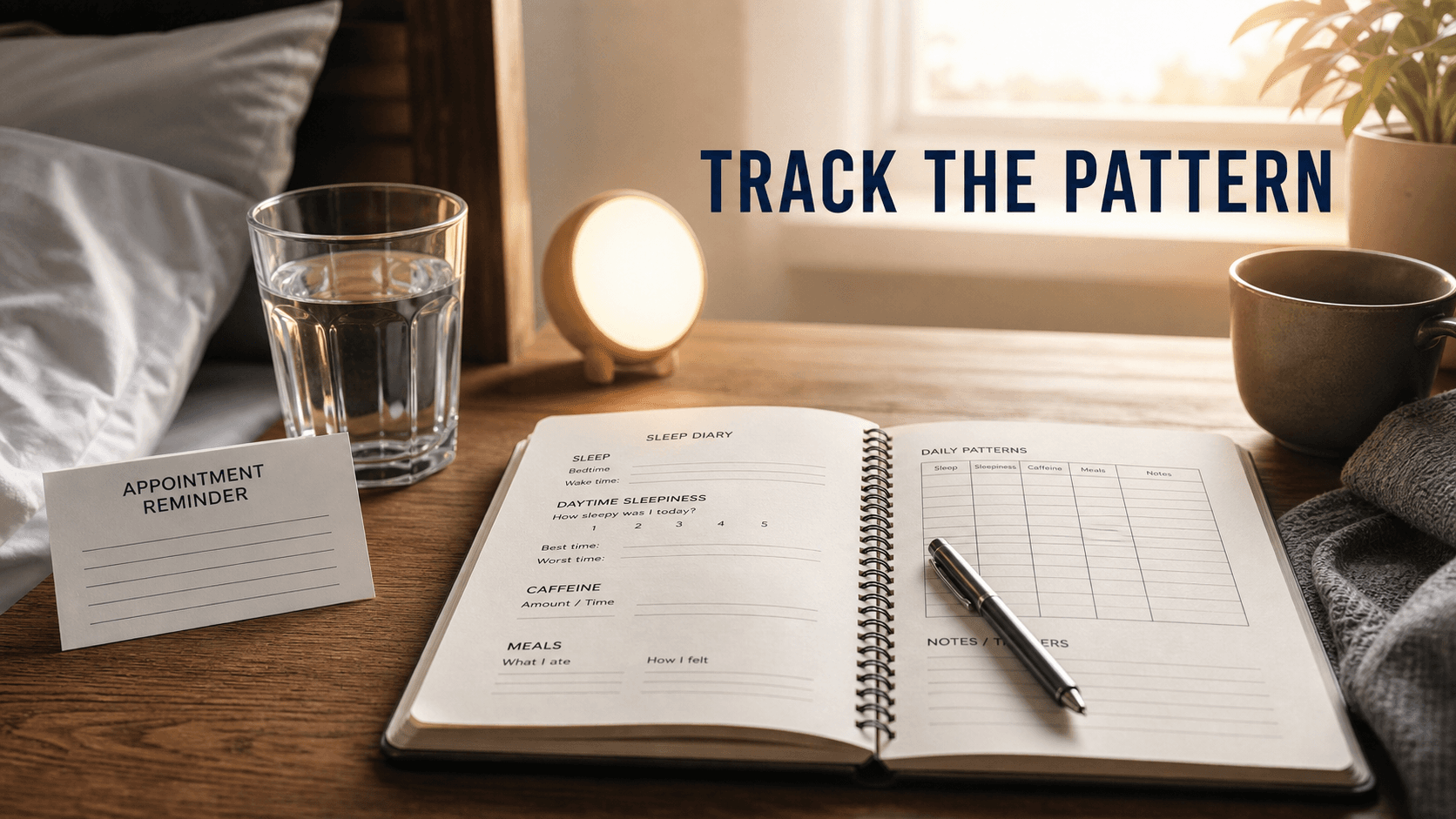
The most useful shift was to stop asking, "What is wrong with me?" and start asking, "What is the pattern?"
That question is less cruel and more useful.
A pattern can include:
- bedtime and wake time
- sleep quality, snoring, choking, or waking gasping
- daytime sleepiness timing
- caffeine amount and timing
- meals before the episode
- medications or supplements
- mood, anxiety, and stress
- movement, sunlight, and screen exposure
- whether episodes happen while driving, working, studying, or talking
Even a simple two-week sleepiness diary can make a medical appointment more productive. It gives a clinician something concrete to work with.
When Sleepiness Becomes a Safety Issue
There is one place where self-compassion is not enough: safety.
If you are sleepy while driving, operating machinery, caring for an infant, cooking with open heat, or doing anything where a lapse could hurt someone, the answer is not to prove your toughness. The answer is to stop and make the situation safer.
That might mean pulling over, resting, asking someone else to drive, changing schedules, taking a short nap when possible, or getting medical help.
Rolling down a window, turning up music, pinching yourself, or pretending you can force alertness is not a reliable safety plan.
When to Seek Medical Care
Consider speaking with a clinician if daytime sleepiness:
- happens often despite enough time in bed
- causes you to doze during work, school, conversations, meals, or driving
- comes with loud snoring, choking, gasping, morning headaches, or high blood pressure
- comes with sudden muscle weakness during laughter or strong emotion
- comes with sleep paralysis, vivid hallucinations near sleep, or sudden sleep attacks
- follows a new medication, substance use change, or major health change
- comes with depression, anxiety, weight change, dizziness, palpitations, or persistent brain fog
- affects safety, performance, relationships, or daily functioning
Possible next steps may include reviewing sleep habits, screening for sleep apnea or narcolepsy, checking medications, ordering blood tests when appropriate, or considering a sleep study.
This does not mean every sleepy afternoon is a disorder. It means repeated, uncontrollable sleepiness deserves more than shame.
What I Understand Now
I do not claim to have a diagnosis.
I do not claim to have a universal solution.
What I do have is a better understanding of my limits and a refusal to shame myself for something I did not choose.
I understand now that:
- mental shutdowns are not always laziness
- boredom and stillness can expose underlying vulnerabilities
- energy is physical, emotional, metabolic, and neurological
- caffeine can hide a problem without solving it
- sleepiness that affects safety should be taken seriously
- getting checked is not overreacting
The younger version of me needed less blame and more curiosity.
Maybe that is true for many people living quietly with this.
Related Reading
References
- Sleep Foundation: What Causes Excessive Sleepiness?
- NHLBI: Narcolepsy
- Mayo Clinic: Narcolepsy Symptoms and Causes
- CDC/NIOSH: Risks from Not Getting Enough Sleep - Drowsy
Disclaimer: This article is educational and experience-based, not medical advice. Daytime sleepiness, sudden sleep attacks, brain fog, fatigue, snoring, medication effects, and food-related crashes can have many causes. If sleepiness is persistent, worsening, unexplained, or affects safety, driving, work, school, or daily functioning, speak with a qualified healthcare professional.
Related Reading
Continue reading after When My Brain Randomly Switched Off And No One Believed Me
I Didnt Heal Until I Finally Had Time to Heal
A de-identified personal story about chronic pain, constant work urgency, burnout, nervous-system exhaustion, and the slower kind of recovery that only started once rest became real instead of theoretical.
It Wasnt Just Anxiety How Understanding Neurodivergence Changed My Life
A de-identified personal story about skin picking, sensory overload, masking, late autism and ADHD diagnosis, and how better understanding changed what kind of support actually helped.
Living With a Dry Mouth, Burning Pain, and No Easy Answers
A lived experience of chronic dry mouth, burning pain, medication side effects, dental damage, broken sleep, and the slow search for safer support.
Share on WhatsApp
2–3 line summary is copied. Tap to open WhatsApp and share.
 Tip: You can edit the text after it opens in WhatsApp.
Editorial Note
This article is prepared by the HealthUnspoken Editorial Team. Our articles may combine first-person submissions, public health education references, and commonly discussed experiences, then are edited for clarity and context.
The goal is reader awareness and education. This content is not a diagnosis or a treatment plan.
⚕️ Medical Disclaimer
The information provided in this article is for **educational and informational purposes only**. It should not be considered medical advice, diagnosis, or treatment. Always seek the advice of your physician or other qualified healthcare provider regarding any medical condition or treatment decisions.
🧾 Sources
HealthUnspoken articles may include first-person stories, editorial summaries of broadly discussed experiences, and public health education references. They are reviewed by the editorial team for clarity and educational context.
Reader Experiences Shared
Curated anonymized snippets from public health discussions, edited for readability.
I kept thinking daytime sleepiness would settle on its own, but what helped most was tracking patterns and asking clearer questions in appointments.
The hardest part for me was uncertainty around daytime sleepiness. Once I stopped changing everything at once, I could finally see what was helping.
I used to delay care because I was embarrassed about daytime sleepiness. Earlier conversations would have saved me a lot of stress.
A second opinion around daytime sleepiness changed my decisions completely. The issue was still real, but the plan felt calmer and more practical.
For me, progress with daytime sleepiness came from boring consistency, not one dramatic fix. That mindset reduced panic a lot.
I learned to separate fear from facts with daytime sleepiness. Writing down symptoms before visits made discussions more useful.