
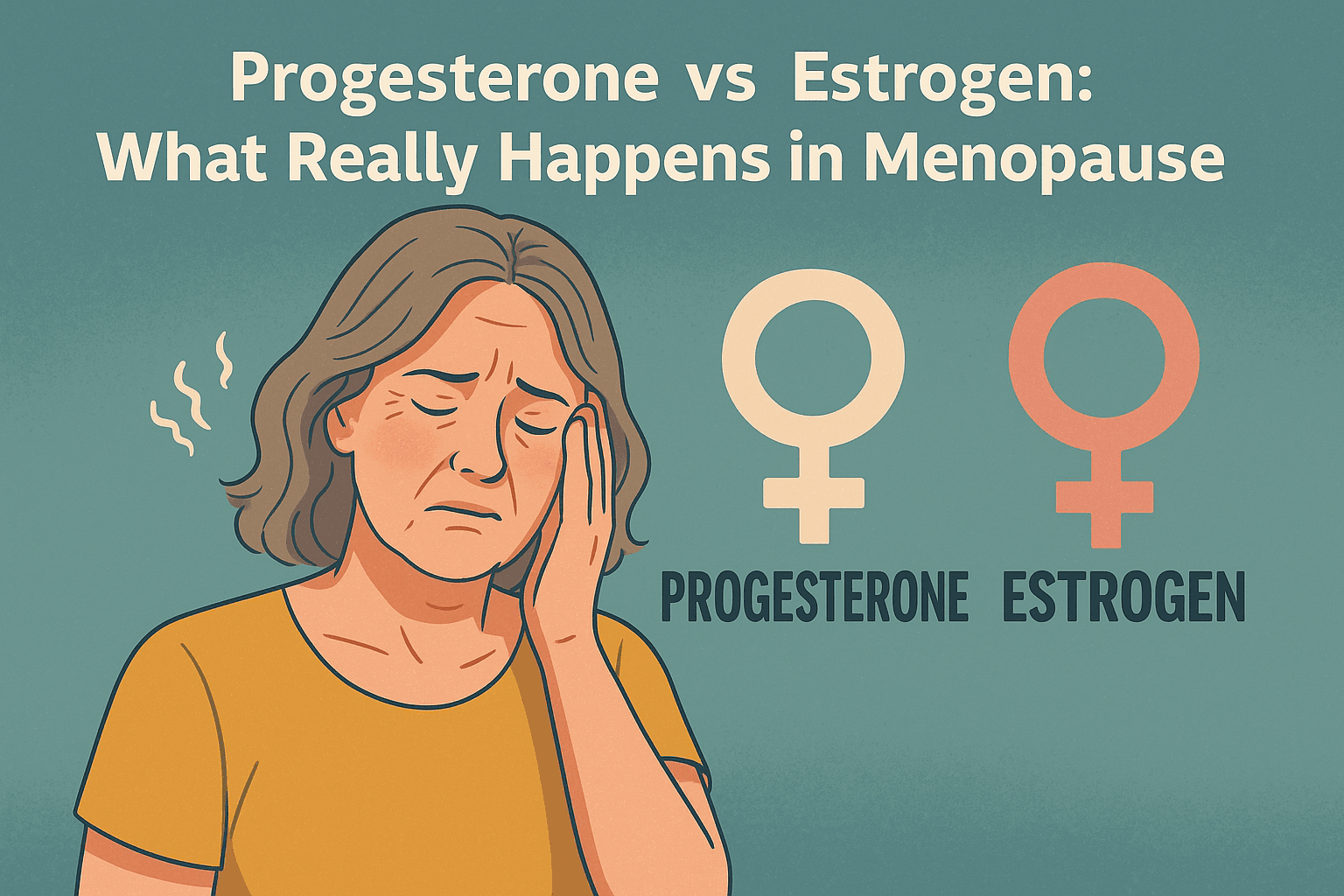
Progesterone and Estrogen in Menopause: A Practical, Balanced Overview
- Authors

- Name
- Author: HealthUnspoken Editorial Team
- Published on
- Last updated:
- Country
- Country
- 🌍Country: Global
Many people ask whether menopause symptoms come from "low estrogen," "low progesterone," or both. In practice, hormone patterns are dynamic and individual, so simplified labels may not fit everyone.
What people commonly report
During perimenopause and menopause, people often describe:
- irregular cycles before periods stop
- hot flashes, sleep disruption, or night sweats
- mood changes, brain fog, or irritability
- vaginal dryness or discomfort with intimacy
Symptom intensity can vary from mild to severe, and timelines differ greatly between individuals.
Why this might happen (basic explanation)
As ovarian hormone production changes over time, estrogen and progesterone levels can fluctuate unpredictably before settling at lower postmenopausal levels.
These shifts may affect:
- temperature regulation
- sleep stability
- urogenital tissue comfort
- mood and cognitive symptoms
Stress load, thyroid function, mental health, medications, and other medical conditions can overlap with menopause symptoms, which is why one-hormone explanations are often incomplete.
What research suggests (high-level)
Current evidence supports individualized assessment rather than one-size-fits-all conclusions. For symptom management:
- lifestyle approaches (sleep routines, physical activity, symptom tracking) can help many people
- non-hormonal and hormonal treatment options may both be valid depending on risk profile
- decisions should be based on symptom burden, medical history, and shared decision-making with a clinician
Some supplements are marketed aggressively for menopause, but product quality, dosing, interactions, and evidence strength can vary significantly.
What this does NOT mean
- It does not mean every symptom is caused by menopause alone.
- It does not mean everyone needs hormone therapy, or that everyone should avoid it.
- It does not mean "natural" products are automatically safer.
- It does not mean online anecdotes can replace individualized care.
Language like "hormone dominance" may be useful descriptively in some communities, but it is not a substitute for clinical evaluation.
When to seek medical advice
Seek professional evaluation if you have:
- severe vasomotor symptoms that affect daily function or sleep
- bleeding after 12 months without periods (postmenopausal bleeding)
- persistent pelvic pain, new breast changes, or unexplained weight loss
- major mood changes, depression, anxiety, or cognitive concerns
- uncertainty about treatment options due to personal or family risk factors
Prompt care is especially important if symptoms are sudden, intense, or associated with red-flag signs.
Final thoughts
Menopause care is most effective when it is practical, individualized, and medically grounded. A helpful first step is tracking symptoms and discussing patterns with a qualified clinician, then building a plan that matches your goals, health history, and risk profile.
References for general understanding
- National Institutes of Health (NIH)
- Mayo Clinic
- National Health Service (NHS)
- American College of Obstetricians and Gynecologists (ACOG)
Related topics
Keep exploring after Progesterone and Estrogen in Menopause: A Practical, Balanced Overview
Bloating
Based on 10,000+ signals, bloating is described as abdominal fullness and distension. Key data identifies fermentation of FODMAPs, gut sensitivity, and slow transit as primary drivers, while movement and ACV show high success.
Acidity
A practical overview of acidity patterns people report, what tends to help, and where to be cautious. Informational only; not medical advice.
Constipation
A practical view of constipation patterns, common triggers, and helpful habits. Informational only; not medical advice.
PCOS (Polycystic Ovary Syndrome)
PCOS is a common hormone-related condition most often linked to irregular ovulation, higher androgen activity (acne, excess hair growth, scalp hair thinning), and metabolic features like insulin resistance. It exists on a spectrum: some people are overweight, others are not, and symptoms can vary widely.
Male infertility
Community discussions around male fertility focus on sperm quality (count, motility, morphology), semen concerns, varicocele, and hormone/sexual-function questions. The most repeated self-actions include reducing heat exposure, lifestyle changes over 2–3 months, and targeted nutrients.
Pregnancy
Pregnancy questions in real discussions cluster around diet safety (especially keto/low-carb/fasting), nausea, gestational diabetes, blood pressure concerns, thyroid changes, gallbladder/gallstones, swelling, constipation, and supplement safety. People want practical rules: what’s normal, what’s risky, and when to see a doctor.
Banana
Informational notes on Banana with cautious guidance and limits.
Curd (Yogurt)
Informational notes on Curd (Yogurt) with cautious guidance and limits.
Oats
Informational notes on Oats with cautious guidance and limits.
Iron
Informational notes on Iron with cautious guidance and limits.
Share on WhatsApp
2–3 line summary is copied. Tap to open WhatsApp and share.
 Tip: You can edit the text after it opens in WhatsApp.
Editorial Note
This article is prepared by the HealthUnspoken Editorial Team. Our articles may combine first-person submissions, public health education references, and commonly discussed experiences, then are edited for clarity and context.
The goal is reader awareness and education. This content is not a diagnosis or a treatment plan.
⚕️ Medical Disclaimer
The information provided in this article is for **educational and informational purposes only**. It should not be considered medical advice, diagnosis, or treatment. Always seek the advice of your physician or other qualified healthcare provider regarding any medical condition or treatment decisions.
🧾 Sources
HealthUnspoken articles may include first-person stories, editorial summaries of broadly discussed experiences, and public health education references. They are reviewed by the editorial team for clarity and educational context.