
Living With Rotoscoliosis at 65: Finding Strength Beyond Surgery
- Authors

- Name
- Author: HealthUnspoken Editorial Team
- Published on
- Last updated:
- Country
- Country
- 🌍Country: USA
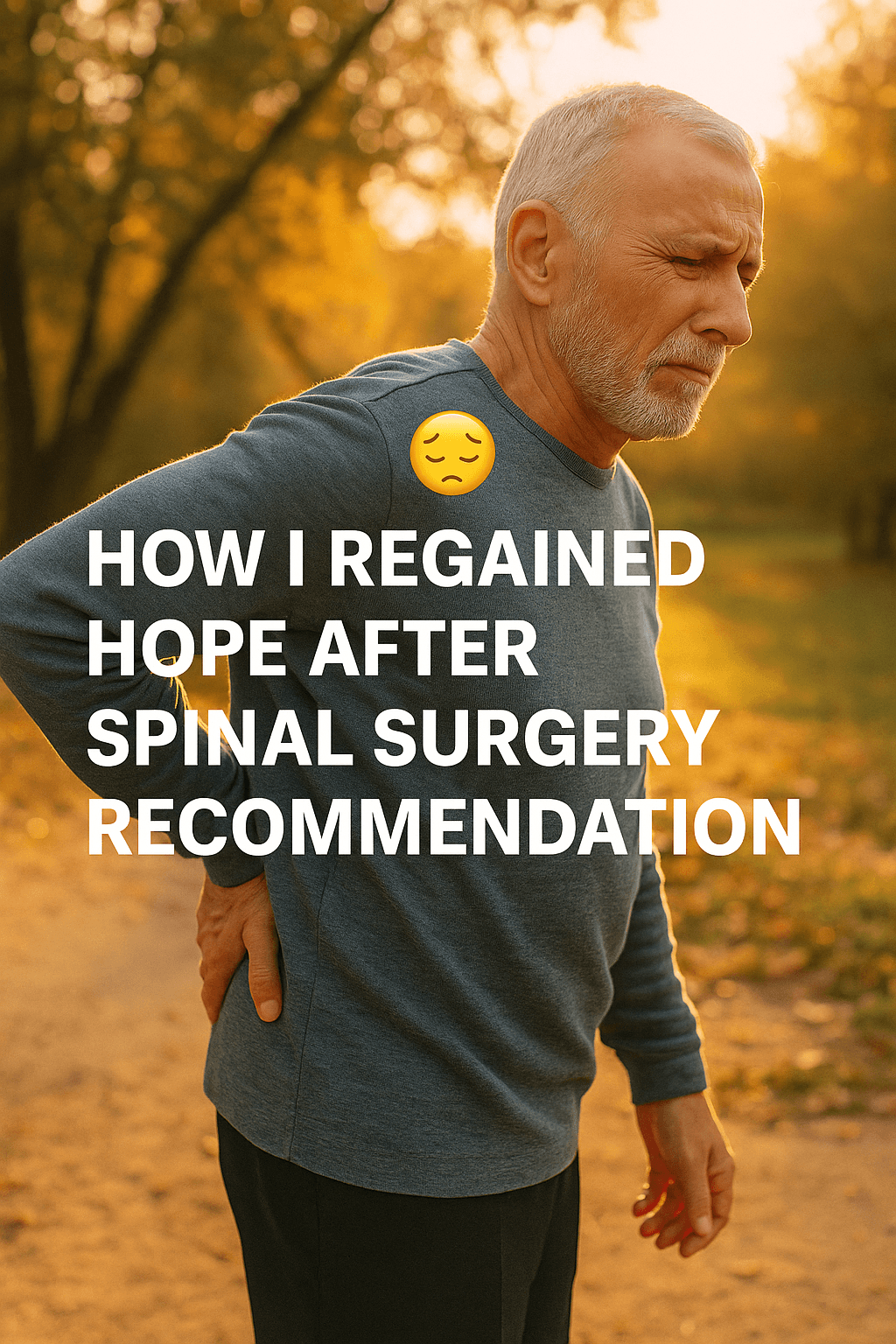
For most of my life, I did not think much about my spine. Then rotoscoliosis, ruptured discs, and chronic pain turned ordinary movement into a daily negotiation. By 65, two neurosurgeons had talked with me about the possibility of a major spinal fusion. The fear was not only the surgery. It was the feeling that my life was shrinking before I had decided what to do.
When Pain Starts Running the Day
Earlier that year, nearly every day had the same shape.
I would wake up, calculate how much pain I was in, drag myself through the minimum, and retreat back to bed. Words like lift, bend, carry, twist, and reach started disappearing from my life.
Even a small bag felt heavy. Standing at the sink felt long. Getting dressed felt like a task that needed strategy.
The pain was not just discomfort. It was sharp, exhausting, and emotionally corrosive. After enough days like that, the body starts to feel less like home and more like a problem that follows you from room to room.
That was the hardest part: not one bad pain day, but the repetition.
Pain changed my schedule.
Pain changed my confidence.
Pain changed how far into the future I could imagine.

Understanding the Diagnosis Without Letting It Become My Identity
Rotoscoliosis is a scoliosis pattern that includes both a side-to-side spinal curve and rotation of the vertebrae. In plain language, the spine is not only curved; parts of it are also twisted.
That can affect posture, muscle balance, nerve irritation, and how stress travels through the back, hips, and legs. In some people, scoliosis is mild and barely noticed. In others, especially when aging changes, disc disease, arthritis, stenosis, or nerve compression join the picture, pain and function can become much harder to manage.
I had to learn not to treat the word itself like a life sentence.
A diagnosis explains part of the pattern. It does not automatically predict every outcome.
That distinction mattered because fear can make imaging results feel final. You read a report, hear terms like curve, degeneration, rupture, collapse, or fusion, and suddenly the body feels like a structure already condemned.
But a spine story is not only an X-ray. It is also function, strength, nerve symptoms, sleep, walking tolerance, medication response, physical therapy history, and what the person wants from life.
The Surgery Conversation
The surgery option was the part that scared me most.
The message I heard was that I might eventually need a full spinal fusion. The version discussed with me sounded long, serious, and life-changing: hours in surgery, hardware, recovery, restrictions, and the uncertainty of whether pain would improve enough to justify the risk.
Spinal fusion is not a casual procedure. AAOS describes it as joining two or more vertebrae so they heal into a single solid bone. It may be considered for problems such as scoliosis, spinal stenosis, degenerative disc disease, fractures, infection, tumors, or instability, depending on the exact situation.
That does not mean everyone with scoliosis or back pain needs fusion.
It means the decision has to be specific.
Specific to the curve.
Specific to the nerves.
Specific to the pain generator.
Specific to the risks.
Specific to the person sitting in the chair.
For me, the question became less dramatic but more useful:
What information would help me make this decision without panic?
What I Wish I Had Asked Earlier
When a surgeon mentions a major operation, fear can make the room go quiet. Later, the questions arrive all at once.
These are the questions I wish I had written down earlier:
- What exactly is the source of the pain you are trying to treat?
- Is the goal pain relief, nerve protection, preventing progression, stability, or all of these?
- What happens if I wait?
- What symptoms would make waiting unsafe?
- What non-surgical options are still reasonable?
- What would recovery realistically look like at my age and health status?
- How much motion could I lose?
- What complications should I understand clearly?
- How many similar cases has this team handled?
- Would a second opinion from another spine specialist be appropriate?
Second opinions are not an insult to a doctor. For major, irreversible decisions, they are often a way to think more clearly.
That is especially true when the first conversation leaves you feeling cornered instead of informed.
The Small Experiments That Helped Me Feel Less Helpless
When you are in pain long enough, you start looking for anything that might give you a little control back.
I changed parts of my morning routine. I used hot lemon water with manuka honey. I tried turmeric, ginger, cayenne, cinnamon, UC-II collagen, and vitamin K2. I also practiced periodic fasting and leaned heavily on prayer.
The original version of this story made those changes sound almost like the turning point by themselves. Looking back, I want to frame it more carefully.
I cannot say those supplements treated rotoscoliosis.
I cannot say fasting repaired ruptured discs.
I cannot say prayer replaced medical care.
What I can say is that the routine gave my days structure during a time when pain had taken structure away. Some symptoms felt steadier. My energy improved. I felt more involved in my own care instead of waiting passively for the next appointment.
That difference mattered.
But supplements and fasting are not risk-free, especially for older adults or people taking medications. Turmeric and concentrated curcumin products can cause side effects and may interact with medicines. Vitamin K can matter for people on blood thinners. Fasting may be unsafe for some people with diabetes, frailty, medication schedules, eating-disorder history, kidney disease, or other medical conditions.
So the safer lesson is not "copy my routine."
The safer lesson is: build a routine with your clinician's input, track what changes, and do not let hope turn into unsafe self-treatment.
Faith Helped, but It Did Not Make Me Invincible
Faith carried me through days when my body felt unreliable.
I am a follower of the Way, and prayer gave me a place to put fear when fear was too heavy to carry alone. Friends and family prayed with me. Community mattered. Meaning mattered.
But faith did not make my spine magically simple.
It helped me stay grounded enough to keep asking questions.
It helped me remember that I was more than a diagnosis.
It helped me get out of bed on days when pain made the room feel small.
That is different from saying faith is a substitute for medical care. It is not. For me, faith was part of endurance. It gave the medical decisions a steadier emotional ground.
A Morning That Changed My Confidence
One morning, about ten days into my changed routine, I noticed something surprising.
I had been awake since 6 a.m. It was already evening, and I was still up and moving. No dramatic miracle. No cured spine. Just a longer day than I had expected from my body.
That mattered because chronic pain trains you to expect collapse.
When your body gives you one better day, you do not want to overclaim it. But you also do not want to ignore it.
I did not take that day as proof that surgery would never be needed.
I took it as proof that my baseline was not completely fixed.
There was still room for adjustment.
There was still room for pacing, strengthening, treatment planning, symptom tracking, and hope.

What Actually Became My Steering Wheel
I used to think of my body like a car accelerating without brakes.
Pain was driving. Fear was in the passenger seat. I was just holding on.
The steering wheel came back slowly through practical things:
- writing down questions before appointments
- tracking which activities worsened pain
- noticing which movements were safer
- pacing instead of doing everything on a good day
- asking what symptoms were urgent
- taking supplements more cautiously
- keeping faith and community close
- refusing to make surgery decisions from panic alone
None of those things erased the spine problem.
They changed my relationship to it.
That connects with other chronic-pain stories like the long search for back pain relief and the emotional damage of not being believed. Pain is not only a signal from tissue. It also changes trust, identity, sleep, relationships, and decision-making.
What I Would Tell Someone Facing a Fusion Recommendation
I would not tell them to refuse surgery.
I would not tell them to rush into it either.
I would tell them to slow the decision down enough to understand it.
Ask what the operation is meant to solve. Ask what it cannot solve. Ask what the realistic odds are for pain relief, function, complications, and recovery. Ask what happens if you wait. Ask what would make waiting dangerous.
Then look honestly at your life.
How much function have you lost?
How much pain are you tolerating?
Are nerves involved?
Are you falling, weakening, losing bladder or bowel control, or developing symptoms that cannot wait?
Are there non-surgical options that still make sense?
Major surgery should not be chosen from fear alone. But it also should not be avoided from fear alone when the body is clearly worsening.
The middle path is informed courage.
When Back Pain Needs Prompt or Emergency Care
Most back pain is not an emergency, but some symptoms should not be watched casually.
Please seek medical care promptly if back pain:
- does not improve after a few weeks of reasonable self-care
- stops you from doing normal daily activities
- is worsening quickly
- is worse at night or does not improve with rest
- comes with unexplained weight loss, fever, chills, or feeling very unwell
- follows a serious fall, accident, or injury
- comes with a new lump, swelling, or major change in back shape
- is associated with cancer history, infection risk, or immune suppression
- causes new leg weakness, numbness, or worsening balance problems
Seek emergency care immediately if back pain comes with numbness around the genitals or anus, loss of bladder or bowel control, difficulty urinating, weakness or numbness in both legs, chest pain, or symptoms after a serious accident.
Those symptoms can signal serious nerve or spine problems and should not wait for a routine visit.
Closing Reflection
At 65, I do not pretend to have all the answers.
My spine is still damaged. My future may still include surgery. Pain still changes plans. Some days still begin with negotiation before my feet even touch the floor.
But I have learned something important: hope is not the same as denial.
Hope can ask hard questions.
Hope can get second opinions.
Hope can use medicine, therapy, prayer, pacing, and community without pretending any one of them is a magic cure.
I am not just waiting for my body to fail. I am learning how to participate in my care.
That may not sound dramatic, but when chronic pain has made your world small, participation feels like a way back to yourself.
Questions This Story Often Raises
What does rotoscoliosis actually mean on an imaging report?
It usually means the spine is curving sideways and rotating at the same time. The word itself is not enough to judge severity. The useful details are the curve location, the Cobb angle, whether it is lumbar or thoracic, whether it leans right or left, and whether nerves are being affected. I keep the practical breakdown here: rotoscoliosis meaning, symptoms, and treatment.
Is mild rotoscoliosis serious?
Mild does not automatically mean dangerous, but it also should not be ignored if symptoms are changing. Some people have a mild curve with little daily impact. Others have pain from discs, joints, muscles, or nerves that happen alongside the curve. That is why follow-up is less about the label and more about function, progression, and symptoms.
What treatments can actually help symptoms?
The most realistic answer is usually a combination: proper imaging review, physical therapy matched to the curve and symptoms, pacing, strength work, pain management, and sometimes bracing or surgical discussion. Exercise can help posture tolerance and pain. It should not be sold as a guaranteed way to erase a rotated curve.
When does spinal fusion enter the conversation?
Fusion is usually discussed when the curve is severe, progressing, causing major deformity, pressing on nerves, limiting function, or not responding to other care. It is not a casual next step. A good conversation should explain the goal of surgery, what it can realistically improve, what it cannot promise, and what recovery may demand.
Which symptoms should not wait?
New or worsening leg weakness, numbness spreading quickly, trouble walking, bowel or bladder changes, severe pain after a fall, fever with back pain, chest pain, or breathing trouble should be treated as medical warning signs. Those are not symptoms to solve by comparing stories online.
References and Trusted Sources
- NIAMS: Scoliosis
- AAOS OrthoInfo: Spinal Fusion
- AAOS OrthoInfo: Surgical Treatment for Scoliosis
- NHS: Back Pain
- NCCIH: Turmeric - Usefulness and Safety
This article is educational and experience-based, not medical advice. Rotoscoliosis, ruptured discs, nerve symptoms, chronic back pain, supplement use, fasting, pain medication, physical therapy, and spinal surgery decisions require individual evaluation by qualified healthcare professionals. Do not start supplements, fasting, or medication changes without checking whether they are safe for your health situation.
Disclaimer: This article is for educational purposes only and is not medical advice. Individual symptoms, risks, and treatment decisions vary. Always consult a qualified healthcare professional for diagnosis and personalized care. If you have severe, worsening, or emergency symptoms, seek urgent medical attention immediately.
Related Reading
Continue reading after Living With Rotoscoliosis at 65: Finding Strength Beyond Surgery
Two Hip Replacements, Twenty Years Apart and the Quiet Miracle of Living Without Pain
I lived through two hip replacements separated by twenty years. What changed was not only medicine but how pain, preparation, therapy and resilience reshaped my life.
Why Shaming Smokers Never Worked — and What Actually Might
A compassion-first look at smoking, nicotine addiction, relapse, quitting support, and why practical help works better than judgment.

Motherhood Across the Whole Journey: What Real Lives Looked Like Behind the Milestones
A curated long-form motherhood journey built from real experiences across planning, childbirth, postpartum shock, and the invisible years after.
Share on WhatsApp
2–3 line summary is copied. Tap to open WhatsApp and share.
 Tip: You can edit the text after it opens in WhatsApp.
Editorial Note
This article is prepared by the HealthUnspoken Editorial Team. Our articles may combine first-person submissions, public health education references, and commonly discussed experiences, then are edited for clarity and context.
The goal is reader awareness and education. This content is not a diagnosis or a treatment plan.
⚕️ Medical Disclaimer
The information provided in this article is for **educational and informational purposes only**. It should not be considered medical advice, diagnosis, or treatment. Always seek the advice of your physician or other qualified healthcare provider regarding any medical condition or treatment decisions.
🧾 Sources
HealthUnspoken articles may include first-person stories, editorial summaries of broadly discussed experiences, and public health education references. They are reviewed by the editorial team for clarity and educational context.
Reader Experiences Shared
Curated anonymized snippets from public health discussions, edited for readability.
I kept thinking rotoscoliosis would settle on its own, but what helped most was tracking patterns and asking clearer questions in appointments.
The hardest part for me was uncertainty around rotoscoliosis. Once I stopped changing everything at once, I could finally see what was helping.
I used to delay care because I was embarrassed about rotoscoliosis. Earlier conversations would have saved me a lot of stress.
A second opinion around rotoscoliosis changed my decisions completely. The issue was still real, but the plan felt calmer and more practical.
For me, progress with rotoscoliosis came from boring consistency, not one dramatic fix. That mindset reduced panic a lot.
I learned to separate fear from facts with rotoscoliosis. Writing down symptoms before visits made discussions more useful.