
When Strangers Feel Unsafe but Friends Feel Like Home

- Authors

- Name
- Author: HealthUnspoken Editorial Team
- Published on
- Last updated:
- Country
- Country
- 🌍Country: Global
Social anxiety does not always look like silence. Sometimes it looks like courage first, then retreat. A person reaches out, misreads the room, gets hurt, and quietly builds a system around never feeling that exposed again.
This article keeps that personal reality, but I want to make it more useful than a memory alone. When strangers feel unsafe but friends feel easy, the issue is often not a lack of social ability. It is a fear pattern built around judgment, uncertainty, and old humiliation.
That pattern can make sense.
It can also become a cage if it is never questioned, treated, or gently retrained.
The Day I Learned to Expect Rejection
In high school, my anxiety and depression already shaped the whole day. School did not feel like a place where I belonged. It felt like a place where I had to move carefully and try not to be noticed for the wrong reasons.
Still, one day I did something brave.
I talked to someone in PE while we were changing out of gym clothes. It was brief, ordinary, and probably forgettable for him. For me, it felt like a test. Maybe I was overthinking everything. Maybe conversation could become friendship if I just stopped hiding.
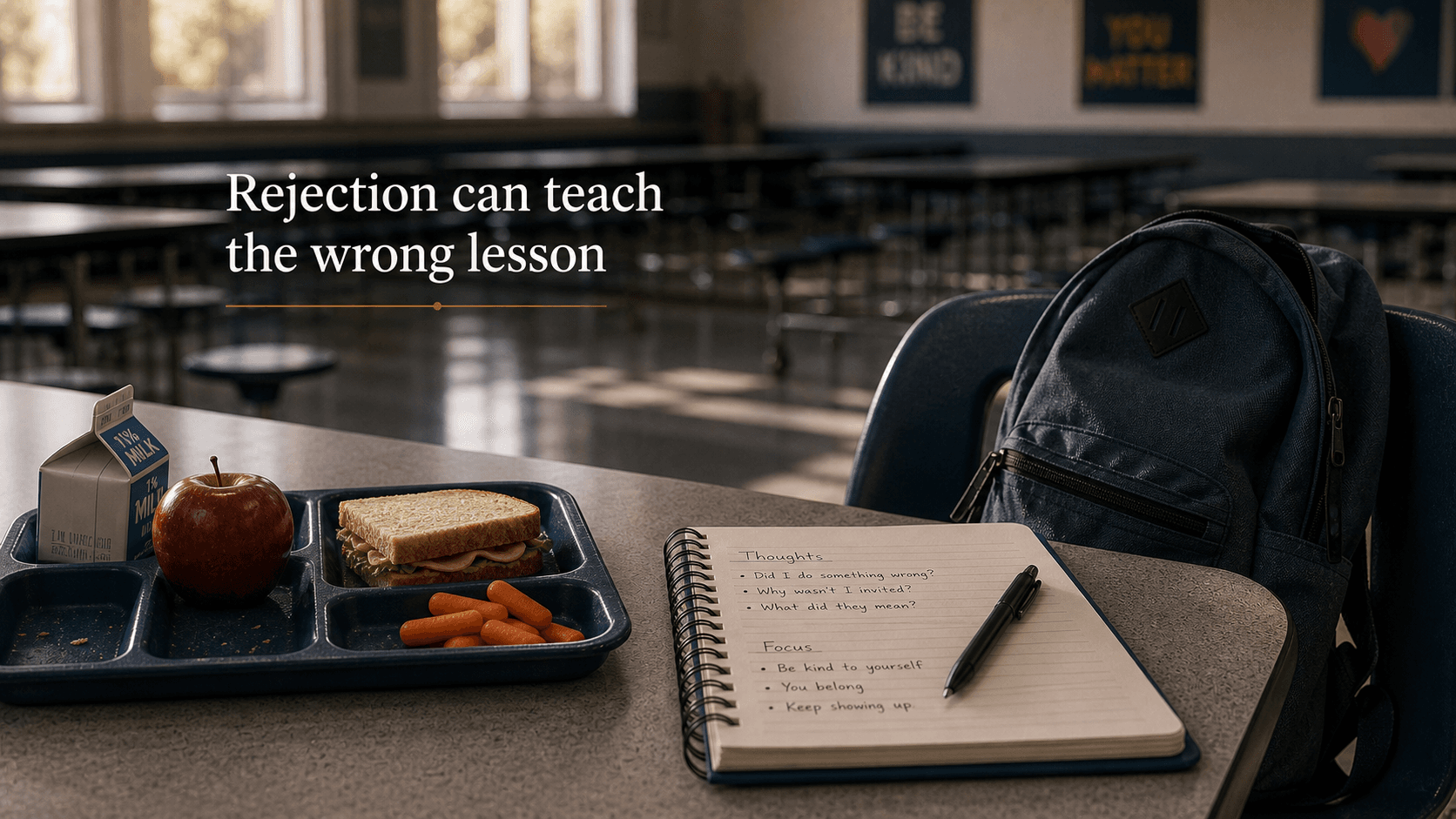
Later I saw him again near the cafeteria and tried once more. I grabbed my food, looked around, and thought I could continue the conversation.
He and his friends were gone.
I looked around longer than I should have. When I could not find them, I went back to what I knew.
I sat alone.
That was the part that mattered. Not because one student walked away, but because my brain filed the moment as evidence:
Reaching out leads to humiliation.
That is how social fear often deepens. One event becomes a rule. The rule becomes identity. The identity starts directing the next hundred decisions.
When the Group Looked Back
Another day, I tried again.
This time it was a small group at lunch. At first I was talking with one person, and it felt normal. Then I noticed the others standing behind him with crossed arms, watching.
They did not need to say anything.
My body filled in the meaning immediately:
- I am not wanted here
- I misread this
- I am bothering them
- I should leave before I make it worse
That physical drop matters. Social anxiety is not only a thought problem. It is often a whole-body alarm response:
- chest tightness
- stomach drop
- heat in the face
- loss of words
- tunnel vision
- a powerful urge to escape
What stayed with me was not the exact conversation. It was the body memory of being visible in the wrong way.
What the Comment Patterns Suggested
I reviewed anonymized patterns from health-related comment data around social anxiety, school rejection, feeling like a burden, public panic, and difficulty with strangers. I did not use raw comments.
The patterns were consistent:
- many people linked their social fear to school humiliation, exclusion, or being laughed at when they tried to join in
- many said they felt normal with friends but unsafe with strangers
- many described panic in public as less about talking and more about being judged, watched, or misread
- many used language about being a burden, an inconvenience, or the person who makes the mood go bad
- some people drifted into unsafe ideas that medication, alcohol, or supplements could quickly erase the fear
That last pattern matters.
Social anxiety often tempts people toward short-term relief. But numbing, self-medicating, or building life entirely around avoidance usually keeps the fear in charge.
Why Friends Feel Safe but Strangers Do Not
For years, this contrast confused me.
With friends, I could talk normally. I did not rehearse every sentence. I did not monitor my tone constantly. I did not feel like I was ruining the atmosphere just by being present.
With strangers, everything changed.
Why?
Because friends already provide proof of safety:
- they know my rhythm
- they have chosen to keep me around
- I do not need to earn permission every minute
- mistakes do not immediately feel fatal
Strangers carry uncertainty.
And uncertainty is exactly what social anxiety interprets as threat.
That does not mean strangers are actually unsafe. It means the nervous system may have learned to associate unfamiliar people with evaluation, rejection, or embarrassment.
This is one reason social anxiety should not be dismissed as simple shyness. It can be a trained fear response with a strong history behind it.
The Burden Belief
The line that stayed with me for years was not "people dislike me." It was subtler than that:
I am a burden to people who do not know me.
That belief can shape almost everything:
- hesitation before asking a question
- fear of joining a group
- reluctance to text first
- overexplaining or apologizing
- disappearing before anyone can reject you
- assuming neutral faces are negative
The person with social anxiety is often not asking, "Will I survive this conversation?"
They are asking:
Will my presence cost other people something?
That is a painful way to move through the world. It turns ordinary uncertainty into moral danger.
Avoidance Makes Sense, but It Trains the Fear
I still think it is important to say this clearly:
Avoidance is understandable.
It is not weakness. It is often the nervous system trying to prevent another painful experience. When someone has learned that social risk can quickly become humiliation, retreat can feel logical.
But avoidance also teaches the brain the wrong lesson over time:
- that escape was the reason nothing worse happened
- that strangers were probably dangerous after all
- that silence is safer than correction
- that relief means the strategy was healthy
This is why social anxiety can grow even in a quiet life. The person is not getting constant new proof that the fear is wrong. They are mostly getting brief relief from not testing it.
That cycle is common and treatable, but it rarely breaks on its own.
What Healing Usually Looks Like in Real Life
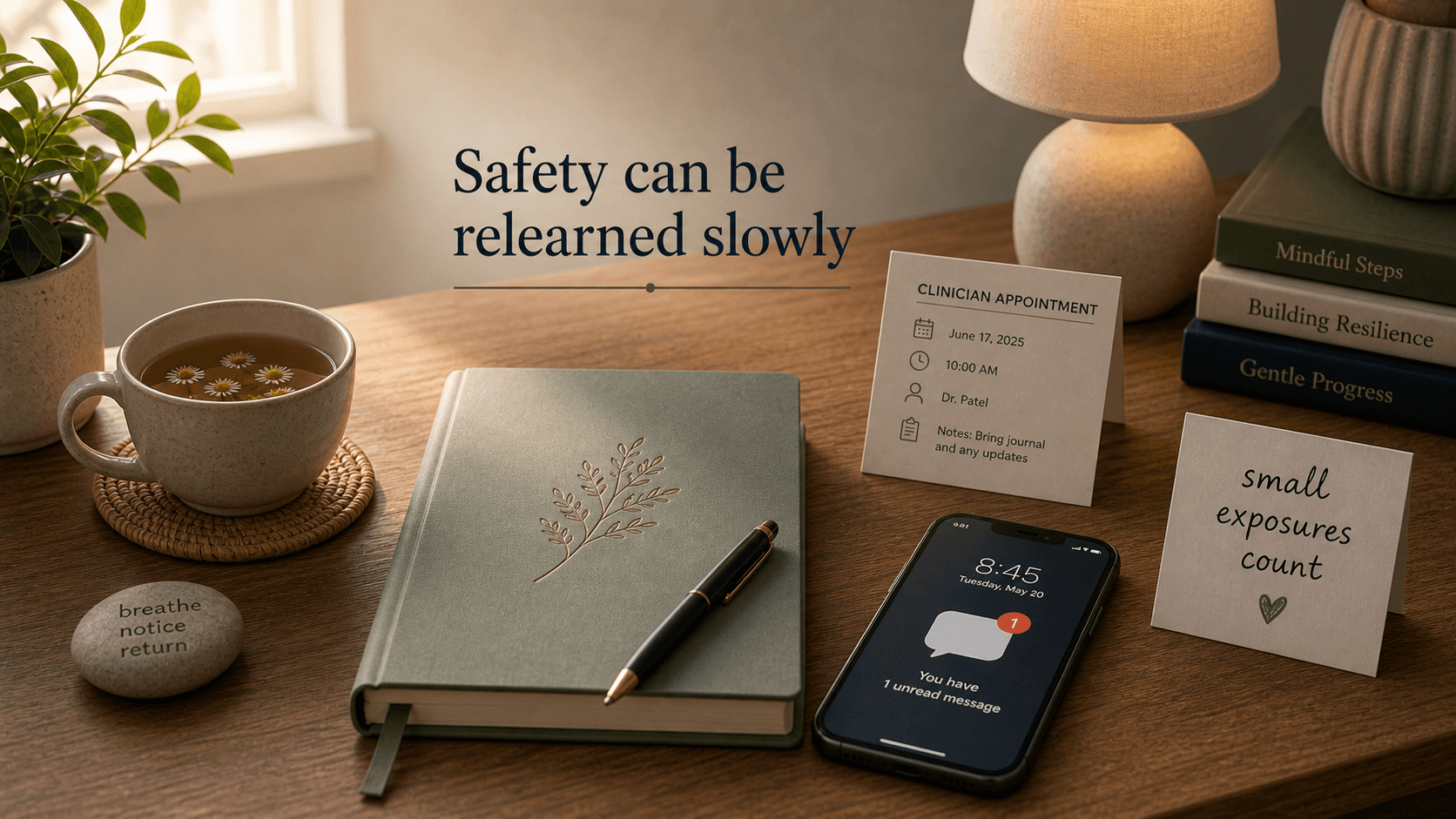
Healing from social anxiety does not usually begin with becoming outgoing.
It usually begins with better interpretation, better support, and smaller exposures than pride would prefer.
That can include:
- naming the problem accurately instead of calling it laziness or awkwardness
- working with a therapist who understands anxiety disorders
- learning how exposure works when it is gradual and intentional
- noticing body alarms without obeying every one of them
- practicing one manageable interaction at a time
- reducing safety behaviors that keep reinforcing fear
Examples of small exposures:
- making brief eye contact and saying hello
- asking one store question instead of avoiding staff completely
- sitting near people without forcing conversation
- attending an event with a clear exit plan and staying a little longer than usual
- sending one message without rereading it ten times
The goal is not to become a different personality.
The goal is to teach the brain that discomfort, uncertainty, and visibility do not always end in social injury.
When to Seek Professional Help
Social anxiety deserves real care when it starts narrowing life.
Talk with a qualified mental health professional or clinician if:
- fear of judgment keeps you from school, work, dating, appointments, or daily tasks
- panic symptoms appear in public or before routine interactions
- you isolate more and more even though loneliness is getting worse
- anxiety is tied to depression, hopelessness, or feeling like a burden
- you rely on alcohol, drugs, or sedating habits to get through social situations
- old rejection memories still feel physically active and hard to control
Evidence-based care can include therapy, skills work, and for some people medication discussion with a licensed clinician. The point is not to force one treatment on everyone. It is to avoid treating a serious anxiety pattern as a personality flaw.
Crisis Signs Should Not Stay Hidden
Some articles about social anxiety stop at "you are not alone." That is not enough if the person is also depressed, deeply isolated, or thinking about disappearing entirely.
Seek urgent help now if anxiety or depression is moving into:
- thoughts of self-harm or suicide
- inability to function at school or work
- panic that feels unmanageable and recurrent
- heavy substance use to escape social fear
- severe hopelessness, numbness, or not wanting to be here
In the United States, calling or texting 988 connects you to the Suicide & Crisis Lifeline. If you may act on self-harm thoughts or are in immediate danger, call emergency services right away.
What I Wish I Knew Earlier
I wish I had known that not every awkward moment deserves to become a life rule.
I wish I had known that some crossed arms are just crossed arms.
I wish I had known that the brain can confuse remembered humiliation with present reality and still be wrong.
Most of all, I wish I had known that understanding the origin of social anxiety is helpful, but not the whole job.
Insight matters.
Treatment matters too.
Friends can make you feel safe. That is real. But the larger goal is not to live inside a tiny ring of guaranteed safety forever. It is to slowly build a life where strangers no longer feel like a verdict waiting to happen.
References
- National Institute of Mental Health: Social Anxiety Disorder
- MedlinePlus: Social Anxiety Disorder
- 988 Suicide & Crisis Lifeline
Related HealthUnspoken Reading
- Anxiety symptoms and safety guidance
- Understanding neurodivergence when anxiety is not the whole story
Disclaimer: This article is for educational purposes only and is not medical advice. It does not diagnose or treat mental health conditions. If social anxiety, depression, panic, or self-harm thoughts are affecting your safety or daily life, seek help from a qualified clinician or emergency service.
Related Reading
Continue reading after When Strangers Feel Unsafe but Friends Feel Like Home

When the Mind Influences the Body: A Long Journey Through Unexplained Physical Symptoms
A deeply personal story of recurring physical symptoms that began in childhood and the long, confusing journey of trying to understand what was really happening.
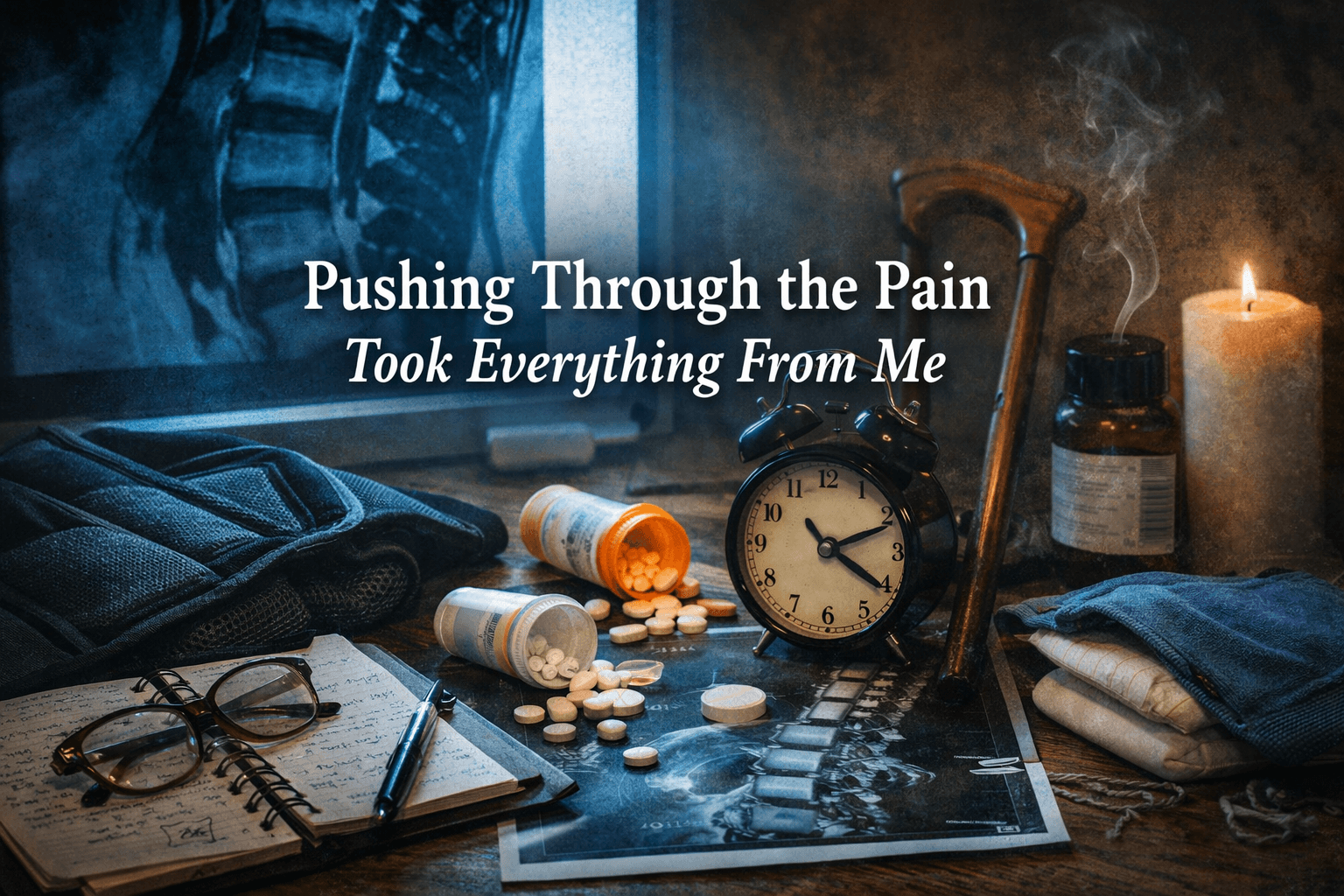
I Kept Pushing Through the Pain… Until It Took Everything From Me
A personal journey through years of untreated back pain, difficult decisions, and the emotional reality of living with sciatica and surgery aftermath.
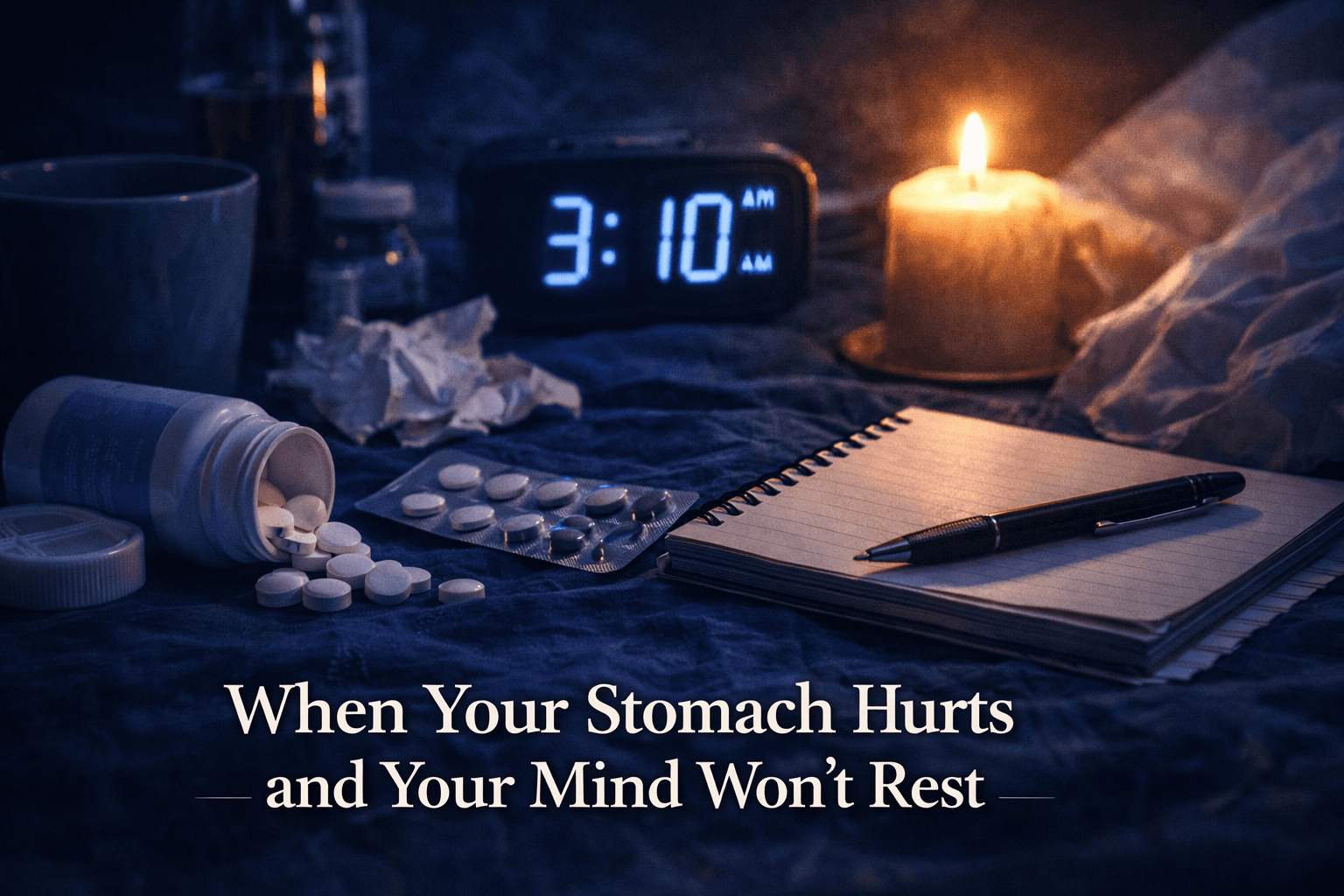
GERD, Reflux, and the Fear Loop: What Took Me Years to Understand
A long-form lived-experience pillar on chronic reflux, nighttime pain, anticipatory anxiety, daily tradeoffs, and what helped create stability over time.
Share on WhatsApp
2–3 line summary is copied. Tap to open WhatsApp and share.
 Tip: You can edit the text after it opens in WhatsApp.
Editorial Note
This article is prepared by the HealthUnspoken Editorial Team. Our articles may combine first-person submissions, public health education references, and commonly discussed experiences, then are edited for clarity and context.
The goal is reader awareness and education. This content is not a diagnosis or a treatment plan.
⚕️ Medical Disclaimer
The information provided in this article is for **educational and informational purposes only**. It should not be considered medical advice, diagnosis, or treatment. Always seek the advice of your physician or other qualified healthcare provider regarding any medical condition or treatment decisions.
🧾 Sources
HealthUnspoken articles may include first-person stories, editorial summaries of broadly discussed experiences, and public health education references. They are reviewed by the editorial team for clarity and educational context.
Reader Experiences Shared
Curated anonymized snippets from public health discussions, edited for readability.
I kept thinking social anxiety strangers would settle on its own, but what helped most was tracking patterns and asking clearer questions in appointments.
The hardest part for me was uncertainty around social anxiety strangers. Once I stopped changing everything at once, I could finally see what was helping.
I used to delay care because I was embarrassed about social anxiety strangers. Earlier conversations would have saved me a lot of stress.
A second opinion around social anxiety strangers changed my decisions completely. The issue was still real, but the plan felt calmer and more practical.
For me, progress with social anxiety strangers came from boring consistency, not one dramatic fix. That mindset reduced panic a lot.
I learned to separate fear from facts with social anxiety strangers. Writing down symptoms before visits made discussions more useful.