
I Thought the Burning Meant It Was Time for Bed
- Authors

- Name
- Author: HealthUnspoken Editorial Team
- Published on
- Last updated:
- Country
- Country
- 🌍Country: India
I’ve had reflux for as long as I can remember — long enough that, for most of my life, I didn’t even know it was something to question.
🍼 When a Body Starts Struggling Before You Can Speak
According to my parents, it started almost immediately.
As a baby, I threw up constantly. Not occasionally — constantly. Nearly every time I drank milk, it came back up. At first, it was brushed off as gas, or overeating, or just a sensitive stomach. They tried feeding me less, spacing things out, adjusting routines.
That helped.
But it never stopped it completely.
As a toddler, the vomiting became less dramatic — but it didn’t disappear. It was just… frequent. Enough that it became background noise to family life.
No one panicked.
No one assumed illness.
It was simply how my body worked.
🌙 When Pain Quietly Becomes Routine
As I got older, the symptoms changed.
I stopped throwing up as often. Instead, something else appeared — something sharper, stranger.
Almost every night, around the same time, I would get this intense pain in my chest.
I didn’t know what “heartburn” was.
I didn’t know what reflux felt like.
So my child brain came up with a simple explanation:
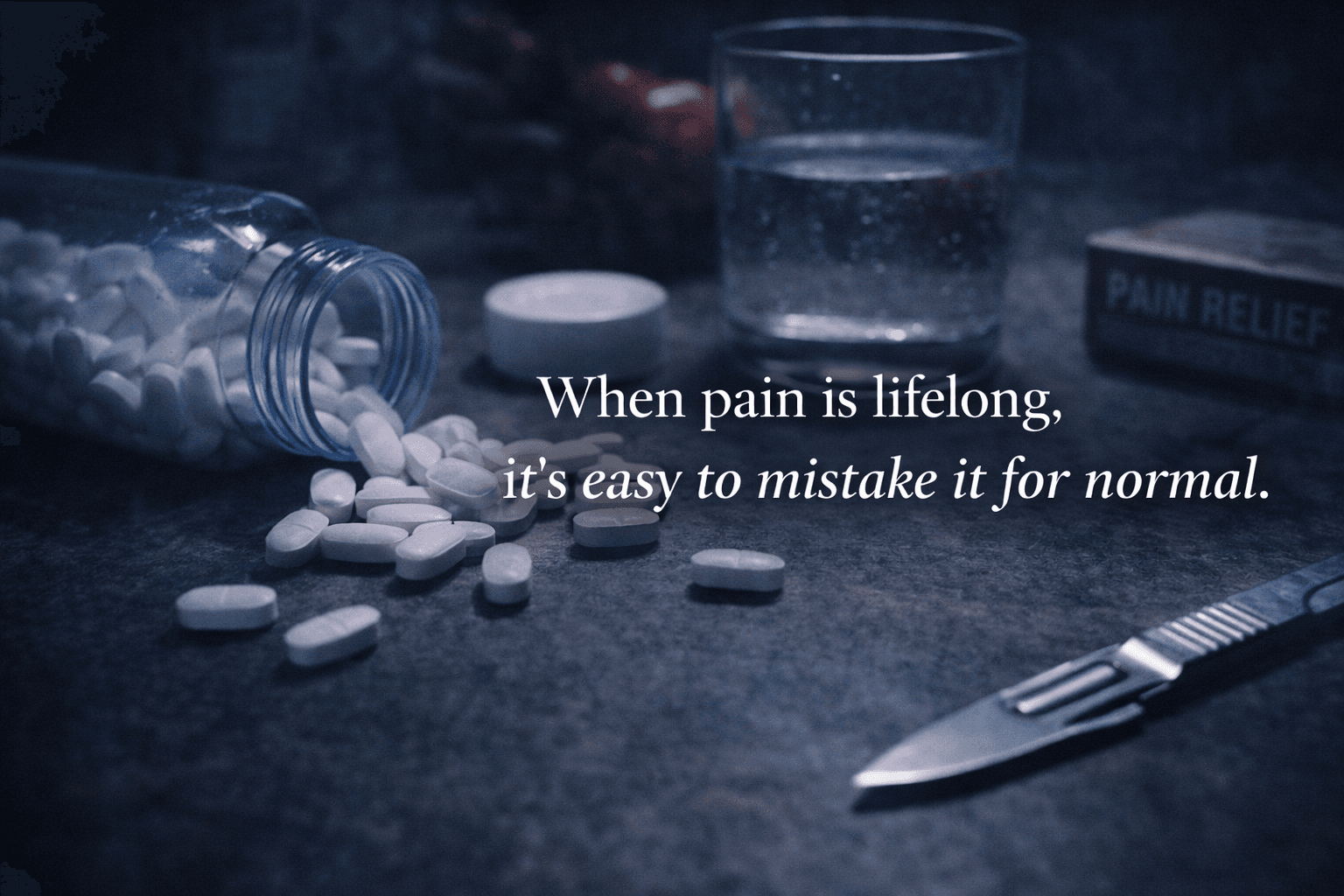
This must be my body telling me it’s bedtime.
And I listened.
I’d lie down.
I’d try to sleep.
And somehow, that explanation stuck with me for years.
🔥 The Burning That Didn’t Go Away With Water
Eventually, the pain stopped being just pain.
Acid would come up into my throat without warning. Sometimes just a little. Sometimes enough to make my throat and even my nose burn intensely. Water didn’t help. It didn’t wash it away. It just… sat there, while the burning lingered.
It was scary — but also weirdly familiar.
When something happens often enough, it stops feeling like an emergency.
It starts feeling like a personal flaw.
🛏 Nights That Made Sleep Impossible
As the years went on, nighttime became the worst part.
The chest pain grew stronger.
Heartburn started happening with almost every meal.
Acid rose multiple times a day.
Sleep stopped being restful.
Some nights, the pain was so severe that when I got out of bed, I couldn’t stand up straight. I’d bend forward instinctively, holding my stomach, waiting for the sensation to pass.
There were moments when I coughed up small amounts of acid.
That was the point when something finally shifted in my mind.
🧠 The Moment I Realized: This Isn’t Normal
I wasn’t a little kid anymore.
And suddenly, the explanation I’d lived with for so long stopped making sense.
This wasn’t bedtime.
This wasn’t growing pains.
This wasn’t normal.
I told my mom.
And to her credit, she acted immediately.
🩺 Entering the World of Specialists and Uncertainty
We went to a gastroenterologist.
Tests were run. Questions were asked. Possibilities were considered.
And then came a familiar medical conclusion:
We don’t know exactly what’s causing it.
That answer is harder than people realize.
There was no clear reason. No single trigger. No simple fix.
Just a body that seemed determined to push acid upward, no matter what stage of life I was in.
💊 Learning to Live With Management, Not Answers
Medication helped.
Taking antacids regularly eased the pain. The burning calmed. Nights became manageable again.
For the first time in a long while, my body felt quieter.
And when things quiet down, a dangerous thought appears:
Maybe it’s gone.
⚖️ The Temptation to Stop When Things Feel Better
I didn’t want to take medication unnecessarily.
So I stopped taking it regularly.
At first, nothing terrible happened.
Heartburn only showed up after certain foods — sugar, spicy meals, things I could point to. It felt controlled. Predictable.
But slowly, quietly, the old patterns crept back in.
The nighttime pain returned.
The regurgitation followed.
Not as violently as before — but unmistakably.
🔁 Realizing This Wasn’t a Phase
That’s when it hit me:
This wasn’t something I “had” once.
This was something my body does.
The symptoms could fade. They could soften. They could change shape.
But they never truly left.
🧠 What Living With Lifelong GERD Teaches You
Living with reflux from infancy does something subtle to your relationship with pain.
You normalize things that would alarm other people.
You reinterpret discomfort as routine.
You downplay signals your body is sending.
You build explanations that help you function — even if they’re wrong.
It takes years to unlearn that.
😴 When Sleep and Stress Become Entangled
One of the hardest parts has always been sleep.
Pain teaches your nervous system to stay alert. To anticipate discomfort. To brace for it.
Stress makes reflux worse.
Reflux disrupts sleep.
Poor sleep increases sensitivity to pain.
It’s a loop that feeds itself.
And breaking it isn’t about willpower.
🌱 Where I Am Now
Today, my symptoms are quieter than they once were.
I don’t need medication as constantly as I did at my worst — but I need it more than I thought I would when I believed this was “over.”
I pay attention now.
Not obsessively.
Not fearfully.
But honestly.
🤍 What I Wish I Had Known Earlier
I wish someone had told me that:
- long-term symptoms don’t have to be dramatic to be real
- children often misinterpret pain, not exaggerate it
- relief doesn’t mean resolution
- managing a condition isn’t the same as curing it
Most of all, I wish I had known that it was okay to question what I had normalized.
🌙 Learning to Listen Without Panic
I don’t hate my body for this anymore.
I don’t feel broken.
I just understand that some systems in me are more sensitive than others — and always have been.
Living well isn’t about pretending that sensitivity doesn’t exist.
It’s about learning how to live alongside it.
And for the first time, that feels possible.
Related topics
Keep exploring after I Thought the Burning Meant It Was Time for Bed
Bloating
Based on 10,000+ signals, bloating is described as abdominal fullness and distension. Key data identifies fermentation of FODMAPs, gut sensitivity, and slow transit as primary drivers, while movement and ACV show high success.
Acidity
A practical overview of acidity patterns people report, what tends to help, and where to be cautious. Informational only; not medical advice.
Constipation
A practical view of constipation patterns, common triggers, and helpful habits. Informational only; not medical advice.
PCOS (Polycystic Ovary Syndrome)
PCOS is a common hormone-related condition most often linked to irregular ovulation, higher androgen activity (acne, excess hair growth, scalp hair thinning), and metabolic features like insulin resistance. It exists on a spectrum: some people are overweight, others are not, and symptoms can vary widely.
Male infertility
Community discussions around male fertility focus on sperm quality (count, motility, morphology), semen concerns, varicocele, and hormone/sexual-function questions. The most repeated self-actions include reducing heat exposure, lifestyle changes over 2–3 months, and targeted nutrients.
Pregnancy
Pregnancy questions in real discussions cluster around diet safety (especially keto/low-carb/fasting), nausea, gestational diabetes, blood pressure concerns, thyroid changes, gallbladder/gallstones, swelling, constipation, and supplement safety. People want practical rules: what’s normal, what’s risky, and when to see a doctor.
Banana
Informational notes on Banana with cautious guidance and limits.
Curd (Yogurt)
Informational notes on Curd (Yogurt) with cautious guidance and limits.
Oats
Informational notes on Oats with cautious guidance and limits.
Iron
Informational notes on Iron with cautious guidance and limits.
Share on WhatsApp
2–3 line summary is copied. Tap to open WhatsApp and share.
 Tip: You can edit the text after it opens in WhatsApp.
Editorial Note
This article is prepared by the HealthUnspoken Editorial Team. Our articles may combine first-person submissions, public health education references, and commonly discussed experiences, then are edited for clarity and context.
The goal is reader awareness and education. This content is not a diagnosis or a treatment plan.
⚕️ Medical Disclaimer
The information provided in this article is for **educational and informational purposes only**. It should not be considered medical advice, diagnosis, or treatment. Always seek the advice of your physician or other qualified healthcare provider regarding any medical condition or treatment decisions.
🧾 Sources
HealthUnspoken articles may include first-person stories, editorial summaries of broadly discussed experiences, and public health education references. They are reviewed by the editorial team for clarity and educational context.