
Living in a Body That Never Gets a Break
- Authors

- Name
- Author: HealthUnspoken Editorial Team
- Published on
- Last updated:
- Country
- Country
- 🌍Country: India
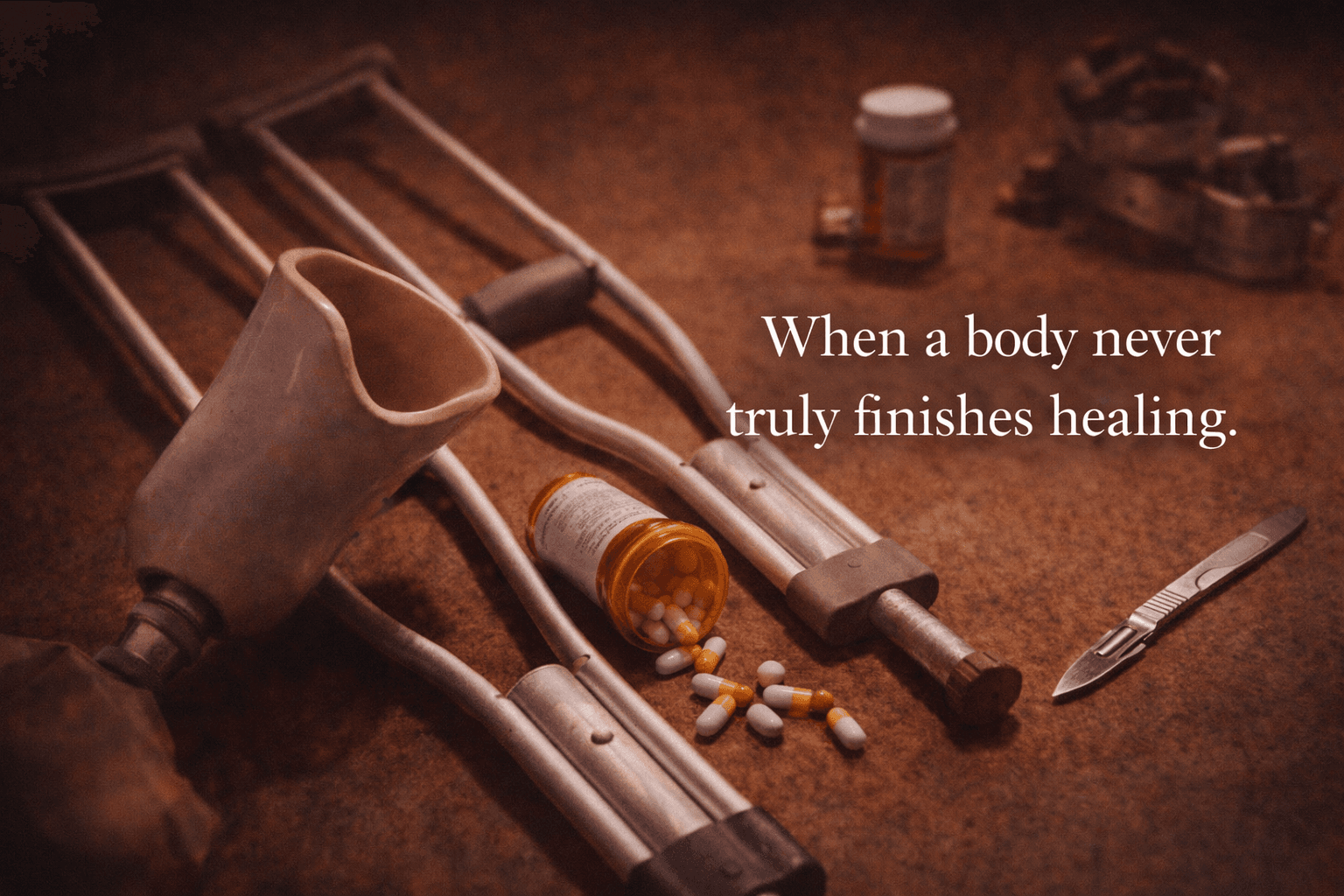
At some point, you stop counting injuries by years and start counting them by body parts. The body becomes less like a finished structure and more like a long-term maintenance project.
Learning to Live With Permanent Change
I have been living with disability for a long time.
Not the kind people always notice immediately, but the kind that changes how you enter rooms, how you plan errands, how you judge a wet floor, and how you calculate risk before every step.
After a traumatic injury years ago, I lost my left leg above the knee. Mobility became something I had to engineer, not assume.
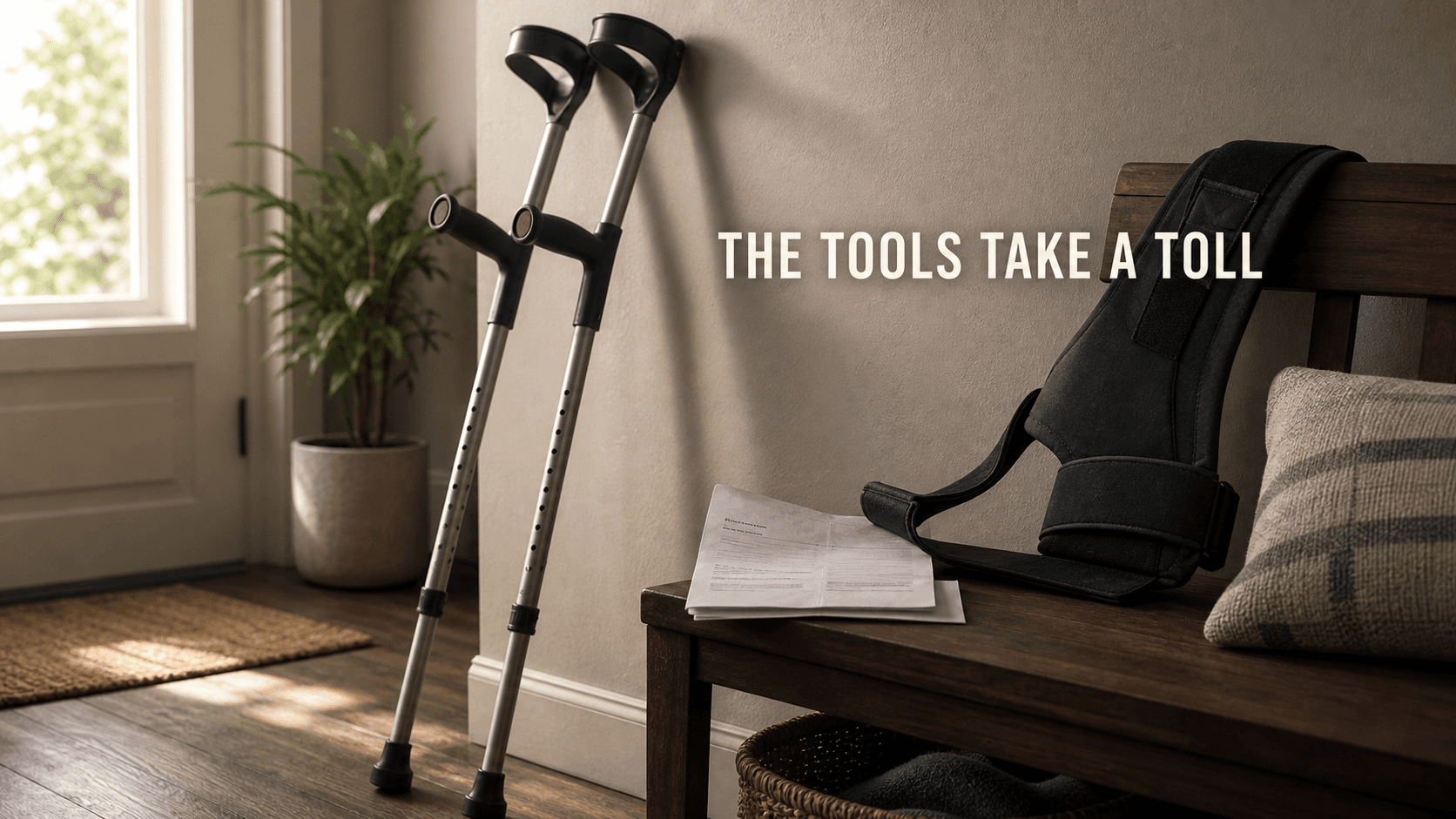
Crutches were not optional. They were survival tools.
Necessary. Relentless. Unforgiving.
Expectation vs Reality
The expectation is that once you adapt to one major injury, the rest of life becomes a matter of routine.
The reality is that adaptation has a cost.
A mobility aid can give you freedom and still strain another part of your body. A surgery can fix one problem and create months of recovery planning. Physical therapy can be necessary and still hurt. Medical progress can be something you are grateful for and exhausted by at the same time.
That contradiction is hard to explain unless you live with it.
You can be grateful for help and still tired of needing so much help.
When the Tools That Save You Start Breaking You Down
Anyone who relies on crutches long-term learns something quickly:
Your shoulders pay the price.
I learned that the hard way.
Years of leaning, lifting, and absorbing weight through joints that were not designed to carry my whole life eventually caught up with me. My right shoulder gave out first. Torn rotator cuff. Surgery followed.
The recovery was brutal.
There is no gentle way to say it: shoulder surgery humbles you. Pain lingers. Sleep becomes awkward. Independence shrinks temporarily. Every basic movement asks for strategy.
My surgeon said something that stuck with me:
"There is nothing worse for shoulders than crutches."
He was not wrong.
One Slip, One Second, Another Injury
A few years later, winter added its own chapter.
I came inside after taking the dog out. One crutch was wet from snow. The kitchen floor was slick.
It took less than a second.
The crutch slipped. I went down. Instinct took over.
I landed on my elbow, and all my weight transferred upward. My left shoulder hyperextended in a way no joint should.
The pain was immediate, deep, and certain.
I knew something had torn.
That is one of the hidden parts of disability: ordinary accidents can have bigger consequences because the body has fewer backup systems left.
When Therapy Is Not Simple
I tried physical therapy.
Six weeks of careful exercises. Six weeks of hoping improvement would come.
Instead, the pain worsened.
Every session felt like reopening something that had not closed. Eventually, I stopped, not because I was lazy or unwilling, but because continuing felt like doing harm rather than healing.
Physical therapy can be essential. It can restore function, prevent stiffness, and help people avoid or recover from surgery. But it also has to match the injury, the timing, and the person in front of the therapist.
Sometimes persistence is strength.
Sometimes wisdom is knowing the plan needs to be reassessed.
Waiting for Answers Takes Its Own Toll
Authorization for imaging did not come quickly.
While waiting, I adapted, as disabled people often do. I compensated. I shifted weight. I protected one side and overloaded the other.
Predictably, my "good" shoulder started hurting too.
By the time imaging was approved, both shoulders needed to be scanned.
One injection helped the right side. The left barely responded.
That difference said a lot.
The medical system often talks about treatment as if it begins once approval is granted, but the body does not pause while paperwork moves. Pain keeps changing. Compensation keeps happening. Sleep keeps getting interrupted. Life keeps asking you to function anyway.
What Similar Chronic Injury Stories Often Reveal
When I looked at broader chronic pain, surgery, and disability conversations, the same patterns kept appearing. I am not publishing raw comments or personal details here, but the themes were familiar.
People talked about physical therapy as both a lifeline and a frustration. Some found it life changing. Others felt unheard when exercises made symptoms worse. Many described long waits for imaging, surgery approval, prosthetics, dental care, specialist visits, or pain management.
Another theme was pain-medication stigma. Some people were afraid of being labeled drug-seeking. Others were afraid of dependence. Others needed pain control simply to sleep, work, or participate in rehab.
The deepest theme was exhaustion. Not just pain, but repetition: the next appointment, the next procedure, the next recovery window, the next explanation to someone who does not understand why you are tired.
That is the part that made me feel less alone.
When the Body Becomes a Long-Term Project
There is a strange mental space you enter when you realize your body is never going to be done.
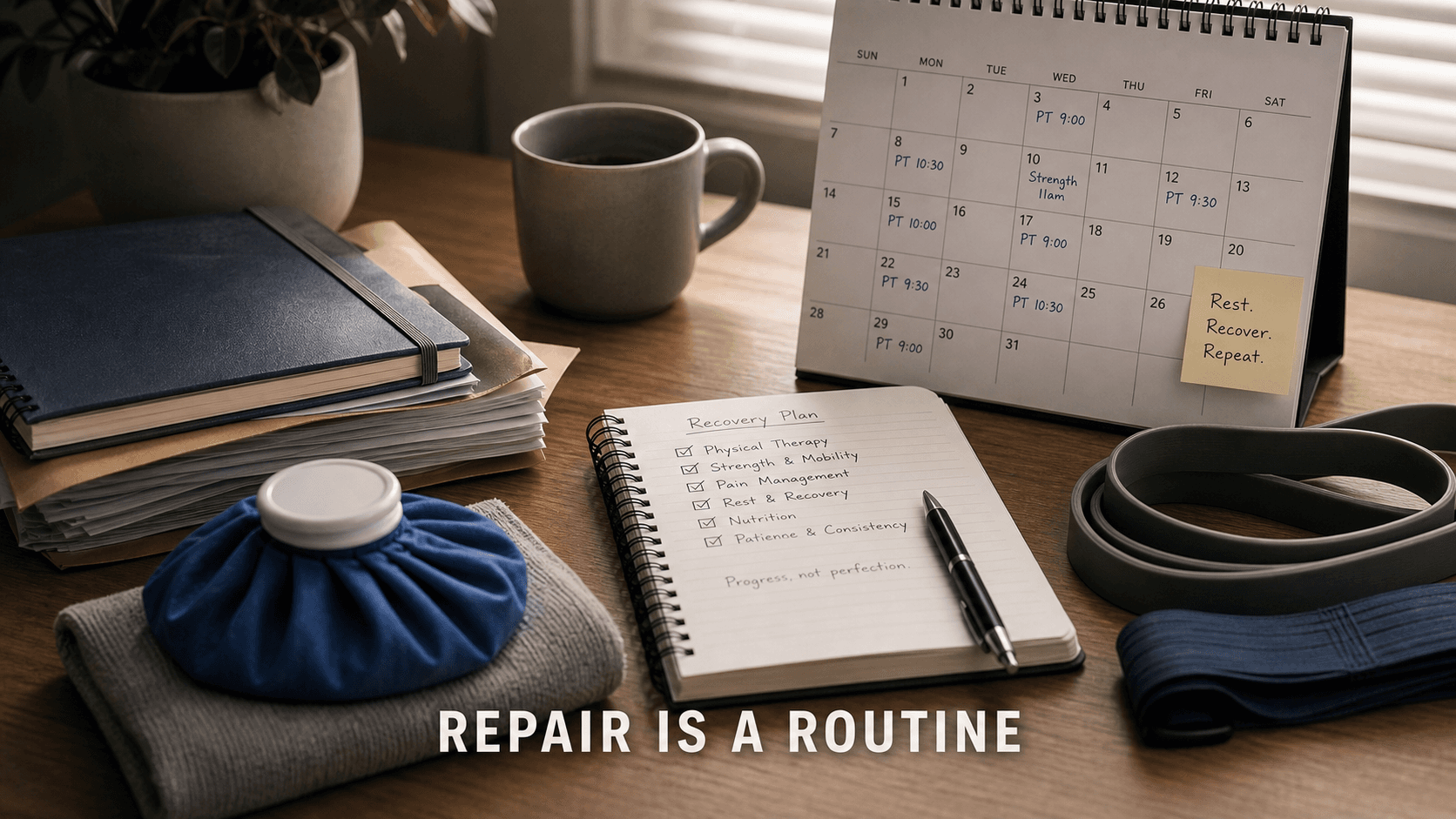
There is always another repair. Another appointment. Another plan for after the next procedure.
Upcoming surgeries stacked themselves into a quiet mental queue:
- shoulder repair
- abdominal surgery for a recurring hernia
- foot surgery to prevent breakdown and wounds
- a knee replacement looming somewhere down the road
At some point, the list stops feeling shocking and starts feeling logistical.
That does not mean it stops being heavy.
It only means you learn how to carry it.
Humor as a Survival Skill
People sometimes mistake dark humor for negativity.
It is not.
It is how you survive when seriousness would crush you.
Joking about being held together by hardware. Laughing about becoming a frequent guest in operating rooms. Pretending your body is a renovation project that keeps uncovering new structural issues.
Humor does not mean you have given up.
It means you found a way to keep breathing inside the frustration.
Pain Is Not Just Physical
Pain does not live only in joints and nerves.
It lives in waiting rooms. In delayed approvals. In bills, forms, scans, and the mental math of whether you can handle one more procedure this year.
It lives in planning life around recovery windows instead of vacations.
It lives in the fear that one more injury could tip the balance.
And it lives in the body memory of previous recoveries. If you have already fought back from one major surgery, the next one does not arrive as a blank page. It arrives carrying every old recovery with it.
What Helps Me Stay Functional
The answer is not one heroic mindset.
It is a system.
For me, that system includes:
- keeping mobility tools dry, stable, and inspected
- asking whether crutch fit or gait mechanics are adding shoulder strain
- taking new pain seriously before compensation spreads it elsewhere
- writing down what worsens or improves symptoms
- asking what physical therapy should feel like and when to stop or modify
- planning recovery logistics before surgery, not after
- preserving sleep as much as possible
- accepting help before I am completely depleted
None of this makes the body easy.
It makes the body more manageable.
Questions Worth Asking Before Another Repair
Repeated surgery changes the questions.
It is not only "Can this be fixed?"
It is also:
- What function are we trying to protect?
- What happens if we wait?
- What happens if we operate?
- What are realistic recovery timelines?
- What will I be unable to do during recovery?
- How will this affect my mobility aids, transfers, sleep, and independence?
- What pain control plan is safe for my situation?
- What signs mean something is wrong after the procedure?
- How do we protect the joints that are compensating?
Those questions do not make you difficult.
They make you prepared.
When to Seek Medical Care
Seek prompt medical care after a fall, shoulder injury, or new limb/joint pain if you notice:
- severe pain, deformity, or inability to move the joint
- sudden weakness, numbness, tingling, or loss of function
- major swelling, bruising, warmth, redness, or fever
- pain that worsens instead of improving
- a new wound, skin breakdown, or pressure sore, especially with prosthetic or mobility aid use
- chest pain, shortness of breath, fainting, or calf swelling after surgery or immobility
- signs of infection after a procedure, including increasing redness, drainage, fever, or worsening pain
Also seek support if chronic pain is affecting sleep, mood, appetite, relationships, or thoughts of self-harm. Pain can become isolating, and isolation makes it heavier.
Choosing Dignity Over Defeat
I do not see myself as broken.
Worn? Yes.
Reinforced? Also yes.
This body has carried me through service, trauma, recovery, and decades of adaptation. It is not fragile. It has been tested.
What I refuse to do is shrink my life in anticipation of decline.
Movement matters. Independence matters. Dignity matters.
And sometimes dignity means laughing. Sometimes it means resting. Sometimes it means asking for the scan, the second opinion, the better crutch fit, the pain plan, or the therapy adjustment.
Still here. Still moving. Still repairing.
Related Reading
- Living With Mysterious Back Pain: My 20-Month Search for Relief
- The Scan Said More Than I Was Ready to Understand
References
- Mayo Clinic: Rotator Cuff Injury
- AAOS OrthoInfo: Rotator Cuff Tears
- Amputee Coalition: Choosing the Right Mobility Device
- CDC: Chronic Pain Among Adults
Disclaimer: This article is for educational purposes only and is not medical advice. Individual symptoms, risks, and treatment decisions vary. Always consult a qualified healthcare professional for diagnosis and personalized care. If you have severe, worsening, or emergency symptoms, seek urgent medical attention immediately.
Related Reading
Continue reading after Living in a Body That Never Gets a Break
When Pain Is Real but Youre Told It Isnt
A de-identified personal story about chronic pain, delayed diagnosis, hypermobility, rare-disease patterns, and the medical trauma that can build when the body is dismissed for too long.
Living With a Dry Mouth, Burning Pain, and No Easy Answers
A lived experience of chronic dry mouth, burning pain, medication side effects, dental damage, broken sleep, and the slow search for safer support.
When Retirement Finally Gave Me the Time to Heal
A personal story about back and hip pain, overwork, physiotherapy, walking, gardening, and how recovery became possible only after life finally slowed down.
Share on WhatsApp
2–3 line summary is copied. Tap to open WhatsApp and share.
 Tip: You can edit the text after it opens in WhatsApp.
Editorial Note
This article is prepared by the HealthUnspoken Editorial Team. Our articles may combine first-person submissions, public health education references, and commonly discussed experiences, then are edited for clarity and context.
The goal is reader awareness and education. This content is not a diagnosis or a treatment plan.
⚕️ Medical Disclaimer
The information provided in this article is for **educational and informational purposes only**. It should not be considered medical advice, diagnosis, or treatment. Always seek the advice of your physician or other qualified healthcare provider regarding any medical condition or treatment decisions.
🧾 Sources
HealthUnspoken articles may include first-person stories, editorial summaries of broadly discussed experiences, and public health education references. They are reviewed by the editorial team for clarity and educational context.
Reader Experiences Shared
Curated anonymized snippets from public health discussions, edited for readability.
I kept thinking chronic injury multiple would settle on its own, but what helped most was tracking patterns and asking clearer questions in appointments.
The hardest part for me was uncertainty around chronic injury multiple. Once I stopped changing everything at once, I could finally see what was helping.
I used to delay care because I was embarrassed about chronic injury multiple. Earlier conversations would have saved me a lot of stress.
A second opinion around chronic injury multiple changed my decisions completely. The issue was still real, but the plan felt calmer and more practical.
For me, progress with chronic injury multiple came from boring consistency, not one dramatic fix. That mindset reduced panic a lot.
I learned to separate fear from facts with chronic injury multiple. Writing down symptoms before visits made discussions more useful.