
When the Mind Influences the Body: A Long Journey Through Unexplained Physical Symptoms
- Authors

- Name
- Author: HealthUnspoken Editorial Team
- Published on
- Last updated:
- Country
- Country
- 🌍Country: Global
I used to think symptoms had to choose one side. Either they were "physical" or they were "mental." If tests were normal, then maybe I was overreacting. If the sensations felt intense, then something serious had to be wrong. Living in that split made everything harder. What took me years to understand is that the mind and body can lock into each other so tightly that the experience feels completely physical, even when the original trigger started in fear.
It Did Not Start With a Diagnosis. It Started With a Moment.
The first episode was not dramatic from the outside.
Inside, it felt like an emergency.
I remember a sudden wave of internal pressure, then one repeating thought: "I cannot breathe properly." I was breathing, but my body did not believe it. My chest felt tight. My throat felt narrow. My attention zoomed in on every heartbeat.
That was the beginning of a pattern I did not have language for.
At that age, I did what most people do when something frightening happens once: I tried to move on. But the body remembers high-fear states even when the mind wants to forget.
Expectation vs Reality
What I expected
I expected one of two clear answers.
- Either doctors would find a specific physical cause and treat it.
- Or the symptoms would fade naturally and never return.
I assumed uncertainty would be short.
What actually happened
The reality was a long middle zone.
- Symptoms came in waves, not in straight lines.
- Good weeks created hope, then difficult days erased confidence.
- Reassurance helped briefly, but fear returned during the next episode.
- My body reacted to stress faster each time.
I was not choosing this. I was not "making it up." But I was also not understanding the cycle yet.
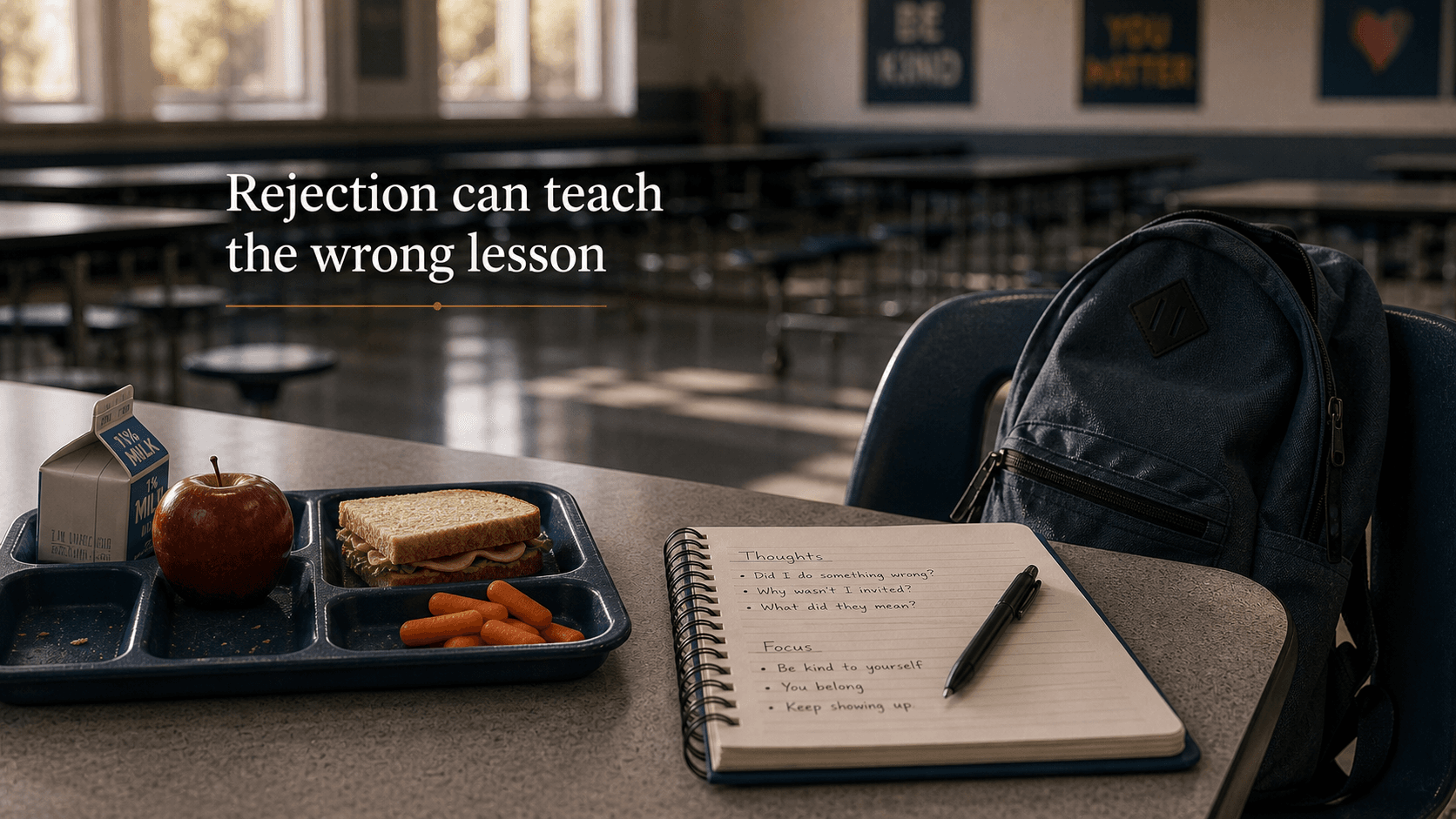
The Pattern That Took Over
Over time, I started noticing a sequence.
- A small sensation appears. Maybe chest pressure, dizziness, or throat discomfort.
- My mind scans for danger and lands on worst-case meaning.
- Adrenaline rises.
- Breathing changes.
- Muscle tension rises in the neck, chest, jaw, and abdomen.
- The symptom feels stronger.
- Fear of the symptom becomes the next trigger.
This is the part people rarely describe clearly: once fear and sensation are linked, the body can start reacting before your rational mind catches up.
I began living with anticipatory fear. I was not only afraid of symptoms. I was afraid of when they might return.
The "All Normal" Test Cycle
I did what anyone would do. I sought medical evaluation.
When tests came back normal, I expected relief. Sometimes I felt it for a day or two.
Then the next episode would happen.
That created a painful contradiction:
- "Nothing dangerous was found"
- "But I still feel unwell"
Both were true at the same time.
Many people in similar situations describe this same emotional whiplash. They are grateful serious conditions are ruled out, but they still do not feel better. The gap between reassurance and lived experience can feel isolating.
How Daily Life Quietly Shrinks
The hardest changes were subtle at first.
I stopped choosing by preference and started choosing by risk.
- Where is the nearest exit if I feel breathless?
- Can I sit near fresh air?
- What if symptoms start in traffic or in a meeting?
- Should I cancel plans "just in case"?
Even when I showed up, I was often not fully present. Part of my attention stayed on symptom watch.
That vigilance is exhausting. It drains focus, patience, and emotional resilience.
After enough nights of poor sleep, even small stressors feel larger. That made the loop tighter.
Nighttime: Where the Mind Gets Loudest
Daytime has distractions. Night removes them.
At night, my mind replayed conversations, symptoms, and unfinished worries. If I woke up with a racing heart, my brain interpreted it as danger instead of a stress response.
Then came the familiar loop:
- fear spike
- shallow breathing
- stronger sensations
- more fear
Several people describe this exact overnight pattern: waking abruptly, checking pulse, feeling a rush of dread, struggling to return to sleep. The next day begins from depletion.
Sleep loss does not just make you tired. It lowers your threshold for stress and increases symptom sensitivity. That means the next episode is more likely.
Experience Blocks
1) "I kept calling it random"
For a long time, I called episodes random because they felt unpredictable. Later, I realized they were not random. They were patterned. Not always by one obvious trigger, but by combinations: accumulated stress, poor sleep, overstimulation, unresolved fear, and body hypervigilance.
Once I started tracking patterns instead of chasing one perfect explanation, I could respond better.
2) "Normal tests did not equal easy recovery"
Medical reassurance mattered. It reduced catastrophic thinking in the moment. But it did not instantly retrain my nervous system. I still had to learn how to respond during episodes, how to reduce baseline tension, and how to stop feeding the loop with constant checking.
3) "The turn happened when I stopped arguing with every symptom"
I used to fight every sensation mentally: "This cannot happen. Why is this happening again?" Ironically, that resistance increased distress.
A calmer approach helped more: acknowledge the sensation, stabilize breathing, reduce stimulation, and move through the wave without interpreting it as immediate catastrophe.
What Felt Common
Across many lived experiences, similar themes keep appearing.
- Symptoms feel deeply physical, even when stress is involved.
- People feel dismissed when language is too simplistic.
- Fear of recurrence becomes a major burden.
- Sleep disruption worsens everything.
- Information overload can increase panic instead of reducing it.
- Small stabilizing habits help more than dramatic one-day changes.
Another common theme is shame. Many people blame themselves for not "handling it better." That self-blame increases pressure and usually worsens symptoms.
One note from the bounded MySQL pull for this article: the result set was smaller and noisier than some of the other topics, which fits the reality that people describe these experiences in many different ways. The usable signal was still consistent:
- people describing symptoms that felt life-threatening in the moment even when tests later looked reassuring
- people checking pulse, oxygen, breathing, or other body signs repeatedly because reassurance did not stick
- stress or poor sleep making the same physical sensations feel stronger the next time
That does not prove a diagnosis. It does support the core pattern this article describes: once fear and physical sensation get linked, the body can start reacting to the alarm itself.
What People Slowly Realized
No single insight fixed everything, but several realizations changed trajectory.
- A strong mind-body symptom loop is real, not imaginary.
- Reassurance and skills are both needed.
- Avoiding every trigger shrinks life and reinforces fear.
- Constant symptom-checking increases nervous-system alarm.
- Recovery is often gradual, uneven, and still meaningful.
- Calm is practiced, not discovered once.
One of the most useful shifts was replacing "What is wrong with me?" with "What pattern is active right now?"
That one question moved me from panic toward response.
What Quietly Made It Worse
Some things looked harmless but repeatedly intensified the loop.
Constant self-checking
I used to check my pulse, breathing, and body sensations repeatedly. It felt responsible in the moment, but in practice it told my nervous system that danger was still present. The more I checked, the more alert my body became.
Over-researching during high-fear windows
Trying to learn is useful. Panic-searching for answers at midnight was not. Information without context can escalate fear quickly, especially when you are already in a stress state.
Treating every flare as a full reset
I interpreted each bad day as proof that I was "back to zero." That thinking created despair and made me abandon routines that were actually helping over longer windows.
Isolation
When symptoms were intense, I withdrew to avoid explaining myself. Isolation reduced immediate social pressure, but increased rumination. Less grounding, more looping.
Perfection standards
I wanted a perfect routine and perfect emotional control. Neither is realistic in long recovery. Progress improved when I accepted "good enough" consistency instead of all-or-nothing plans.
Practical Stabilizers That Helped
These were not miracle cures. They were repeatable practices that reduced intensity over time.
1) Breathing that actually slows the body
During acute fear, I focused on longer exhalation and gentler pace rather than trying to take huge breaths. The goal was to signal safety, not force control.
2) Fewer stimulants during unstable periods
Caffeine and doom-scrolling amplified internal noise during bad phases. Reducing both lowered my reactivity.
3) Symptom notes with boundaries
Tracking helped when it was brief and structured. Endless logging increased obsession. I used short notes: trigger context, intensity, duration, what helped.
4) Sleep protection
I treated sleep like medical infrastructure, not a luxury.
- consistent wind-down routine
- lower nighttime stimulation
- no late emotional spirals online
- practical limits on late-evening decisions
5) Movement as nervous-system regulation
On difficult days, gentle walking and simple mobility were often better than complete inactivity. Motion helped discharge stress chemistry.
6) Better language in self-talk
"I am in danger" intensified symptoms. "I am in a stress wave" made response possible.
Language did not erase symptoms, but it changed how quickly they escalated.
What Helped Me Get Better Care Conversations
One practical problem in mind-body conditions is communication. If you describe only fear, people may miss the physical burden. If you describe only physical sensations, people may miss the stress amplification pattern. I had better appointments when I prepared both.
I brought a short symptom timeline
Not pages of notes. Just a one-page pattern summary:
- onset window
- main sensations
- frequency and duration
- sleep impact
- functional impact (work, concentration, daily tasks)
- what had already been tried
This made appointments more efficient and less emotional in the moment.
I asked focused questions
Instead of asking for one final answer, I asked:
- What dangerous causes have been ruled out?
- What should still be monitored over time?
- What is the likely stress-amplification component here?
- What practical steps should I follow for the next 4 to 6 weeks?
Focused questions reduced helplessness because they turned uncertainty into a plan.
I treated follow-up as part of treatment
I used to seek reassurance once, then return only when symptoms were severe again. Follow-up helped me evaluate trends, adjust strategy, and avoid restarting from fear every time a flare happened.
I used plain language about impact
Saying "I feel anxious" was true, but incomplete. Saying "I wake three times most nights, cannot focus by noon, and avoid normal travel" gave a clearer picture of severity.
Clear impact language often changed the quality of support.
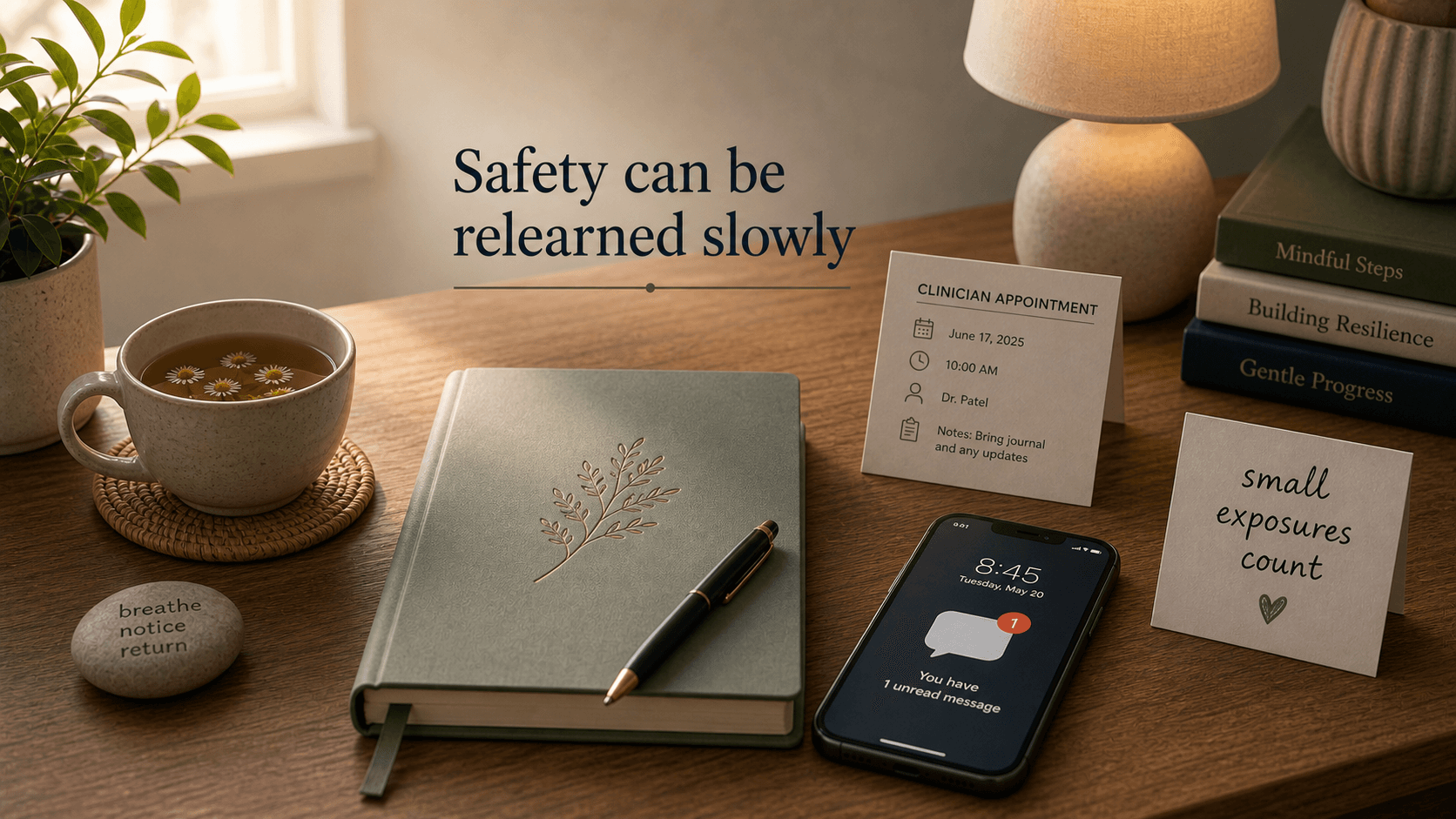
When It Was Too Much
There were periods where I felt trapped in my own body.
I stopped trusting normal sensations. I questioned whether I could cope with another cycle. The fear was not always loud, but it was constant.
This is where support matters most.
Not generic advice. Not "just relax." Real support:
- clear medical follow-up for red-flag concerns
- practical regulation skills
- someone who listens without trivializing
- room to recover without performance pressure
One of the biggest turning points was admitting I needed structured support, not more private struggling.
What Should Not Be Ignored
Mind-body loops are real, but serious medical conditions must still be ruled out when symptoms are new, severe, or changing.
Seek urgent medical care for:
- new or severe chest pain
- fainting, confusion, or neurological changes
- significant breathing difficulty
- persistent vomiting or dehydration
- sudden one-sided weakness, numbness, or speech changes
- any symptom pattern that is clearly escalating or unlike your baseline
If you are in immediate danger or unsure whether symptoms are urgent, seek emergency care.
Closing Reflection
For years, I wanted one clean answer.
What I got instead was a slower truth: my symptoms were real, my fear was real, and my recovery would require both medical clarity and nervous-system retraining.
I no longer measure progress by "never feeling symptoms again." I measure it by how I respond when symptoms appear, how quickly I return to baseline, and how much of my life I refuse to surrender to anticipatory fear.
That shift did not happen in one breakthrough moment. It happened in many ordinary days of choosing steady responses over panic.
If you are living in this confusing middle zone, you are not weak and you are not inventing it. You may be in a loop that can be understood, supported, and gradually loosened.
References
- NIMH: Panic Disorder
- MedlinePlus: Somatic Symptom Disorder
- MedlinePlus: Anxiety
Related HealthUnspoken Reading
Disclaimer: This article is for educational purposes only and is not medical advice. Mind-body symptom loops are real, but new or worsening chest pain, breathing difficulty, fainting, persistent vomiting, neurological changes, or symptoms outside your usual pattern still need medical evaluation. Please consult a qualified healthcare professional for diagnosis and treatment decisions.
Related Reading
Continue reading after When the Mind Influences the Body: A Long Journey Through Unexplained Physical Symptoms
GERD, Reflux, and the Fear Loop: What Took Me Years to Understand
A long-form lived-experience pillar on chronic reflux, nighttime pain, anticipatory anxiety, daily tradeoffs, and what helped create stability over time.
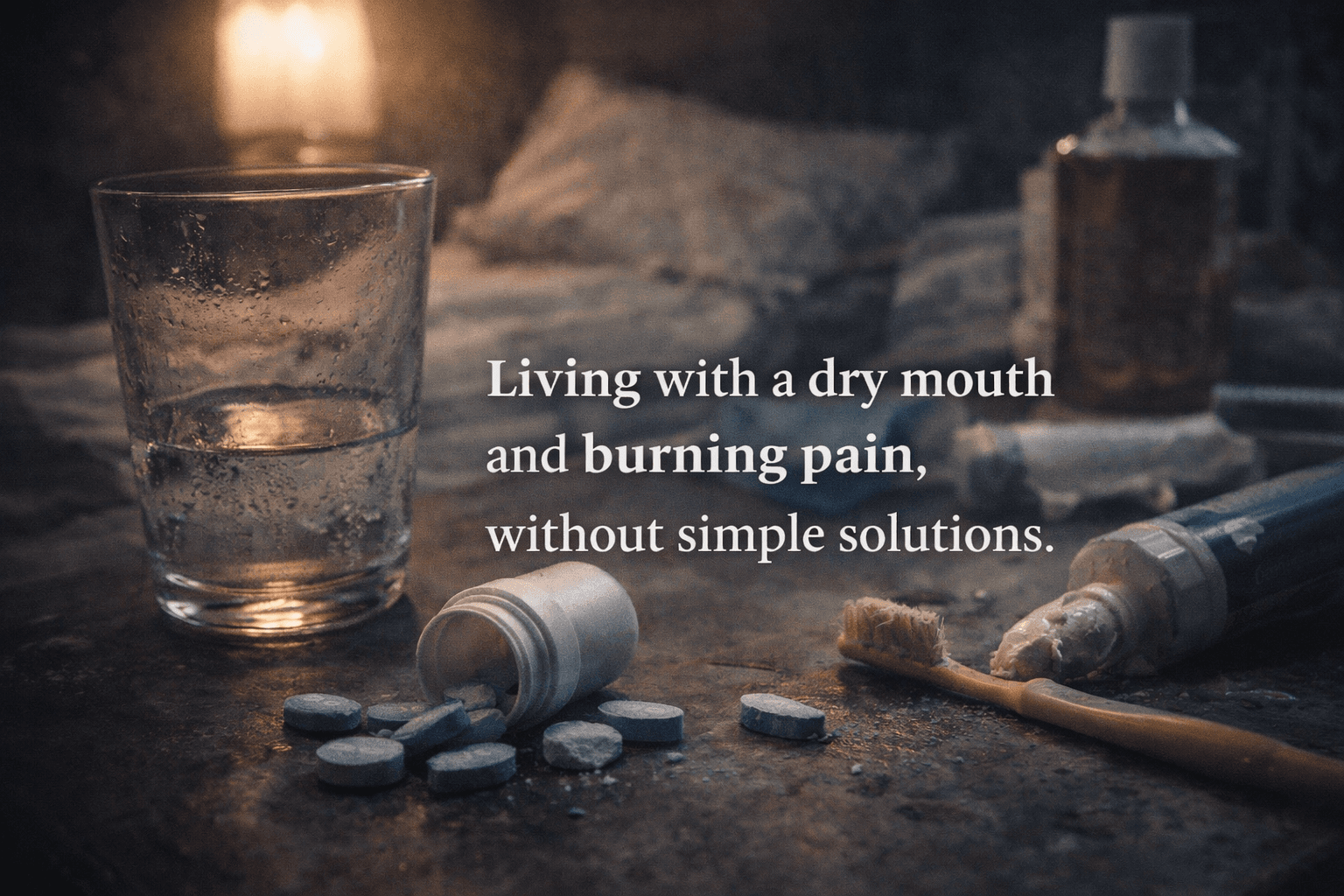
Living With a Dry Mouth, Burning Pain, and No Easy Answers
A lived experience of chronic dry mouth, burning pain, medication side effects, dental damage, broken sleep, and the slow search for safer support.
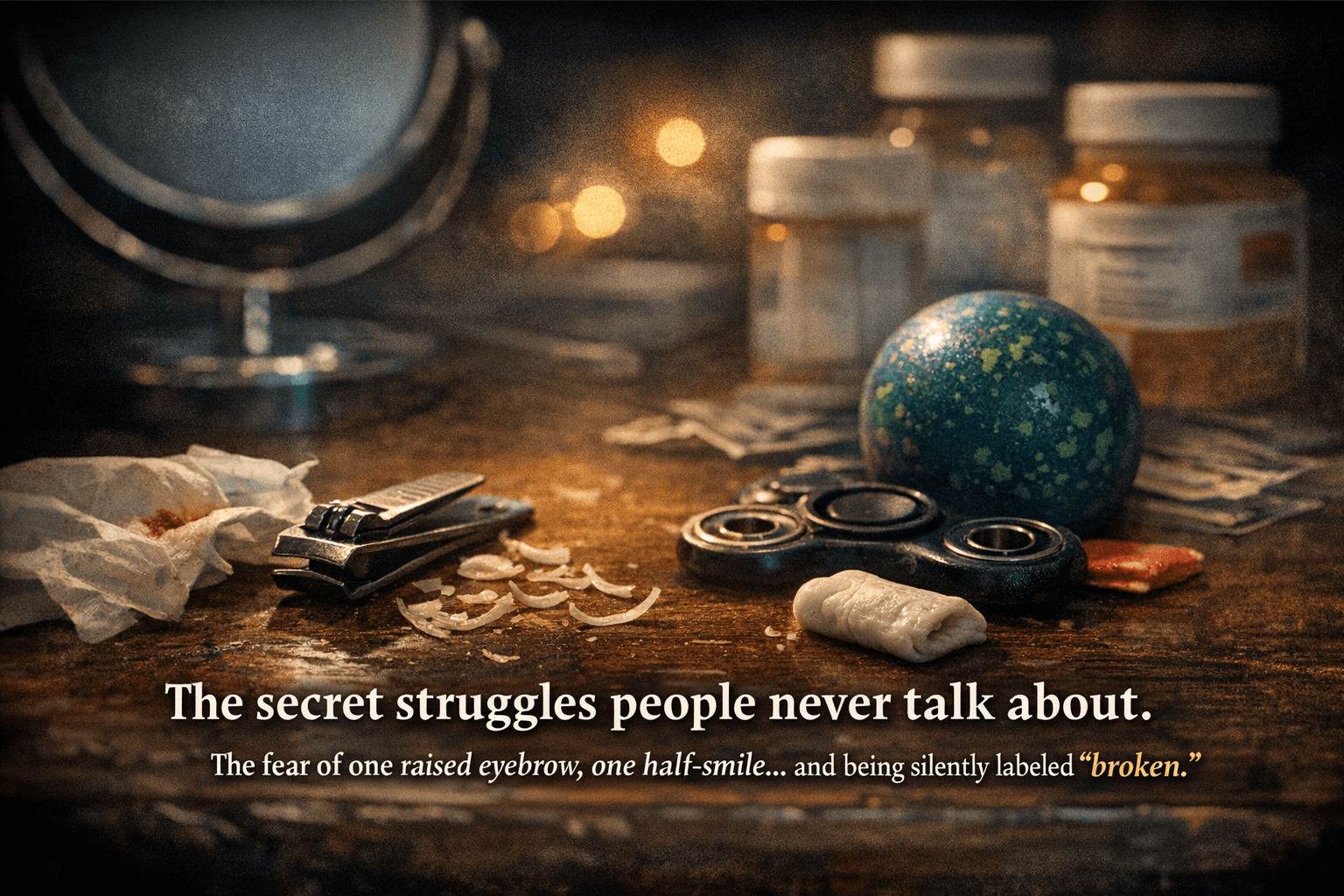
“Please Don’t Call It Gross”: Living With Body-Focused Repetitive Behaviors in Silence
A de-identified personal journey about BFRBs—skin picking, nail biting, cheek chewing—and the quiet shame that keeps people from seeking help. This story focuses on compassion, harm-reduction, and what actually makes recovery feel possible.
Share on WhatsApp
2–3 line summary is copied. Tap to open WhatsApp and share.
 Tip: You can edit the text after it opens in WhatsApp.
Editorial Note
This article is prepared by the HealthUnspoken Editorial Team. Our articles may combine first-person submissions, public health education references, and commonly discussed experiences, then are edited for clarity and context.
The goal is reader awareness and education. This content is not a diagnosis or a treatment plan.
⚕️ Medical Disclaimer
The information provided in this article is for **educational and informational purposes only**. It should not be considered medical advice, diagnosis, or treatment. Always seek the advice of your physician or other qualified healthcare provider regarding any medical condition or treatment decisions.
🧾 Sources
HealthUnspoken articles may include first-person stories, editorial summaries of broadly discussed experiences, and public health education references. They are reviewed by the editorial team for clarity and educational context.
Reader Experiences Shared
Curated anonymized snippets from public health discussions, edited for readability.
My episodes started with a thought like “something is wrong,” then my chest and breathing felt strange within seconds. It felt physical, not imagined.
The hardest part was hearing “your tests are normal” while still feeling awful every day. It was confusing to hold both things at the same time.
When my sleep got worse, my anxiety symptoms became louder. Once I started protecting sleep, I noticed fewer intense spirals.
I kept over-monitoring every sensation, and that made the fear loop stronger. Writing symptoms down once and stepping away helped me break that cycle.
Breathing techniques did not fix everything, but they gave me a way to interrupt panic when I felt short of breath and overwhelmed.
What changed most was learning that mind and body can amplify each other. That made me less afraid and more consistent with recovery habits.