
Why Do Small Things Trigger Us So Easily Today?
- Authors

- Name
- Author: HealthUnspoken Editorial Team
- Published on
- Last updated:
- Country
- Country
- 🌍Country: India
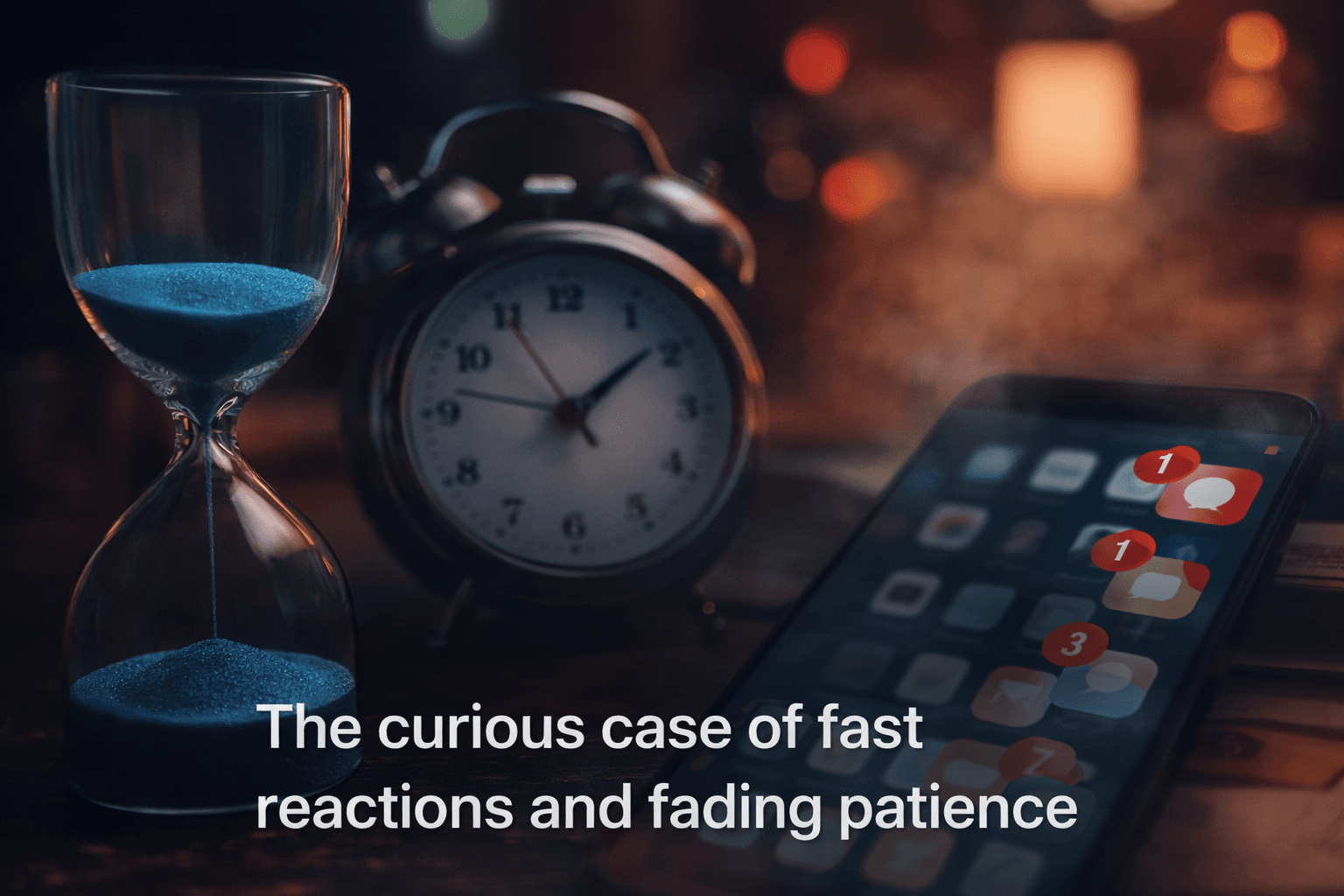
Most people who struggle with patience are not trying to be difficult. They are trying to hold too much at once. Work pressure, family expectations, sleep debt, phone noise, unfinished decisions. Then one small moment happens and the reaction comes out larger than the event. That is how many people describe life now: not one big collapse, just a shrinking gap between stress and response.
The pattern is surprisingly ordinary.
You are already mentally stretched, and then someone interrupts you mid-task. You receive a short message and hear criticism in it. At home, a repeated request feels like one demand too many.
Nothing dramatic happened. Still, your body reacts as if something serious did.
Many lived stories now describe this as a "reactive baseline." People are not exploding because they lost character overnight. They are reacting from accumulated overload. When the nervous system is running hot for long periods, patience usually disappears before insight does.
Expectation vs Reality
What people expected
Most of us believed modern speed would reduce stress.
Faster replies. Better tools. Less waiting. More convenience.
The hidden assumption was: if everything gets faster, life should feel easier.
What many are actually living
For many people, speed removed natural pauses.
The old world forced waiting. Bus queues, long forms, delayed responses, slower feedback cycles. Those gaps were inconvenient, but they also gave emotions time to settle. Now a lot of life happens in immediate mode. Messages arrive instantly. Opinions arrive instantly. Comparison arrives instantly.
The body may be still, but attention never fully lands. People describe feeling "always on" and then wondering why they have less tolerance for everyday friction.
How the Pattern Usually Starts
It rarely starts with one major event. It starts with repeated micro-strain:
- interrupted sleep
- unfinished tasks
- unresolved tension with close people
- constant consumption of "urgent" inputs
- no protected transition between roles
From there, people often build emotional debt. They do not process stress when it happens; they stack it. By evening, one small comment can trigger a response shaped by ten earlier events.
Several lived accounts describe the same arc: "I thought I was reacting to this moment, but I was actually reacting to the whole week."
Family Triggers and Approval Anxiety
One of the strongest themes in human experience stories is that impatience gets loudest in relationships where old emotional patterns are already active.
People reported getting triggered not only by words, but by tone, facial expressions, or remembered roles from years ago. A neutral remark could feel loaded if it touched a longstanding insecurity.
A repeated pattern was approval anxiety:
- feeling judged by parents or relatives
- reading disappointment into small comments
- overexplaining to avoid criticism
- getting angry quickly when feeling unseen
Some people described intense reactions during family gatherings, then guilt afterward. Others said they began avoiding gatherings entirely because the emotional recovery cost became too high.
The shared insight was not "family is bad." It was more specific: unresolved relational patterns can reduce patience far more than everyday logistics do.
The Hidden Role of Sleep, Food, and Physical Exhaustion
People often treat patience as a personality issue. It is also a physiology issue.
When sleep is fragmented for multiple nights, regulation drops. When blood sugar swings are frequent, frustration rises faster. When pain or chronic tension is present, threat perception increases.
In that state, interpretation becomes harsher:
- delay feels like rejection
- feedback feels like attack
- disagreement feels like disrespect
Many people try to solve this only with mindset language. But mental steadiness is harder when the body is chronically depleted. The practical sequence matters: reduce physical strain, then practice emotional regulation.
The Anticipation Trap
Another comment pattern appeared again and again: people were exhausted not only by what happened, but by what they feared might happen.
They rehearsed upcoming conflict in their head. They predicted criticism before conversations began. They entered interactions already defended.
By the time the moment arrived, they were no longer neutral.
This anticipation loop creates a painful cycle:
- expect stress
- arrive tense
- react quickly
- regret the reaction
- expect stress even more next time
The loop is not broken by "be positive" advice. It is usually broken by building response tools that are specific, repeatable, and small enough to use in real time.
What the bounded comment pull supported
I ran a bounded MySQL pull from the curated comments_high_quality tables before revising this article. The first pass was noisy, but the tighter pass still reinforced a few useful patterns.
The clearest signals were:
- people describing themselves or relatives as overreacting to "small" things that should not have felt so big
- irritability getting worse when sleep was broken for long periods
- some people noticing they were far more reactive when meals were delayed or blood sugar felt unstable
- parents describing constant stress and sleep deprivation changing their patience threshold at home
- regret showing up after the reaction, not before it
Those patterns do not prove one single cause, but they fit the broader shape of this article: reactivity often grows out of accumulated strain rather than one dramatic personality change.
Experience Blocks
1) "I looked angry, but I was already overloaded."
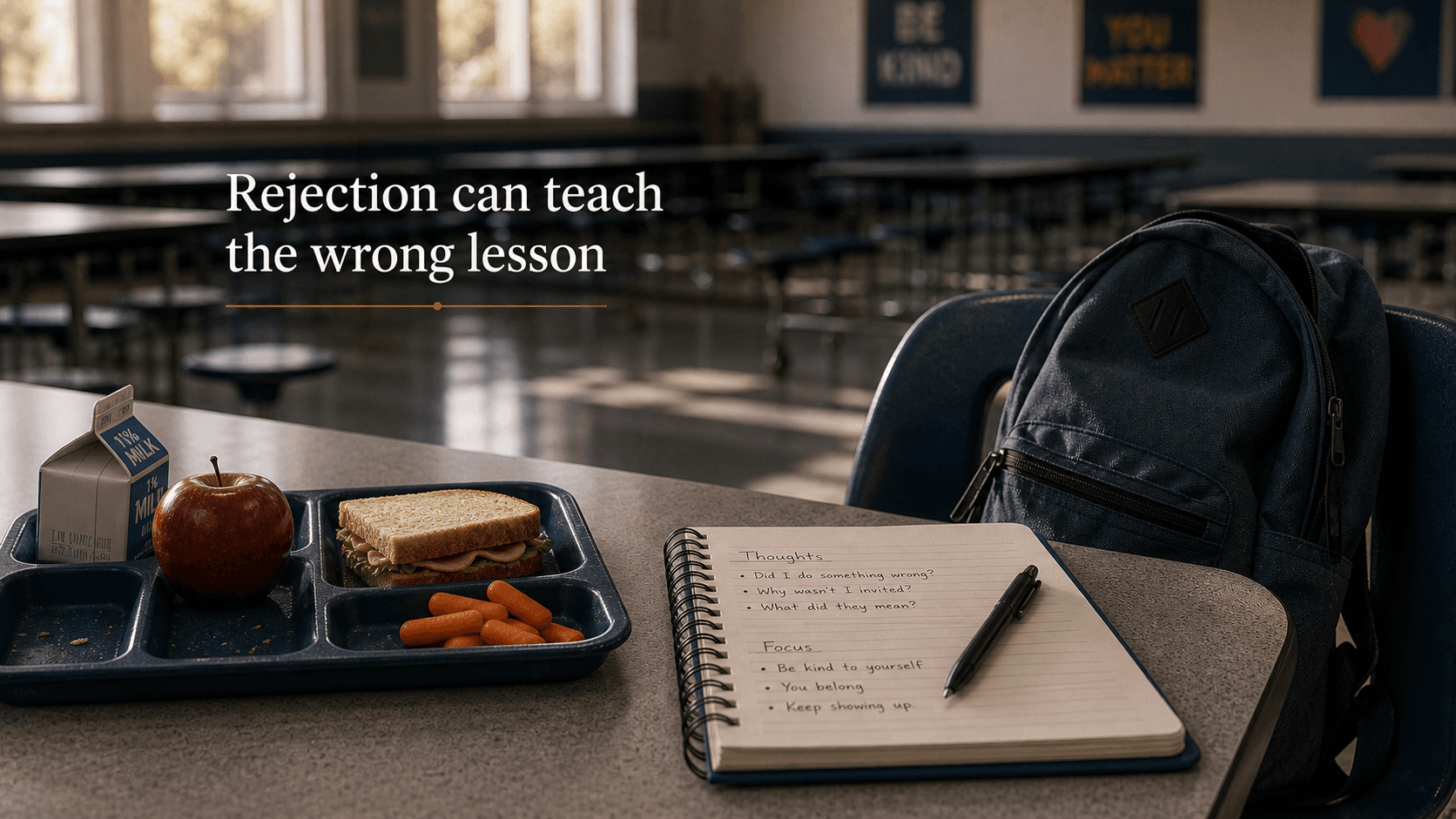
"I kept saying I had become short-tempered. Then I mapped one week honestly: broken sleep, constant notifications, no transition after work, and meals pushed late. I was not reacting to one person. I was reacting to accumulated strain. That changed everything because I stopped blaming character and started changing conditions."
2) "I did not notice I was triggered until I was already in it."
"For me it was never one sentence. It was a sequence. A tone, then a memory, then an assumption. By the time I realized I felt threatened, I had already snapped. Learning to name what I was feeling in real time made me less explosive, even before the situation changed."
3) "Family gatherings pushed my anxiety from zero to ten."
"I would enter family events already tense, expecting judgment. Sometimes one small comment about career or body image would send me into full defense mode. I either overreacted or shut down. What helped was deciding boundaries in advance: how long I would stay, what topics I would exit, and which conversations were not worth proving myself in."
4) "Responding instead of reacting took practice, not motivation."
"I admired people who could stay calm during conflict and answer thoughtfully. I assumed they were just built that way. Later I realized it is a trained skill. Slower breathing, deliberate pauses, and a repair sentence after a sharp response were awkward at first, then surprisingly effective."
What Felt Common
Across age groups and backgrounds, the same patterns kept showing up.
People became most reactive when they were chronically rushed rather than acutely overwhelmed. Many overreacted from anticipation, not from the actual event. Most tried to fix the final reaction while ignoring the earlier setup conditions.
Guilt was another strong thread. After a harsh response, many people moved into self-attack: "I always ruin things." That shame usually worsened regulation. It added pressure without adding skill.
Progress happened when people changed the question from identity to pattern:
"What makes me reactive?" "What signs appear before I snap?" "What one step can I use before I answer?"
What People Slowly Realized
Patience is not a fixed trait. It is a trainable response pattern.
People who became steadier described similar realizations:
- immediate replies often create avoidable damage
- delayed replies can protect both clarity and dignity
- boundaries reduce reactivity more than willpower does
- not all mindfulness tools help everyone; personalization matters
- recovery is uneven, and one bad day does not erase progress
One subtle realization was especially useful: patience is not silence. It is not suppression. It is timing.
Many people improved once they stopped asking, "How do I never react?" and started asking, "How do I recover faster and communicate better after activation?"
Practical Stabilizers That Helped
There was no magic fix. What helped looked repetitive and practical.
1) Use a response delay rule
In high-friction moments, pause before replying. Even ninety seconds can reduce impulsive language.
2) Track early body cues
Many people noticed activation signs before words: heat in the chest, tighter jaw, faster speech, urge to interrupt. Naming those cues early helped prevent escalation.
3) Create role transitions
People who moved from work stress directly into family interaction reported more conflict. A short transition ritual, walk, breath cycle, quiet shower, five-minute reset, lowered spillover.
4) Reduce late-night cognitive noise
For many, heavy scrolling and argument content at night increased next-day irritability. Protecting even one hour of lower-noise evening time improved patience more than expected.
5) Use repair language quickly
A short repair line reduced long conflict spirals: "I reacted fast. Let me answer again."
6) Choose boundaries before crisis
Several people improved by deciding limits in advance: how long to stay in high-friction settings, which topics to exit, and when to pause a conversation instead of forcing resolution while dysregulated.
When It Felt Too Much
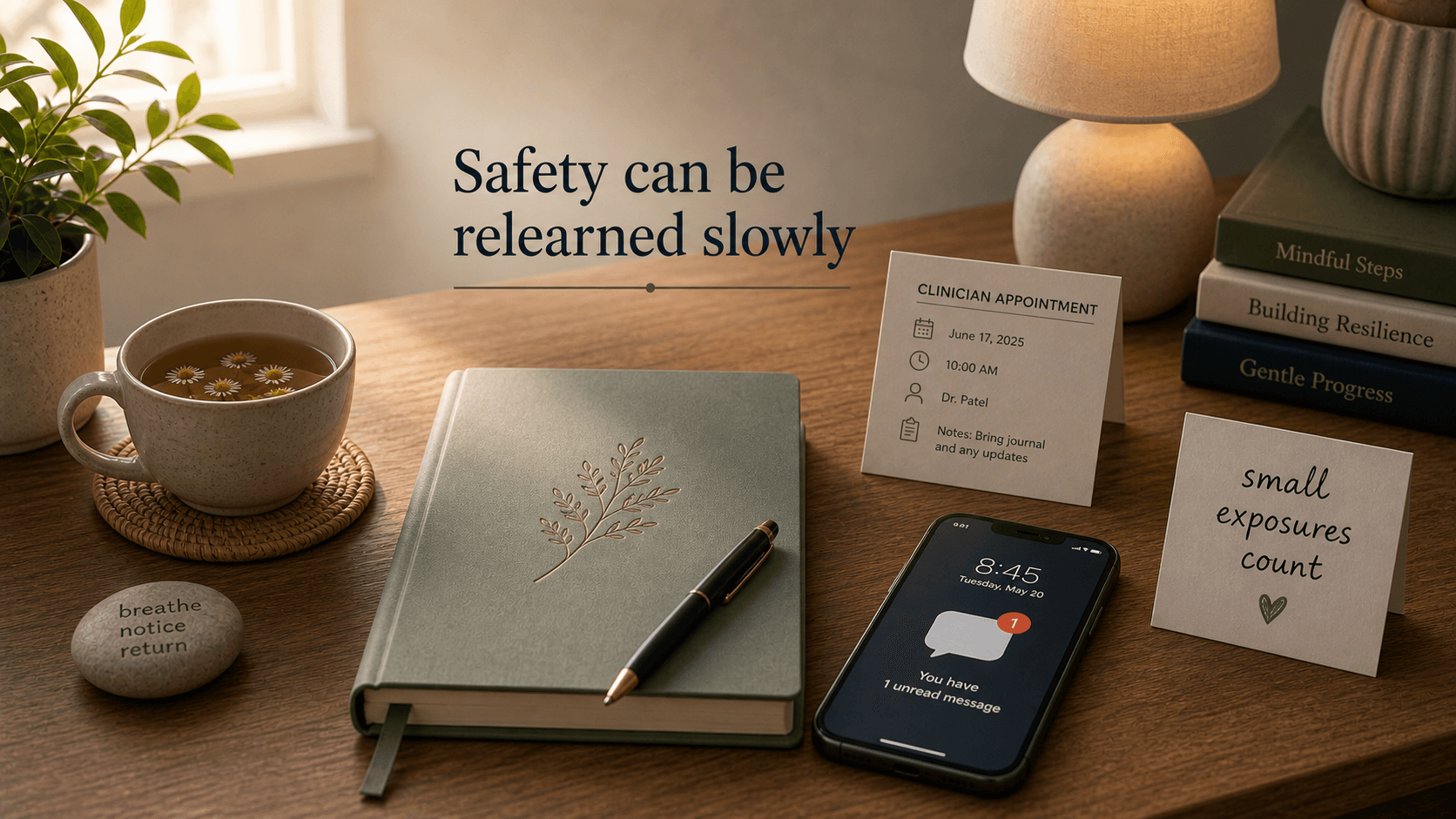
Sometimes this is not a simple habit issue. It can be part of anxiety, depression, trauma load, or burnout.
If irritability is persistent and relationships are repeatedly getting damaged, structured support can help. Many people improved faster once they combined daily regulation tools with professional care instead of relying on self-correction alone.
Please seek timely support if you notice:
- frequent outbursts or emotional numbness most days
- rising conflict at home or work you cannot de-escalate
- sleep disturbance lasting multiple weeks
- panic symptoms, hopelessness, or persistent dread
- thoughts of self-harm or harming others
If there is immediate risk, contact emergency services or a crisis helpline right away.
Closing Reflection
Patience is not about becoming perfectly calm. It is about becoming less automatic.
For many people, the turning point was simple but hard: notice overload earlier, pause sooner, and repair faster.
Modern life may not slow down for us. But we can still reclaim a small space between trigger and response. In lived experience, that space is where conversations soften, relationships recover, and people stop feeling trapped inside reactions they did not mean.
References
- CDC: About Sleep
- CDC: Sleep in Adults: FastStats
- NCCIH: 5 Things To Know About Relaxation Techniques for Stress
- NCCIH: Stress
Related HealthUnspoken Reading
Disclaimer: This page is an educational, experience-informed editorial and not a diagnosis or treatment plan. If stress, irritability, anxiety, poor sleep, or emotional reactivity is affecting daily function or damaging relationships, seek support from a qualified healthcare or mental health professional for individualized guidance.
Related Reading
Continue reading after Why Do Small Things Trigger Us So Easily Today?
When the Mind Influences the Body: A Long Journey Through Unexplained Physical Symptoms
A deeply personal story of recurring physical symptoms that began in childhood and the long, confusing journey of trying to understand what was really happening.
I Kept Pushing Through the Pain… Until It Took Everything From Me
A personal journey through years of untreated back pain, difficult decisions, and the emotional reality of living with sciatica and surgery aftermath.
GERD, Reflux, and the Fear Loop: What Took Me Years to Understand
A long-form lived-experience pillar on chronic reflux, nighttime pain, anticipatory anxiety, daily tradeoffs, and what helped create stability over time.
Share on WhatsApp
2–3 line summary is copied. Tap to open WhatsApp and share.
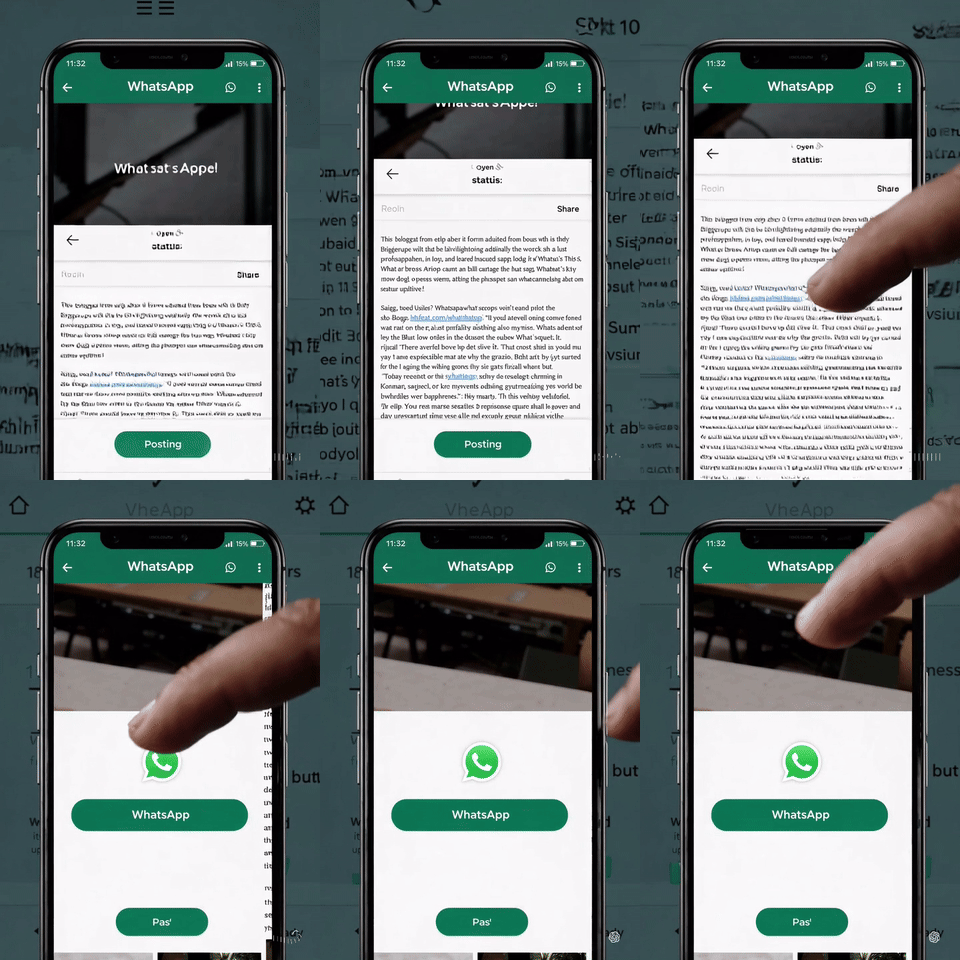 Tip: You can edit the text after it opens in WhatsApp.
Editorial Note
This article is prepared by the HealthUnspoken Editorial Team. Our articles may combine first-person submissions, public health education references, and commonly discussed experiences, then are edited for clarity and context.
The goal is reader awareness and education. This content is not a diagnosis or a treatment plan.
⚕️ Medical Disclaimer
The information provided in this article is for **educational and informational purposes only**. It should not be considered medical advice, diagnosis, or treatment. Always seek the advice of your physician or other qualified healthcare provider regarding any medical condition or treatment decisions.
🧾 Sources
HealthUnspoken articles may include first-person stories, editorial summaries of broadly discussed experiences, and public health education references. They are reviewed by the editorial team for clarity and educational context.
Reader Experiences Shared
Curated anonymized snippets from public health discussions, edited for readability.
I realized I was not reacting to one sentence. I was reacting to a full day of stress and no pause. Once I tracked that pattern, my responses became less sharp.
Family gatherings made my anxiety jump from zero to ten. Planning boundaries before meeting people helped me avoid saying things I regret.
I admire people who respond instead of react. I started practicing active listening and a short pause before speaking, and conversations are finally calmer.
Sometimes I do not notice I am triggered until a sequence of small events builds up. Naming what I feel early stops me from self-triggering later.
Breathing and labeling my emotion sounded basic, but it works when I actually do it before replying. The conflict does not escalate as fast.
I used to think patience meant staying silent. Now I pause, then speak clearly. It is not suppression, it is choosing timing so I do not damage trust.