
Why Taking Care of My Teeth Started Feeling Like a Battle Instead of a Routine
- Authors

- Name
- Author: HealthUnspoken Editorial Team
- Published on
- Last updated:
- Country
- Country
- 🌍Country: Global
Taking care of your teeth is supposed to be simple. Brush, floss, visit the dentist, repeat. But for many people, including me, it stopped feeling simple. It became a constant negotiation between advice, fear, money, and the question that never quite went away: am I actually helping my mouth, or just reacting to the last scary appointment?
Dental care gets framed like a clean checklist.
Real life is noisier.
People do what they are told, try to stay consistent, and still end up confused. One visit says "urgent." Another says "watch and wait." One person improves with basic routines. Another does "everything right" and still struggles with sensitivity, recession, staining, dry mouth, gum bleeding, grinding, or repeat procedures.
This page is not a dental protocol. It is a lived-experience map of a pattern many people describe:
- expectations of simple maintenance
- rising uncertainty after mixed experiences
- routine fatigue and trust erosion
- cost pressure that changes decisions
- gradual movement toward steadier, less reactive habits
Expectation vs Reality
Most of us expected a straightforward equation:
- brush and floss daily
- get regular cleanings
- fix problems early
- avoid major dental issues
The emotional expectation was just as simple: if I am responsible, I should feel safer over time.
But responsibility did not remove uncertainty. It changed its shape.
Advice felt inconsistent across providers. Treatment urgency was hard to evaluate as a non-expert. Costs created pressure to decide quickly. Each difficult visit made the next visit heavier.
The result was not always neglect.
Often it was overthinking.
How the Pattern Usually Starts
The shift rarely begins with one dramatic event.
It usually starts with small friction: a recommendation that feels sudden, a procedure explanation that feels rushed, a bill that lands hard, or a symptom that does not match what we expected after "doing everything right."
Then the mental pattern starts:
- replaying appointment conversations later at home
- searching for second opinions online at night
- trying multiple strategies at once
- losing track of what helped and what only felt urgent
- delaying care because the next decision feels too expensive or too loaded
Once this happens, dental care stops being a routine and becomes a running internal debate.
When Routine Turns Into Mental Load
The practical work of oral care is not always the hardest part.
The decision fatigue can be.
People described the same daily loop:
- Is this sensitivity normal, or a warning?
- Do I need another appointment now, or am I overreacting?
- Is this recommendation preventive, necessary, or optional?
- If I delay, am I taking a risk I will regret later?
- If I agree too quickly, am I being pressured into something I do not understand?
This loop can quietly consume attention. You still brush. You still show up. But the background stress keeps rising, and eventually every new sensation feels high-stakes.
That is where dental care starts feeling less like self-care and more like threat management.
Why Appointments Can Feel So Charged
One strong theme from community experiences was not "dentists are good" versus "dentists are bad."
It was about trust quality.
People felt steadier when care conversations included:
- clear explanation of urgency vs monitoring
- alternatives with tradeoffs
- room for questions without pressure
- realistic timelines instead of fear-based framing
- cost transparency before the patient felt cornered
People felt destabilized when visits felt transactional, rushed, or dismissive.
The same recommendation can feel either supportive or threatening depending on how it is explained. That emotional context matters because it affects whether people return early for care or avoid care until a problem is worse.
What Dental Comments Kept Repeating
When I reviewed broader dental-care conversations from doctor-channel and health-influencer comment sources, I did not treat them as medical evidence. I used them as lived-experience signals. I am not publishing raw comments or personal details, only the patterns.
Several themes came through clearly.
People were afraid of judgment. Some joked about flossing before appointments as if they were trying to pass a test. Others said they trusted an online explainer more than their own appointment because the explainer slowed down and made the "why" visible.
Cost and pressure came up repeatedly. People worried about being told they needed crowns, root canals, implants, extractions, whitening, veneers, or orthodontic work without understanding the timing or alternatives.
Pain stories were intense. People described dry socket after extraction, root-canal fear, toothache that changed their willingness to accept treatment, jaw pain after dental procedures, and confusion about what post-procedure pain was normal.
There were also many routine claims: oil pulling, baking soda, water flossers, electric toothbrushes, diet changes, tongue scraping, mouthwash, and very specific product stacks. Some may help some people. Some may not. The useful lesson is not to copy an extreme routine. It is to build a baseline that protects your mouth without overwhelming your life.
Experience Blocks
1) "I left one clinic feeling panicked, and the second one felt calm"
A recurring story was this: one clinic framed multiple issues as urgent, another found fewer immediate concerns. Whether both were technically defensible or not, the emotional impact was clear.
People felt whiplash.
The lesson was not "never trust providers." It was that for high-cost, invasive, or irreversible work, second opinions can reduce fear and improve decision confidence.
2) "I was consistent, but I still felt like I was failing"
Many people described shame when symptoms continued despite regular hygiene. They interpreted this as personal failure.
Over time, some reframed it. Oral health is influenced by multiple factors, including routine quality, dry mouth risk, diet patterns, stress, grinding, medications, reflux, smoking, access to care, genetics, and how quickly concerns are addressed.
That shift from blame to pattern-tracking reduced panic.
3) "I changed too many things at once"
Another common arc: after a discouraging visit, people overcorrected by stacking many changes immediately.
When symptoms improved or worsened, they could not tell why.
The better long-term pattern was simpler: change a few basics, stay consistent long enough to evaluate, and then adjust with help.
The Boring Basics Still Matter
Simple does not mean easy.
The American Dental Association emphasizes brushing twice a day with fluoride toothpaste, cleaning between teeth daily, eating a balanced diet, limiting frequent sugary snacks and drinks, and seeing a dentist regularly. NIDCR also explains that tooth decay happens when bacteria and sugars form acids that damage tooth enamel, and that gum disease can begin with plaque buildup and bleeding or swollen gums.
Those points sound basic until life gets complicated.
Dry mouth makes the routine harder. Depression makes nighttime care harder. Shift work makes timing messier. Dental trauma makes appointments harder. Cost makes "come back soon" feel heavier. And if you have sensitive gums, a tiny mouth, braces, crowns, bridges, implants, reflux, grinding, or medications that affect saliva, the generic checklist may need tailoring.
The goal is not to turn oral care into a performance.
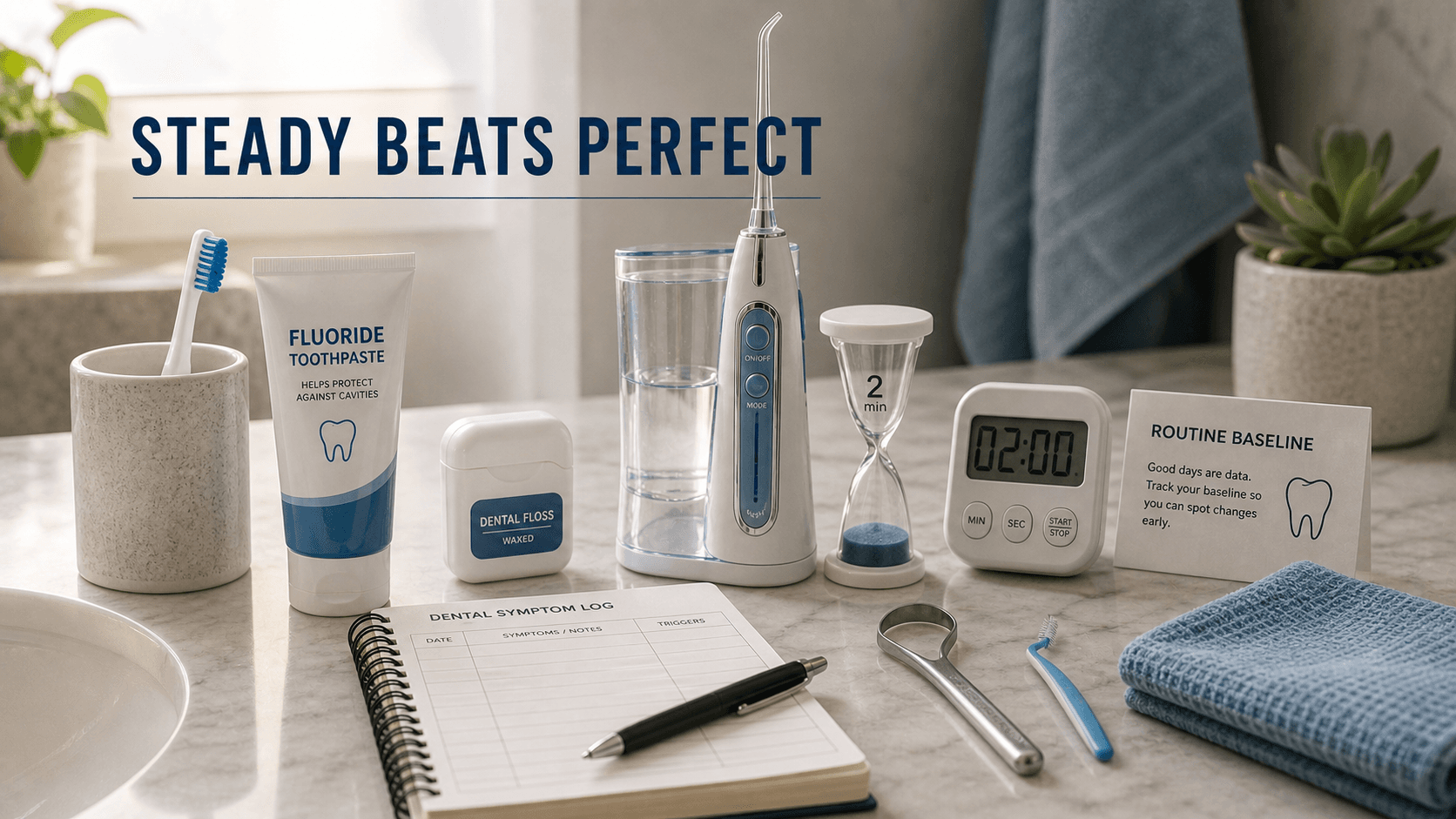
The goal is to make the baseline repeatable.
What Felt Common
Across different backgrounds, the same themes kept resurfacing:
- fear was often driven by uncertainty, not just pain
- conflicting recommendations created decision paralysis
- cost pressure made people postpone questions they needed answered
- embarrassment delayed early conversations about symptoms
- improvement usually came from repeatable basics, not one dramatic trick
- pain after treatment needed clearer expectations and follow-up instructions
Another common thread was language.
People did better when recommendations were explained as "here is what we know, here is what we should monitor, here is what can wait" instead of "do this now or everything gets worse."
Questions That Made Appointments Better
I started feeling steadier when I brought specific questions instead of trying to remember everything while anxious in the chair.
Questions that helped:
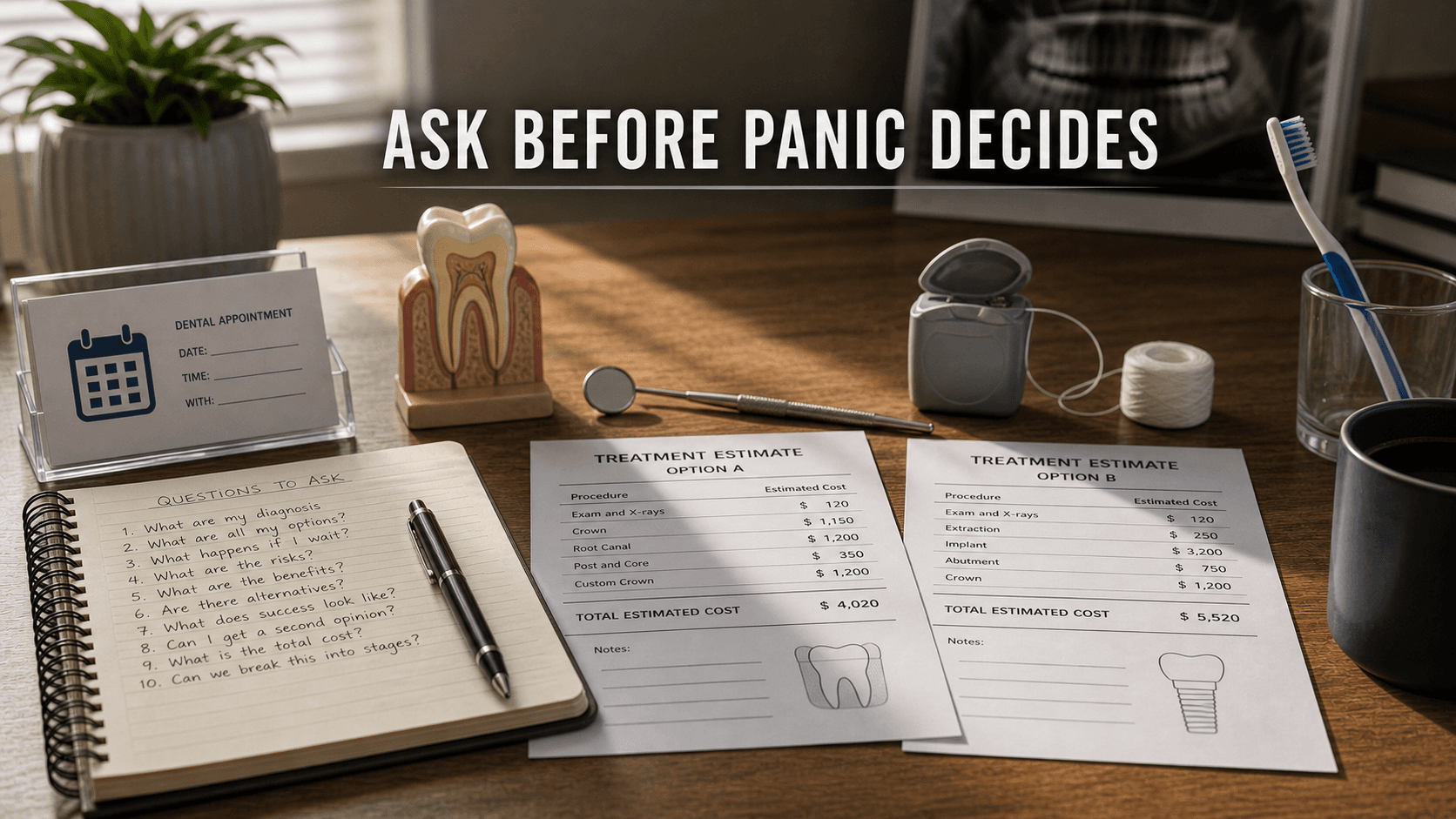
- What is the diagnosis, and how confident are we?
- Is this urgent, preventive, elective, or cosmetic?
- What happens if I wait three months?
- What are the signs that waiting is no longer safe?
- What are the reasonable alternatives?
- What does success look like?
- What could go wrong?
- What will this cost, and can it be staged?
- What pain or swelling is normal afterward, and what should make me call?
- What should I change at home first?
These questions are not confrontational. They are how a patient becomes oriented.
Practical Stabilizers That Helped
These are not universal cures. They are practical patterns that felt stabilizing:
- Keep a boring, sustainable baseline routine rather than cycling extremes.
- Space major changes so you can track what is helping.
- Bring written questions to appointments to avoid forgetting under stress.
- Ask directly: "What is urgent, what is optional, and what can be monitored?"
- If a plan is expensive or invasive, ask for alternatives and timeline tradeoffs.
- If fear is rising, address dental anxiety as part of care, not as a separate personal weakness.
- Ask for written aftercare instructions after extractions, root canals, deep cleanings, or surgery.
- Tell the dental team about dry mouth, reflux, grinding, medications, and previous bad experiences.
That last point matters. A dentist cannot account for what they do not know.
When It Should Be Checked Quickly
Stories like these can help people feel less alone, but they should not replace an actual dental exam when your body is clearly signaling trouble.
Please get timely dental or medical care if you notice:
- tooth pain that is strong, worsening, or keeps returning
- swelling in the face, jaw, floor of mouth, or neck
- fever, chills, or feeling systemically unwell with oral pain
- gum bleeding that is heavy, persistent, or worsening
- pus, foul taste, bad smell, or signs that suggest infection
- a loose tooth, dental injury, broken tooth, or sudden bite change
- a mouth sore, ulcer, red patch, white patch, or lump that has not healed after about two weeks
- trouble opening your mouth, swallowing, or breathing
- severe pain after a dental procedure, especially if it worsens instead of improving
If swelling is spreading fast, breathing or swallowing is difficult, fever is present, or you feel seriously ill, treat it as urgent and seek emergency care. Dental infections can spread beyond the tooth.
Closing Reflection
The biggest shift for me was not finding one perfect method.
It was stepping out of the all-or-nothing cycle.
Dental care became easier when I stopped treating every decision like a verdict on my character. When I focused on steady habits, better questions, and calmer follow-through, things became more manageable.
The routine is still not effortless.
But it is no longer a battle every day.
Related Reading
- I Lost My Smile Before I Understood What Dental Health Was Taking From Me
- Living With a Dry Mouth, Burning Pain, and No Easy Answers
- A Smile Built Over a Decade: The Orthodontic Journey Nobody Talks About
References
- American Dental Association: Brushing Your Teeth
- American Dental Association: Flossing
- NIDCR: Tooth Decay
- NIDCR: Gum Disease
- Mayo Clinic: Tooth Abscess
Disclaimer: This article is educational and experience-based, not medical advice. Tooth pain, gum bleeding, dry mouth, cavities, gum disease, oral infections, dental trauma, post-procedure pain, jaw symptoms, and treatment decisions require individualized evaluation from a qualified dental professional. Seek urgent care for facial or neck swelling, fever with oral pain, trouble breathing or swallowing, rapidly worsening symptoms, severe uncontrolled pain, or symptoms that feel unsafe.
Related Reading
Continue reading after Why Taking Care of My Teeth Started Feeling Like a Battle Instead of a Routine
I Didnt Heal Until I Finally Had Time to Heal
A de-identified personal story about chronic pain, constant work urgency, burnout, nervous-system exhaustion, and the slower kind of recovery that only started once rest became real instead of theoretical.

When the Mind Influences the Body: A Long Journey Through Unexplained Physical Symptoms
A deeply personal story of recurring physical symptoms that began in childhood and the long, confusing journey of trying to understand what was really happening.
GERD, Reflux, and the Fear Loop: What Took Me Years to Understand
A long-form lived-experience pillar on chronic reflux, nighttime pain, anticipatory anxiety, daily tradeoffs, and what helped create stability over time.
Share on WhatsApp
2–3 line summary is copied. Tap to open WhatsApp and share.
 Tip: You can edit the text after it opens in WhatsApp.
Editorial Note
This article is prepared by the HealthUnspoken Editorial Team. Our articles may combine first-person submissions, public health education references, and commonly discussed experiences, then are edited for clarity and context.
The goal is reader awareness and education. This content is not a diagnosis or a treatment plan.
⚕️ Medical Disclaimer
The information provided in this article is for **educational and informational purposes only**. It should not be considered medical advice, diagnosis, or treatment. Always seek the advice of your physician or other qualified healthcare provider regarding any medical condition or treatment decisions.
🧾 Sources
HealthUnspoken articles may include first-person stories, editorial summaries of broadly discussed experiences, and public health education references. They are reviewed by the editorial team for clarity and educational context.
Reader Experiences Shared
Curated anonymized snippets from public health discussions, edited for readability.
One clinic told me I needed several procedures immediately. I got a second opinion and they recommended monitoring plus one minor fix. It lowered my panic a lot.
My biggest issue was fear before appointments. Once I started writing my questions in advance, I felt less pressured and understood the plan better.
I tried too many changes at once after one bad visit. Slowing down and keeping one stable routine helped me see what was actually useful.
Cost discussions were hard for me. Asking what was urgent vs what could be monitored made decisions feel less overwhelming.
I kept blaming myself whenever sensitivity came back. Tracking food timing, stress, and symptoms helped me stop spiraling and ask better follow-up questions.
A respectful dentist who explained tradeoffs clearly changed everything for me. Same problem, very different experience.