
I Brushed Every Day. Why Were My Teeth Still Yellow?
- Authors

- Name
- Author: HealthUnspoken Editorial Team
- Published on
- Last updated:
- Country
- Country
- 🌍Country: Global
I used to think yellow teeth meant one simple thing: I was not brushing well enough. So I brushed harder. I changed toothpaste. I stared at my smile in different mirrors. Some days my teeth looked fine. Other days they looked darker, warmer, almost embarrassingly yellow. The confusing part was this: I was doing the routine, but the color was not changing the way I expected.
This is where many people get stuck. They do not always have tooth pain. They may not have obvious cavities. They are often brushing daily. But the mirror still tells a story that feels unfair: Why are my teeth yellow if I am trying?
This article is not a whitening plan or a dental diagnosis. It is a practical story about the confusion behind yellow teeth: surface stains, natural enamel shade, tartar, dry mouth, coffee and tea habits, whitening products, and the point where a dentist should check what is actually going on.
In This Article
- Expectation vs Reality
- The First Mistake: Brushing Harder
- Stain, Tartar, or Natural Tooth Color?
- Four Small Wins That Changed the Pattern
- When Whitening Advice Gets Risky
- What A Dentist Can Actually Clarify
- Questions This Story Often Raises
- References
Expectation vs Reality
What I expected
I expected oral care to be a direct transaction:
- brush twice a day
- maybe floss more
- avoid too much sugar
- get white teeth as the visible reward
That expectation is everywhere. Toothpaste ads, influencer routines, before-and-after videos, and filtered smiles all make tooth color look like a discipline score.
So when teeth stayed yellow, the first emotion was not curiosity. It was blame.
Maybe I am lazy.
Maybe I am brushing wrong.
Maybe everyone notices.
What actually happened
The color question turned out to be less simple.
Some yellowing was probably surface stain. Some was lighting. Some was the natural warmth of teeth, especially near the gum line. Some days coffee made the shade look worse. Some days dry mouth made my mouth feel less clean even after brushing. And some areas looked darker because buildup does not always come off with a toothbrush once it has hardened.
That was the first useful lesson:
Yellow teeth are not always one problem.
They can be a mix of:
- surface stains from drinks, foods, or tobacco
- plaque or tartar that needs professional cleaning
- natural enamel and dentin shade
- older dental work that no longer matches
- dry mouth or reflux changing the mouth environment
- early decay, especially if one spot looks different
- medication, childhood illness, trauma, or developmental staining
Once I understood that, the question changed from how do I make them white fast? to what kind of yellowing is this?
That question was much safer.
The First Mistake: Brushing Harder
The most tempting reaction is to attack the problem.
Brush longer. Brush harder. Use a stronger toothpaste. Add whitening strips. Add charcoal. Try baking soda. Try lemon. Try whatever looks convincing at midnight.
But brushing harder did not make me feel more in control. It made me more anxious.
Hard brushing can irritate gums. Abrasive products can make sensitivity worse. And if the yellow color is coming from natural tooth shade, deeper discoloration, old tartar, or a restoration, more force with a toothbrush will not solve the real issue.
The better move was boring: stop treating tooth color like a moral failure.
I started looking for patterns instead:
- Did the color look worse after coffee or tea?
- Were the darker areas near the gum line?
- Did brushing improve surface feel but not shade?
- Was one tooth changing color differently from the rest?
- Did whitening products cause sensitivity?
- Was I overdue for a cleaning?
Those questions gave me more information than panic-brushing ever did.
Stain, Tartar, or Natural Tooth Color?
This distinction matters because each problem needs a different response.
Surface stain
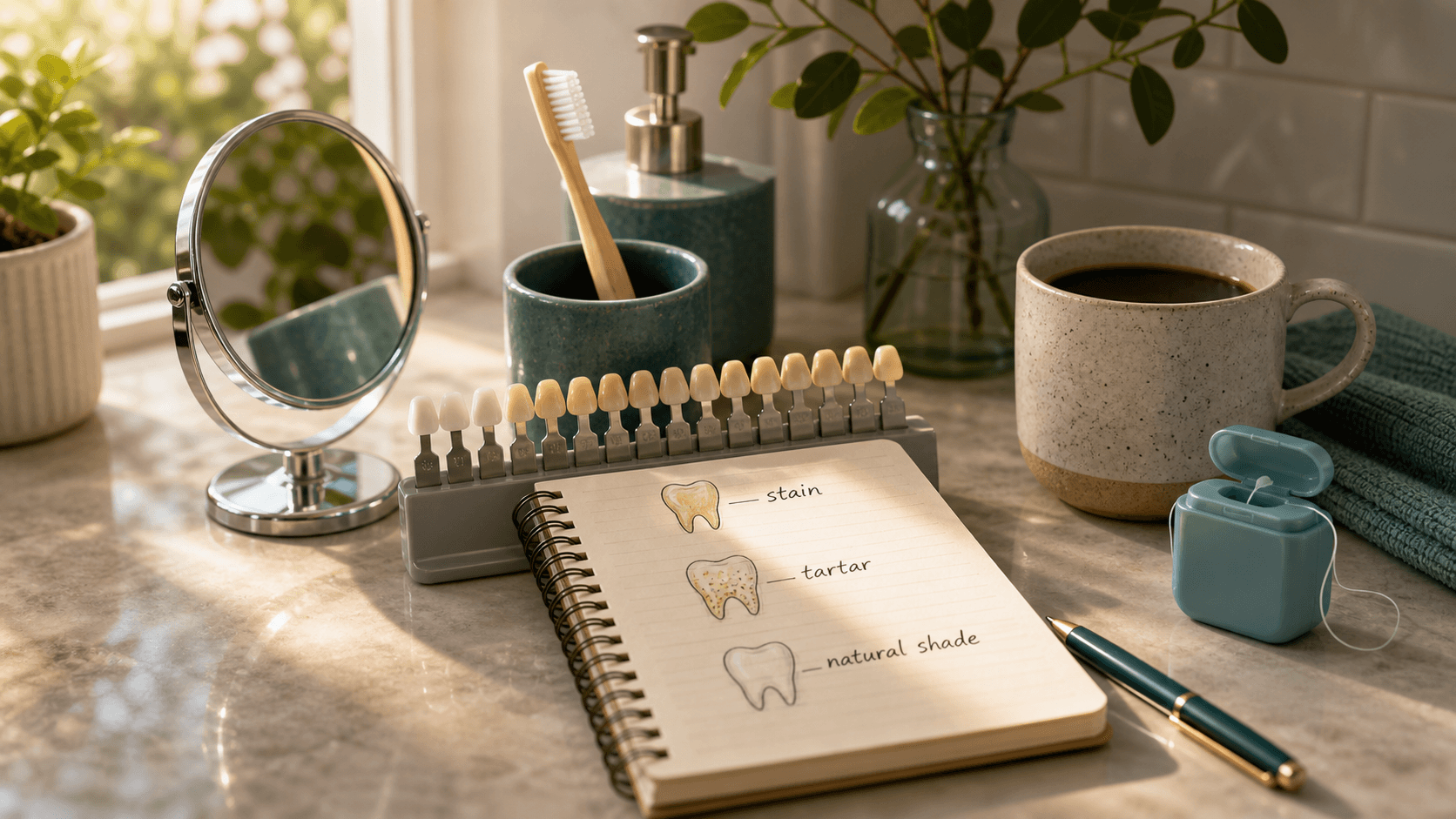
Surface stains often come from things that touch the enamel repeatedly: coffee, tea, tobacco, colored drinks, certain foods, and daily habits that leave pigments behind.
These stains may improve with better routine consistency, professional cleaning, and dentist-guided whitening options. But improvement is usually gradual, and not every stain behaves the same way.
Tartar or hardened buildup
Plaque can harden into tartar. Once it hardens, brushing alone usually will not remove it. That is where people get frustrated: they may be brushing every day, but the yellow or brownish buildup near the gum line stays.
That does not mean brushing is useless. It means a cleaning may be needed before home care can maintain the result.
Natural tooth shade
Teeth are not naturally paper white for most people. Enamel is partly translucent, and the dentin under it has a warmer color. Some people simply have a naturally warmer tooth shade.
That can be emotionally hard to accept because social media has moved the goalpost. A natural smile can start looking "yellow" only because the comparison is artificially white.
Internal discoloration
Sometimes color comes from inside the tooth. Cleveland Clinic lists causes such as trauma, aging, poor oral hygiene, tobacco use, certain foods and drinks, medications, and some medical treatments. Internal or developmental discoloration may not respond the same way surface stains do.
That is why guessing can waste time. You can buy five whitening products and still not know what problem you are trying to solve.
Four Small Wins That Changed the Pattern
These are not universal cures. They are the practical shifts that made the situation feel less random.
1) I stopped treating yellow teeth as proof of bad hygiene
This sounds small, but it changed the tone of the whole problem.
Shame made me overcorrect. Overcorrecting made me try too many things at once. Trying too many things made it impossible to know what helped.
The win was separating self-worth from tooth shade.
Yellow teeth can come from routine gaps, yes. But they can also come from stain exposure, tartar, enamel shade, genetics, age, dry mouth, dental work, trauma, or medication history. Once the problem became specific, it became less personal.
2) I looked at where the yellow color was strongest
The mirror became more useful when I stopped asking, "Are my teeth yellow?" and started asking, "Where is the color?"
Near the gum line suggested buildup or stain. Whole-smile warmth suggested natural shade or broad staining. One tooth looking darker than others felt different and deserved a dental check. Patchy marks, rough spots, pain, or sensitivity changed the conversation entirely.
That simple location check helped me avoid treating every color change the same way.
3) I stopped stacking whitening experiments
This was the biggest practical lesson.
When I changed toothpaste, added whitening strips, tried a new mouthwash, brushed harder, and cut coffee all in the same week, I learned nothing. If my teeth looked better, I did not know why. If my gums felt irritated, I did not know which product caused it.
A calmer approach worked better:
- keep the basic routine stable
- change one thing at a time
- give it enough time to judge
- stop products that repeatedly cause sensitivity or gum irritation
- ask a dentist before stronger whitening
It felt slower. It was also much less chaotic.
4) I treated cleaning as information, not punishment
For a long time, I saw a dental cleaning as a report card. If the hygienist found buildup, I felt embarrassed.
Eventually I started seeing it differently. A cleaning can answer a question home care cannot: How much of this color was removable buildup or surface stain?
If teeth look brighter after cleaning, that tells you something. If they still look warm but feel smooth and healthy, that tells you something too. If a dentist sees decay, enamel issues, gum inflammation, or a discolored single tooth, that changes the plan.
The win was not just cleaner teeth. It was clarity.
When Whitening Advice Gets Risky
Whitening advice online can sound very confident.
That confidence is the problem.
Some advice focuses on surface stains. Some is about bleaching the natural tooth color. Some is about abrasive scrubbing. Some is basically a dare disguised as a remedy.
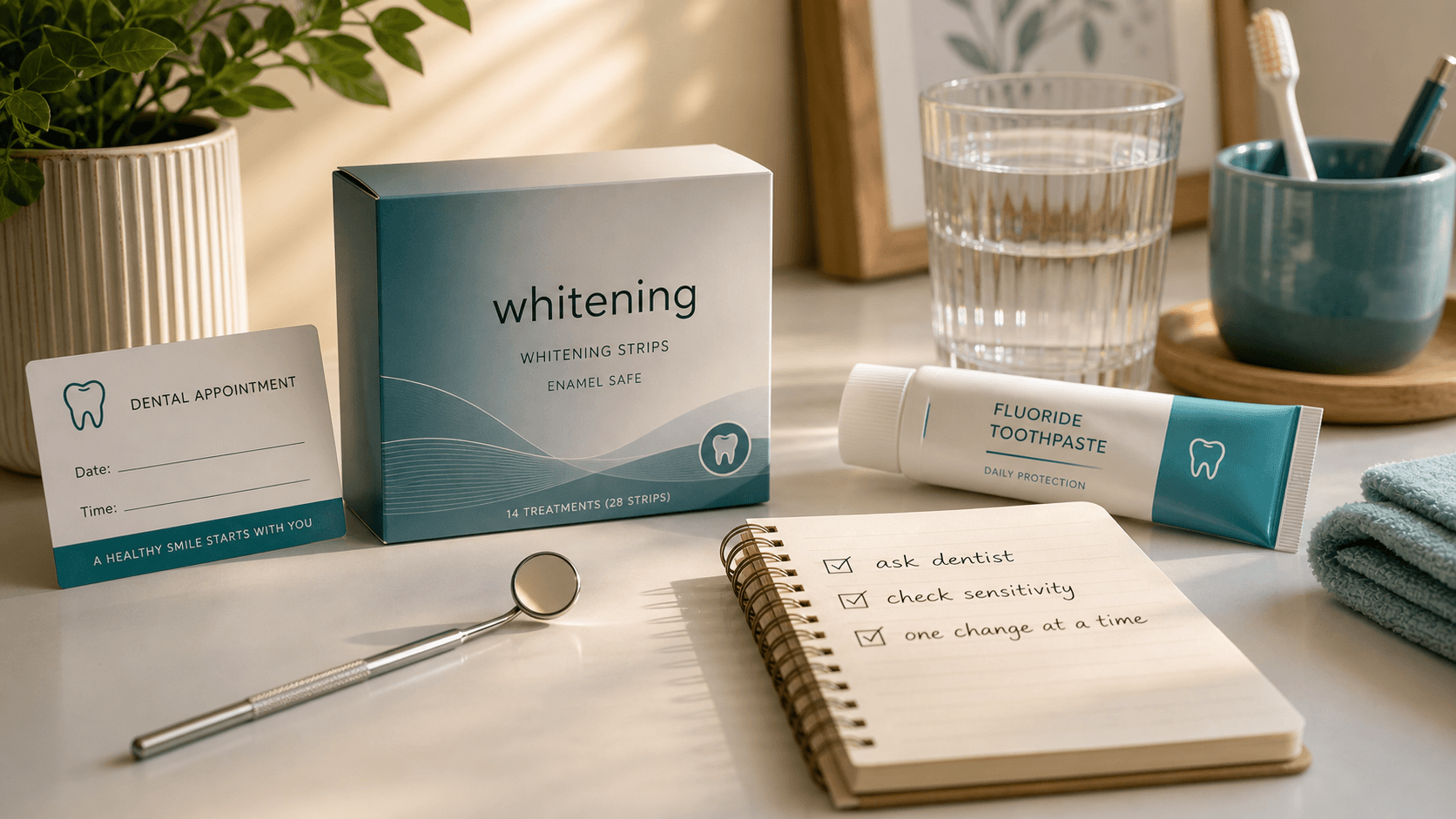
The American Dental Association explains that whitening products do not all work the same way. Some mainly remove surface stains, while bleaching products use peroxide-based agents to change tooth color. ADA also notes that tooth sensitivity and gum irritation can happen with whitening.
That means "natural" does not automatically mean safe, and "strong" does not automatically mean better.
Be careful with:
- lemon or acidic tricks
- frequent baking soda scrubbing
- charcoal products used aggressively
- whitening strips used longer or more often than directed
- peroxide routines copied from strangers
- whitening when you already have pain, cavities, gum inflammation, or sensitivity
The mouth is not a countertop. You cannot scrub it back to new without consequences.
The safer question is: What kind of discoloration do I have, and what method fits that cause?
What A Dentist Can Actually Clarify
A dentist cannot change every insecurity in one visit. But a good dental visit can reduce guessing.
Useful questions to ask:
- Is this surface stain, tartar, natural shade, or something else?
- Are there signs of decay, enamel wear, or gum inflammation?
- Would a cleaning likely change the color?
- Am I a safe candidate for whitening?
- Will whitening affect crowns, fillings, veneers, or bonding?
- Why is one tooth darker than the others?
- What should I avoid because of sensitivity or gum recession?
- What is cosmetic, and what is health-related?
Those questions matter because yellow teeth are sometimes purely cosmetic, but not always.
Please get checked if you have:
- tooth pain or swelling
- bleeding gums that persist or worsen
- one tooth turning yellow, brown, gray, or dark compared with the rest
- new sensitivity to hot, cold, or sweets
- visible holes, rough spots, or suspected decay
- bad taste, pus, or signs of infection
- a mouth sore or patch that does not heal
- discoloration after trauma
If there is facial swelling, fever, trouble swallowing, trouble breathing, or severe uncontrolled pain, treat it as urgent.
Questions This Story Often Raises
Why are my teeth yellow even though I brush?
Brushing helps remove plaque and prevent decay, but it cannot solve every kind of yellowing. The color may come from surface stains, hardened tartar, natural enamel and dentin shade, older dental work, dry mouth, tobacco, coffee or tea habits, medication history, or early dental problems. If brushing improves the feel but not the color, the next step is figuring out what kind of yellowing you have.
Can yellow teeth become white naturally?
Sometimes teeth can look brighter when surface stains are reduced and routine care becomes more consistent. A professional cleaning can also remove buildup that brushing cannot. But naturally warmer tooth color, internal staining, old restorations, or developmental discoloration may not turn bright white from home habits. The safest goal is healthier, cleaner teeth first, then a dentist-guided whitening plan if you are a good candidate.
Are yellow teeth unhealthy?
Not always. Slightly yellow teeth can be normal because natural teeth are not pure white. But yellow or brown buildup near the gum line, pain, bleeding gums, sensitivity, rough spots, bad taste, or one tooth changing color can point to problems that need a dental exam. Color alone does not tell the whole story.
When should I see a dentist for yellow teeth?
See a dentist if the discoloration is sudden, limited to one tooth, paired with pain or sensitivity, linked with gum bleeding, or not improving despite steady hygiene. Also get checked before strong whitening if you have cavities, gum recession, crowns, veneers, fillings, braces, pregnancy concerns, or a history of tooth sensitivity.
Closing Reflection
The most useful change was not finding a miracle whitening trick.
It was learning to ask better questions.
Yellow teeth can make people feel embarrassed quickly because the smile is so visible. But embarrassment is a poor guide. It pushes people toward harsh fixes and late-night experiments.
Clarity works better.
What is stain? What is buildup? What is natural shade? What needs a dentist? What is just comparison pressure from unnaturally white smiles?
Once those questions are separated, the problem becomes less dramatic and more solvable.
Not instantly. Not perfectly. But steadily.
Related Reading
- Why Taking Care of My Teeth Started Feeling Like a Battle Instead of a Routine
- I Lost My Smile Before I Understood What Dental Health Was Taking From Me
- Living With a Dry Mouth, Burning Pain, and No Easy Answers
- A Smile Built Over a Decade: The Orthodontic Journey Nobody Talks About
References
- Cleveland Clinic: Tooth Discoloration: Causes & Treatment
- American Dental Association: Whitening
- American Dental Association: Brushing Your Teeth
- American Dental Association: Flossing
- NIDCR: Tooth Decay
Disclaimer: This article is educational and experience-based, not dental advice. Tooth discoloration, tooth pain, sensitivity, gum bleeding, dental trauma, cavities, whitening decisions, and cosmetic treatment choices should be evaluated by a qualified dental professional. Seek urgent care for facial swelling, fever with oral pain, trouble breathing or swallowing, rapidly worsening symptoms, or severe uncontrolled pain.
Related Reading
Continue reading after I Brushed Every Day. Why Were My Teeth Still Yellow?

Motherhood Across the Whole Journey: What Real Lives Looked Like Behind the Milestones
A curated long-form motherhood journey built from real experiences across planning, childbirth, postpartum shock, and the invisible years after.
Why Taking Care of My Teeth Started Feeling Like a Battle Instead of a Routine
A lived-experience editorial on dental uncertainty, trust friction, cost pressure, routine fatigue, and how steadier oral care starts with better questions.
GERD, Reflux, and the Fear Loop: What Took Me Years to Understand
A long-form lived-experience pillar on chronic reflux, nighttime pain, anticipatory anxiety, daily tradeoffs, and what helped create stability over time.
Share on WhatsApp
2–3 line summary is copied. Tap to open WhatsApp and share.
 Tip: You can edit the text after it opens in WhatsApp.
Editorial Note
This article is prepared by the HealthUnspoken Editorial Team. Our articles may combine first-person submissions, public health education references, and commonly discussed experiences, then are edited for clarity and context.
The goal is reader awareness and education. This content is not a diagnosis or a treatment plan.
⚕️ Medical Disclaimer
The information provided in this article is for **educational and informational purposes only**. It should not be considered medical advice, diagnosis, or treatment. Always seek the advice of your physician or other qualified healthcare provider regarding any medical condition or treatment decisions.
🧾 Sources
HealthUnspoken articles may include first-person stories, editorial summaries of broadly discussed experiences, and public health education references. They are reviewed by the editorial team for clarity and educational context.
Reader Experiences Shared
Curated anonymized snippets from public health discussions, edited for readability.
I kept thinking why teeth yellow would settle on its own, but what helped most was tracking patterns and asking clearer questions in appointments.
The hardest part for me was uncertainty around why teeth yellow. Once I stopped changing everything at once, I could finally see what was helping.
I used to delay care because I was embarrassed about why teeth yellow. Earlier conversations would have saved me a lot of stress.
A second opinion around why teeth yellow changed my decisions completely. The issue was still real, but the plan felt calmer and more practical.
For me, progress with why teeth yellow came from boring consistency, not one dramatic fix. That mindset reduced panic a lot.
I learned to separate fear from facts with why teeth yellow. Writing down symptoms before visits made discussions more useful.