
How the Galaxy Watch 4 Helped Me Rebuild My Lifestyle — From Junk Food to Discipline
- Authors

- Name
- Author: HealthUnspoken Editorial Team
- Published on
- Last updated:
- Country
- Country
- 🌍Country: India
Five years ago, I was not failing because I lacked health advice. I knew walking was useful. I knew sleep mattered. I knew late-night junk food was not helping. My problem was simpler and more stubborn: I was not noticing my patterns until they had already become my routine.
That is where a smartwatch helped me.
Not because it was magical. Not because every reading was perfect. Not because a device can replace discipline, medical care, or common sense.
It helped because it made small habits visible.
When My Habits Took Over Quietly
There was no dramatic turning point at first.
My lifestyle changed in small, ordinary ways:
- pastry after lunch
- chips during late-night work
- coffee too late in the day
- scrolling when I should have been sleeping
- skipped walks because I was "busy"
- telling myself tomorrow would be different
Tomorrow kept moving.
My energy dipped. My clothes felt tighter. My focus became unreliable. I was not sick in a sudden way, but I could feel my baseline slipping.
The strange part is that I still thought I understood my life. I knew I was tired. I knew I was snacking. I knew I should move more.
But knowing something in a vague way is not the same as seeing it every day.
Why the Phone Was Not Enough
I started evening walks around my street in Vijayawada.
The walks helped. The problem was consistency.
My phone could track distance and steps, but carrying it also brought messages, reels, news, notifications, and work. I would open it to check progress and somehow end up somewhere else.
I wanted a quieter signal.
That was my first reason for trying a watch. I did not need another screen to entertain me. I needed something boring enough to remind me of the basics:
- move
- stand up
- sleep
- breathe
- drink water
- notice stress before it becomes the whole day
My first watch was a simple Mi Smart Watch. It was not fancy, but the step count gave me something concrete. For the first time, a walk was not only a feeling. It was a record.
Later, after that watch broke, I moved to the Galaxy Watch 4.
Sleep Tracking Hit Harder Than Advice
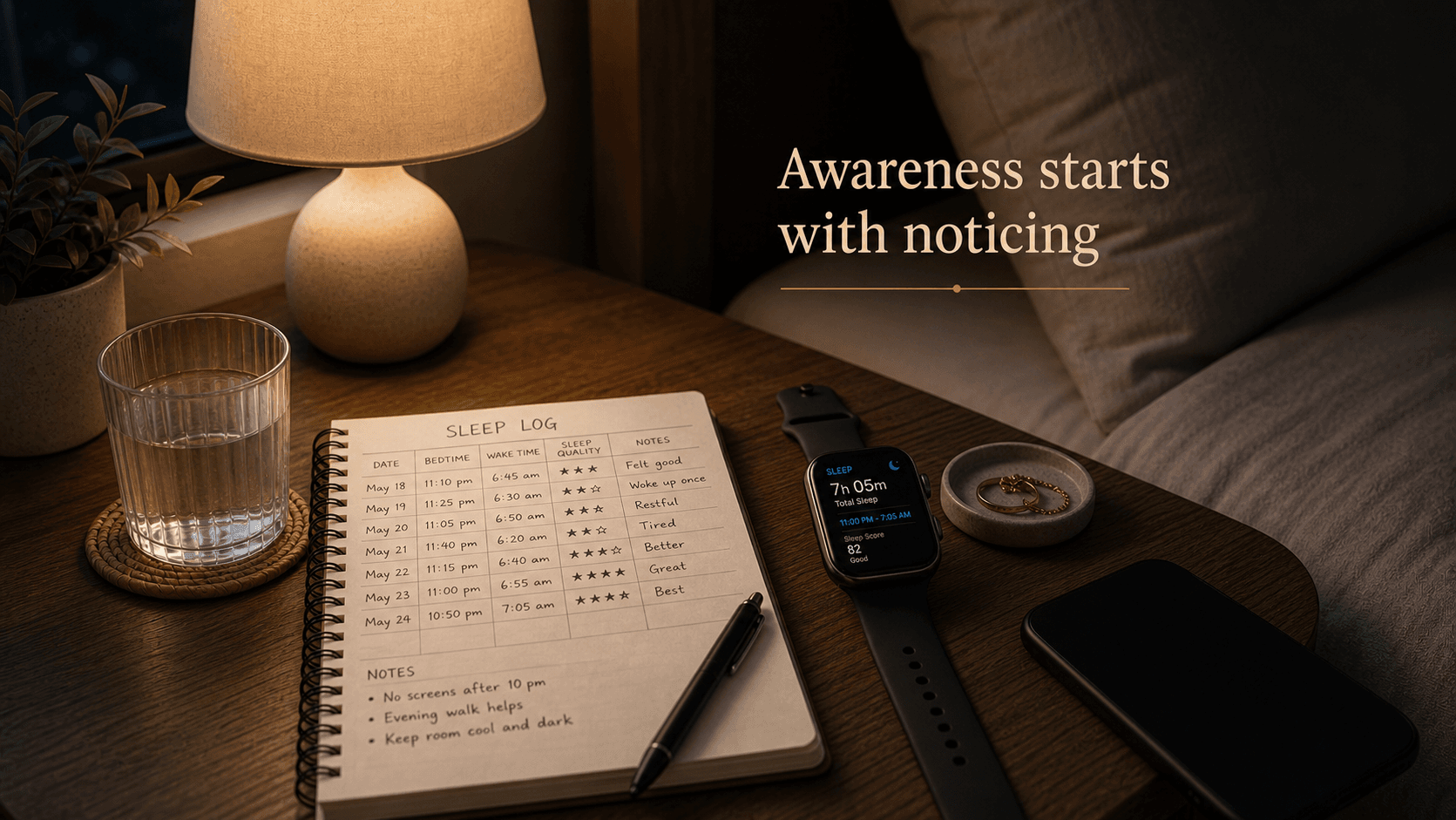
The first feature that changed my behavior was sleep tracking.
I already knew I slept late. But seeing a short sleep duration on my wrist made the pattern harder to dismiss.
It was not only the number. It was the repetition.
One bad night could be ignored. Several bad nights in a row told a different story:
- caffeine after sunset was not harmless for me
- late work kept my mind alert
- screen time made bedtime drift
- poor sleep made next-day cravings louder
- tired days made movement feel harder
The watch did not diagnose a sleep disorder. It simply made my sleep debt visible enough that I could stop pretending it was random.
I started with small changes:
- no caffeine late in the evening
- phone away from the bed
- fewer late-night snacks
- a more consistent bedtime
- short walks earlier in the evening instead of endless scrolling
This connected directly with something I later saw in many reader and comment patterns: people often do not need a perfect plan first. They need one visible loop they can interrupt.
Steps Made Movement Less Abstract
The step target became useful because it turned movement into a daily check-in.
I do not think everyone needs exactly 10,000 steps. That number is easy to remember, but the right target depends on starting point, age, disability, schedule, pain, and medical history. For me, the important part was not the exact number. It was the direction.
If I had barely moved by evening, the watch made that obvious.
Some days I walked outside. Some days I walked around the house. Some days I stood up after meals and did a short loop instead of sitting immediately. Those small walks mattered because they broke the pattern of sitting for hours.
The comment patterns I reviewed echoed this. People often described walking as the first habit that felt possible when intense workouts felt too hard. Some linked walking with digestion, weight management, blood pressure improvement, mood, and the feeling of taking control again.
Not every claim people make about walking is medically precise. But the practical pattern is real:
walking is often accessible enough to become the first repeatable health habit.
If daytime tiredness is part of the problem, the related article on daytime sleepiness and tracking patterns may help separate sleep, routine, and safety signals.
Stress Alerts Made Me Pause
One day during a tense call, the watch buzzed with a high heart-rate alert.
That got my attention.
It did not mean something was medically wrong. Heart rate can rise from stress, caffeine, movement, poor sleep, heat, dehydration, illness, and many other reasons. A consumer watch cannot explain the cause by itself.
But in that moment, the alert did something useful:
It made me pause.
I noticed my shoulders were tight. I noticed I was holding my breath. I noticed I had been rushing through the day without a real break.
So I stopped for a few minutes.
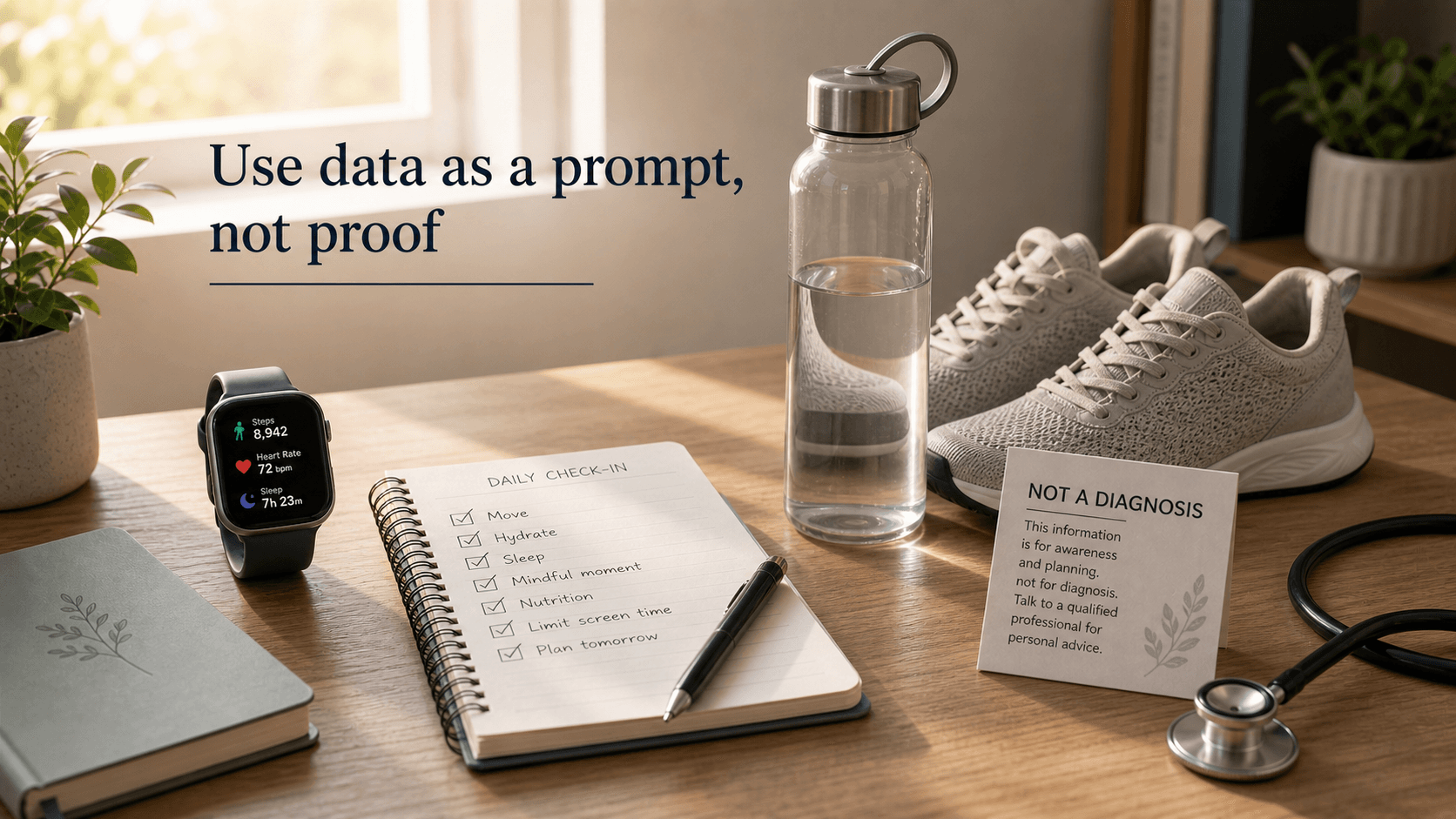
That is how I now think about wearable alerts. They are prompts, not proof. A prompt can be useful if it leads to a sensible next step:
- drink water
- sit down
- breathe slowly
- step away from the screen
- check whether symptoms are present
- seek care if something feels dangerous or unusual
The unsafe version is treating every number as a diagnosis or ignoring serious symptoms because the watch looks normal.
The Reminders Were Small, But They Built a Rhythm
The reminders felt annoying at first.
"Time to move."
"Drink water."
"Try breathing."
"You have been sitting."
I ignored them often. Then I started responding to a few.
That was enough.
The biggest change was not that the watch forced discipline. It reduced the amount of willpower I needed to remember basic things. A reminder broke the automatic loop.
Over time, those small prompts became anchors:
- stand after long sitting
- walk after dinner when possible
- stop caffeine earlier
- drink water before reaching for snacks
- take two minutes before reacting to stress
- treat bedtime as preparation for tomorrow
The changes were ordinary, but ordinary habits are where lifestyle actually lives.
What the Watch Could Not Do
This part matters.
A smartwatch can collect signals, but it cannot understand your whole life.
It does not know whether you are grieving, overworked, anemic, sleep deprived, dehydrated, ill, injured, pregnant, taking medication, or dealing with anxiety. It does not know whether you skipped food because you were busy or because your relationship with food is becoming unhealthy.
It can also be wrong.
Wrist-based heart rate can be affected by fit, skin contact, motion, sweat, tattoos, temperature, and sensor limitations. Sleep staging on consumer devices can be interesting, but it is not the same as a clinical sleep study. ECG, blood pressure, oxygen, stress, and other health features vary by device, region, setup, and regulatory availability.
I still use the watch, but I do not ask it to be my doctor.
I ask it to be a mirror for habits.
When Wearable Data Should Lead to Real Care
Talk to a qualified healthcare professional if wearable data is repeatedly concerning or if symptoms are present.
Do not rely on a watch alone if you have:
- chest pain, pressure, fainting, severe shortness of breath, or sudden weakness
- repeated very high or very low heart-rate readings with symptoms
- irregular rhythm alerts, palpitations, dizziness, or unexplained fatigue
- loud snoring, choking during sleep, morning headaches, or severe daytime sleepiness
- oxygen readings that look low, especially with breathing symptoms
- rapid unexplained weight change, swelling, or reduced exercise tolerance
- anxiety that becomes worse because you keep checking health numbers
Also be careful if tracking becomes obsessive. A health tool should support your life, not make you afraid of your body.
If a device creates panic, compulsive checking, or constant reassurance-seeking, it may be worth turning off some alerts and discussing the anxiety pattern with a professional.
What Actually Changed
The Galaxy Watch 4 did not rebuild my lifestyle by itself.
It did something smaller and more useful:
It made my choices visible.
Before the watch, I could tell myself I was "trying." After the watch, I could see whether I had moved, slept, paused, hydrated, or sat too long. That visibility created accountability without needing a dramatic transformation plan.
The watch helped most when I used the data gently:
- as a reminder, not a punishment
- as a trend, not a single-day verdict
- as a habit prompt, not a medical diagnosis
- as support for walking, sleep, hydration, and pauses
- as a reason to ask better questions when something felt off
That is the version of technology I trust more now.
Not technology as a savior.
Technology as a quiet nudge toward the life you already know you need to build.
References
- CDC: Physical Activity Guidelines for Adults
- CDC: About Sleep
- FDA: Do Not Use Smartwatches or Smart Rings to Measure Blood Glucose Levels
- National Center for Complementary and Integrative Health: Meditation and Mindfulness
Disclaimer: This article shares a personal experience and general educational context. It is not medical advice, device guidance, diagnosis, or a recommendation to buy a specific smartwatch. Consumer wearable data can be useful for awareness, but it can be inaccurate or incomplete. For symptoms, abnormal readings, sleep concerns, heart symptoms, or personal medical decisions, consult a qualified healthcare professional.
Related Reading
Continue reading after How the Galaxy Watch 4 Helped Me Rebuild My Lifestyle — From Junk Food to Discipline
When Retirement Finally Gave Me the Time to Heal
A personal story about back and hip pain, overwork, physiotherapy, walking, gardening, and how recovery became possible only after life finally slowed down.

Why Taking Care of My Teeth Started Feeling Like a Battle Instead of a Routine
A lived-experience editorial on dental uncertainty, trust friction, cost pressure, routine fatigue, and how steadier oral care starts with better questions.
I Thought I Was Invincible — Until One Fall Changed Everything
A personal story of parkour, confidence, a painful fall, injury recovery, safer training progressions, and learning that technique matters more than proving courage.
Share on WhatsApp
2–3 line summary is copied. Tap to open WhatsApp and share.
 Tip: You can edit the text after it opens in WhatsApp.
Editorial Note
This article is prepared by the HealthUnspoken Editorial Team. Our articles may combine first-person submissions, public health education references, and commonly discussed experiences, then are edited for clarity and context.
The goal is reader awareness and education. This content is not a diagnosis or a treatment plan.
⚕️ Medical Disclaimer
The information provided in this article is for **educational and informational purposes only**. It should not be considered medical advice, diagnosis, or treatment. Always seek the advice of your physician or other qualified healthcare provider regarding any medical condition or treatment decisions.
🧾 Sources
HealthUnspoken articles may include first-person stories, editorial summaries of broadly discussed experiences, and public health education references. They are reviewed by the editorial team for clarity and educational context.
Reader Experiences Shared
Curated anonymized snippets from public health discussions, edited for readability.
I kept thinking galaxy watch4 rebuild would settle on its own, but what helped most was tracking patterns and asking clearer questions in appointments.
The hardest part for me was uncertainty around galaxy watch4 rebuild. Once I stopped changing everything at once, I could finally see what was helping.
I used to delay care because I was embarrassed about galaxy watch4 rebuild. Earlier conversations would have saved me a lot of stress.
A second opinion around galaxy watch4 rebuild changed my decisions completely. The issue was still real, but the plan felt calmer and more practical.
For me, progress with galaxy watch4 rebuild came from boring consistency, not one dramatic fix. That mindset reduced panic a lot.
I learned to separate fear from facts with galaxy watch4 rebuild. Writing down symptoms before visits made discussions more useful.